PEF-backed Lotte Insurance faces regulatory heat over bond redemption
Lotte Insurance, backed by private equity firm JKL Partners, is under intensified regulatory scrutiny after South Korea’s financial watchdog blocked its attempt to redeem 90 billion won ($64.2 million) in subordinated bonds ahead of maturity.
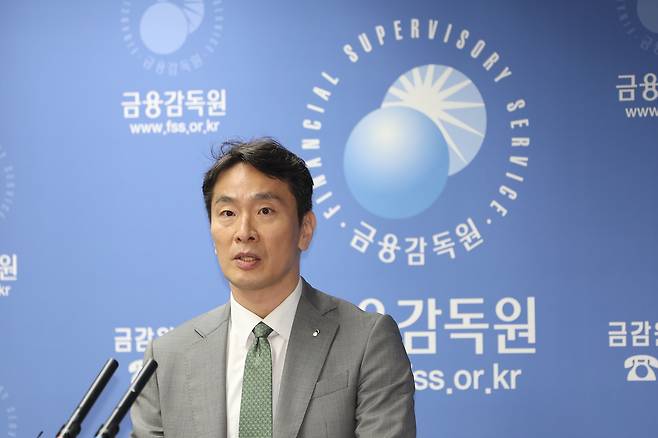
Financial Supervisory Service Governor Lee Bok-hyun on Thursday issued a sharp rebuke, saying he was “gravely concerned” about the company’s push to exercise the call option despite falling short of financial stability requirements.
“The company’s K-ICS risk-based capital ratio has deteriorated and does not meet the conditions for early redemption,” Lee said during a financial stability meeting. “We will take necessary actions in strict compliance with regulations.”
The warning followed Lotte Insurance’s formal statement earlier that day confirming it had triggered the call option and initiated the redemption process.
“We have secured sufficient funds for redemption and formally exercised the call option on Thursday,” the company said, adding that the move was aimed at protecting investors and maintaining capital market stability.
That stance puts the insurer at odds with regulators, who have repeatedly blocked its efforts to issue new subordinated debt and proceed with the early redemption, citing inadequate solvency.
Under Korean insurance regulations, companies must maintain a post-redemption K-ICS ratio above 150 percent to qualify for a call. Lotte Insurance’s ratio stood at 155 percent at the end of 2024, but is expected to fall below the threshold if the bonds are redeemed.
In February, Lotte Insurance sought to issue 100 billion won in subordinated bonds, completing investor demand forecasting and book-building. The offering was pulled after the FSS intervened.
The stalemate has left Lotte Insurance cornered, under pressure from bondholders seeking redemption. The 90 billion won in subordinated bonds, issued in May 2020 with a 10-year maturity, are typically redeemed after five years with investor consent and regulatory approval. The redemption process is overseen by the Korea Securities Depository and requires FSS approval.
A company official denied the move was meant to defy regulators, characterizing it as an effort to uphold investor trust.
“At this point, we have no other choice. The call date was triggered on Thursday, and from that moment, significant interest begins to accrue. The risk of not repaying is too great,” the official told The Korea Herald, adding that the firm is in talks with regulators to find a solution.
The FSS is pressing Lotte Insurance to shore up its capital base before proceeding. Insurers with a K-ICS ratio below 150 percent may still redeem debt early, but only by improving solvency through methods such as recapitalization or refinancing.
Yet, those options appear limited for Lotte Insurance. Raising capital takes time, and more critically, JKL — as a financial investor — has limited appetite to inject fresh funds.
The dispute also complicates JKL’s exit strategy. The Seoul-based firm acquired a 53 percent stake in Lotte Insurance from Lotte Group for 370 billion won in 2019, followed by a 360 billion won capital infusion, boosting its holding to 77 percent.
JKL has been actively pursuing a sale. After a failed deal with Woori Financial Group, it switched to a rolling sale structure in July 2024, leaving the company open for acquisition without a deadline or preferred bidder.
Valuation remains a major hurdle. JKL is reportedly seeking 2 trillion won, but market expectations hover closer to 1 trillion won or lower, reflecting the insurer’s weak fundamentals. Lotte Insurance’s K-ICS ratio is among the industry’s lowest and turns negative when measured against common equity. The only other Korean insurer with negative capital adequacy is MG Non-Life Insurance, now facing insolvency after repeated failed sale attempts.
While the industry expects Lotte Insurance will likely push ahead with the call option, the regulatory standoff is likely to complicate fundraising for other insurers and dampen activity in Korea’s M&A market. Observers say the scrutiny has intensified because the firm is PE-owned — a structure often criticized for prioritizing short-term exits over long-term stability.
The controversy also comes amid public backlash over MBK Partners’ troubled stewardship of Homeplus, which entered court-led rehabilitation after a ratings collapse under MBK’s watch.
The FSS has signaled it will examine whether Lotte Insurance’s ownership structure played a role in its decision-making.
“Unlike other insurers, Lotte Insurance’s majority shareholder is a financial investor whose focus is on maximizing short-term returns rather than ensuring long-term stability,” said FSS Senior Deputy Governor Lee Se-hoon. “Given the recent controversy surrounding MBK, the broader issue of private equity ownership will also be part of our review.”
Copyright © 코리아헤럴드. 무단전재 및 재배포 금지.