S. Korean used car exports surge as SME sales triple in six years
이 글자크기로 변경됩니다.
(예시) 가장 빠른 뉴스가 있고 다양한 정보, 쌍방향 소통이 숨쉬는 다음뉴스를 만나보세요. 다음뉴스는 국내외 주요이슈와 실시간 속보, 문화생활 및 다양한 분야의 뉴스를 입체적으로 전달하고 있습니다.
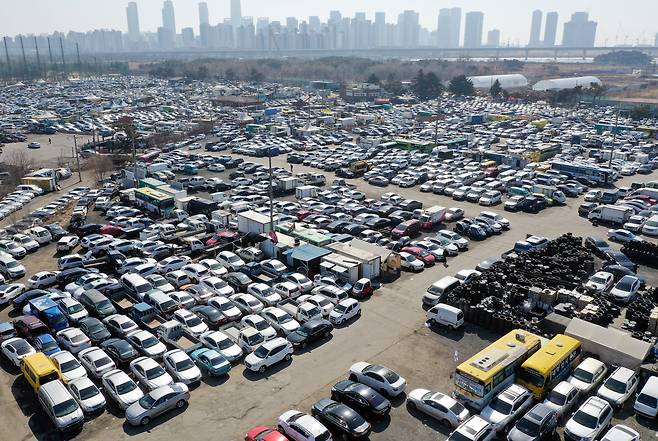
South Korea’s used car export market is accelerating rapidly, with annual volume reaching 7 trillion won ($5 billion) and continuing to gain ground. Traditionally led by small and medium-sized enterprises (SMEs), the industry is hitting new highs as a result of several favorable external conditions, including a strong U.S. dollar, rising global recognition of Korean automotive brands, and ongoing geopolitical uncertainty. An expanding global perception that Korean vehicles offer strong value for money is further propelling used car exports beyond the domestic market.
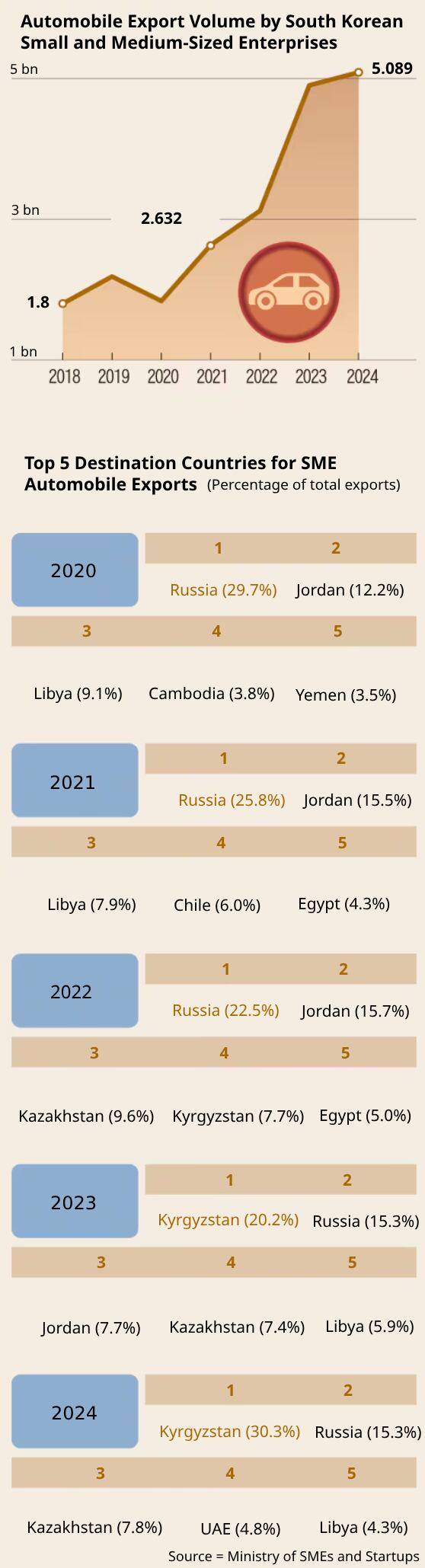
According to the Ministry of SMEs and Startups on May 6, South Korean SMEs exported $5.089 billion worth of vehicles in 2024. At an exchange rate of 1,400 won to the dollar, that amounts to approximately 7.12 trillion won—nearly three times the $1.8 billion recorded in 2018. The growth has been especially sharp since 2021, when used vehicle exports surged from $1.837 billion in 2020 to over $4.9 billion in 2023.
“Over 90 percent of used car exports are handled by small businesses, and some projections suggest the market could expand to 8 to 9 trillion won this year,” said Shin Hyun-do, head of the Korea Used Car Distribution Research Institute.
The outlook remains strong. According to the Incheon Port Authority (IPA), 166,000 used vehicles were shipped through Incheon Port in the first quarter of 2025 alone, a 52 percent increase from the 109,000 units exported during the same period in 2024. The IPA projects annual exports to reach between 600,000 and 650,000 vehicles, far surpassing the previous record of 500,000 units set last year.
With Incheon Port handling the majority of the country’s used car shipments, the rapid growth is starting to strain capacity. “The spike in used car exports is causing port congestion and a shortage of container terminals,” said Kim Sung-tae, head of port operations at the Incheon Port Authority.
The export boom is also driving up global demand for Korean auto parts. Global e-commerce platform eBay reported that auto parts were the top-selling category among South Korean sellers in 2024. “As Korean cars gain traction in global markets and vehicle owners in countries like the United States embrace DIY repairs, demand for Korean-made parts has surged,” an eBay spokesperson said.
Industry analysts cite strengthened brand competitiveness as a key factor behind the trend. Alongside favorable pricing, the availability of replacement parts and ease of repairs have made Korean vehicles more appealing in international markets.
Most of the exported used vehicles are domestically manufactured sedans and recreational vehicles (RVs) with engine displacements between 1,500cc and 3,000cc. Top-selling models include the Hyundai Sonata and Avante, the Kia K5 and K3, along with SUVs such as the Hyundai Tucson and Santa Fe and the Kia Sportage and Sorento. In regions such as Africa and the Middle East, one-ton trucks like the Hyundai Porter II and Kia Bongo III are especially popular.
The depreciation of the South Korean won has also strengthened the market. As the won weakens against the dollar, Korean exports become more affordable for overseas buyers, enhancing price competitiveness. Exporters, in turn, benefit from improved profitability by earning more won per dollar.
Stabilized international shipping rates since 2022 have also alleviated pressure on container logistics, supporting further growth. Additionally, an increase in new car deliveries—following the easing of the global semiconductor shortage—has shortened the trade-in cycle, expanding the supply of late-model used cars eligible for export.
Copyright © 조선일보. 무단전재 및 재배포 금지.
- [속보] “미군, 이란서 실종됐던 F-15 조종사 구조”
- ‘계열사 사장 딸 부정 채용’ 前 신한카드 부사장 1심 집행유예
- 정청래 “국힘, 5·18정신 헌법전문 수록 입장 밝혀라”
- 대법 “피고인이 재판 열리는지도 몰랐다면 재판 다시해야”
- “다시 시작선 ” 국힘 충북지사 경선에 돌아온 윤희근
- ‘라임 사태’ KB증권 전 대표 징계 1심서 취소…법원 “기준 미비 아냐”
- ‘빚 갚는 유증’ 한화솔루션, “금감원과 사전 논의” 발언으로 또 구설수
- 중동전쟁 장기화 우려에 글로벌 ‘먹거리 쇼크’ 우려...비료 가격 상승이 결국 곡물가 상승
- 삼성전자·SK하이닉스 합쳐 연간 최대 500조원 영업이익 시대 열리나
- 金총리 “농업용 자재, 잘 공급되고 있는데 불안 심리로 가수요 발생”