Kia's first pickup, Tasman, boasts power, comfort and utility
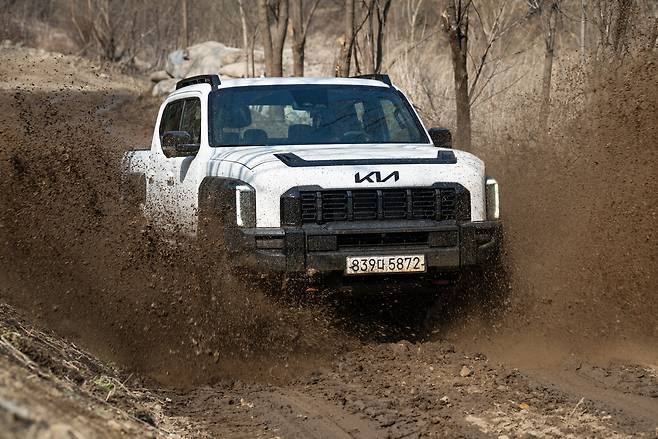
Kia launched its first pickup truck, the Tasman, in Korea in February, aiming to revitalize Korea’s declining pickup market by appealing to the growing number of leisure enthusiasts.
With advanced off-road technology, uncompromised by its affordable starting price of 37.5 million won ($25,475), it recorded sales of 4,000 units in its first month after launch, equivalent to around 30 percent of Korea’s overall pickup sales in 2024.
On Monday, the Korea Herald test-drove the top-tier Tasman X-Pro trim across three different courses, including public roads, an off-road track, and a muddy mountain trail, all in Inje, Gangwon Province.
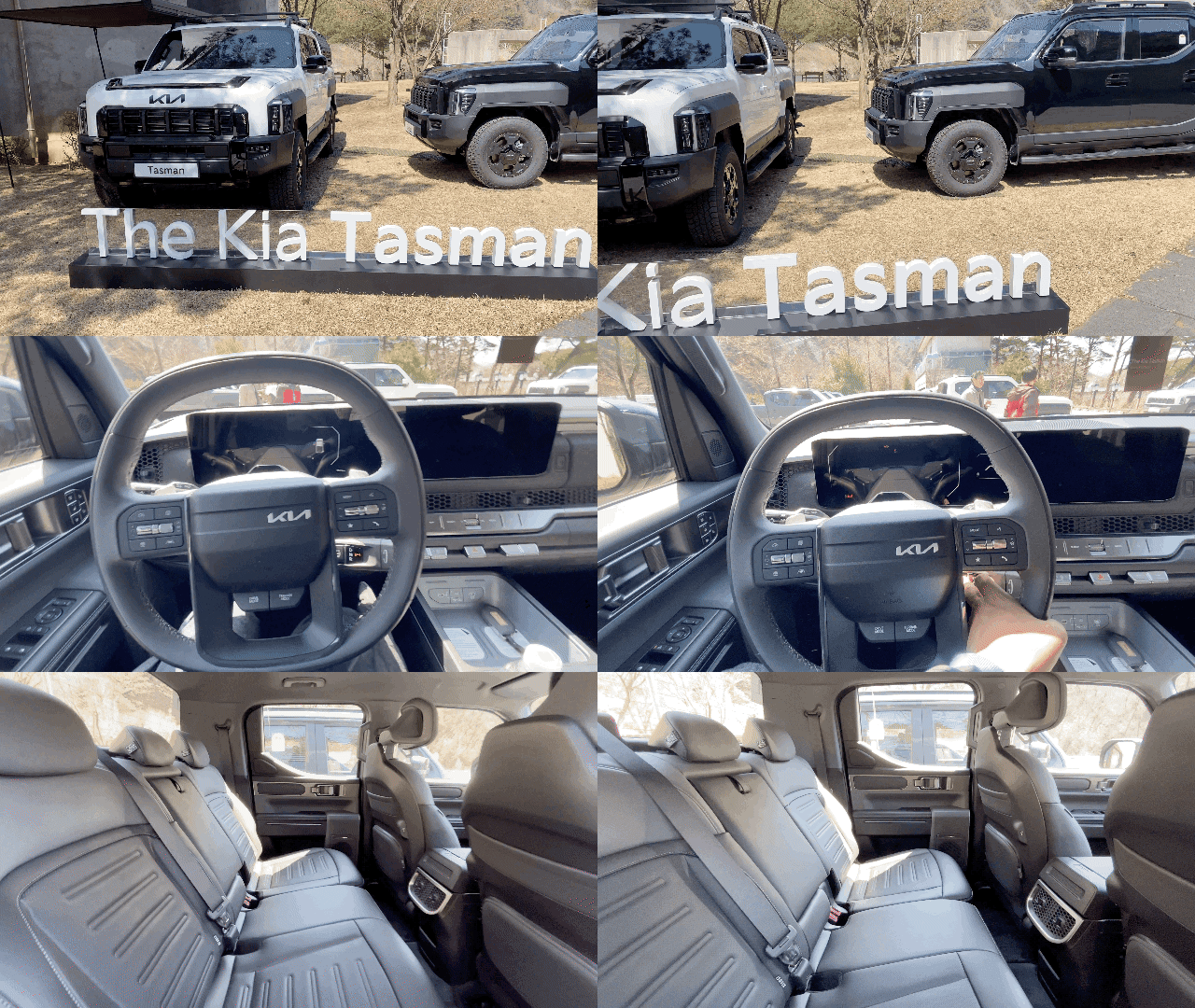
The front view of the mid-sized pickup exudes a bold presence with angular lines and a rugged, rectangular-shaped front end, while its tiger snout-inspired grille reflects Kia’s signature design language. Its cargo bed, measuring 1,512 millimeters in length, 1,572 millimeters in width and 540 millimeters in depth, offers ample space for different leisure and work-related equipment.
During the on-road drive, the Tasman’s 2.5-liter turbo gasoline engine delivered smooth, rapid acceleration, demonstrating its power potential to handle heavy loads. According to Kia, the truck can carry up to 700 kilograms of cargo and tow up to 3.5 tons of camping trailers.
The spacious driver's seat and simple cockpit design contributed to a comfortable driving experience. Notably, the Tasman simplified the center console by minimizing control elements, relying primarily on buttons while avoiding dials and levers. This effort reduced the reporter’s confusion while driving.
While it offers three four-wheel-drive modes — high-range, low-range and auto — along with a two-wheel-drive mode, the Tasman operated in two-wheel-drive mode during the on-road test, sending power to the rear wheels to reduce unnecessary resistance from the front wheels and improve fuel efficiency.
Thanks to this feature, the 2.2-ton truck achieved a fuel efficiency of 10 kilometers per liter during a 60-kilometer on-road test drive, surpassing its official rating of approximately 8 kilometers per liter.
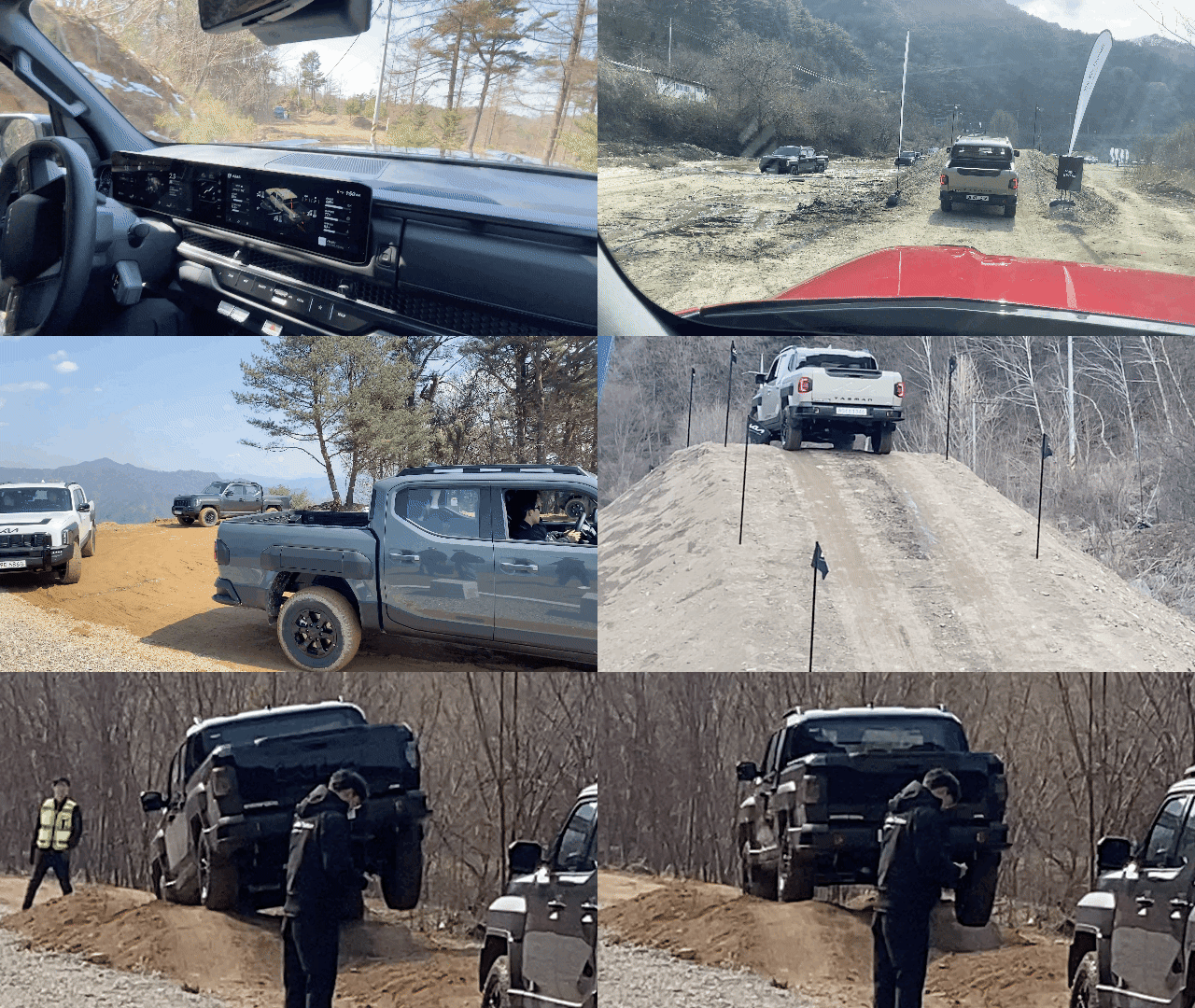
On the off-road course, the low-range four-wheel-drive mode was engaged to deliver maximum torque while maintaining controlled speeds. The Tasman also features a terrain management system with sand, mud and rock modes, which adjust torque and other drivetrain settings to suit specific terrains.
Built on a flexible ladder-frame chassis, the Tasman demonstrated exceptional resilience on uneven terrain. As the vehicle navigated a bumpy section, some wheels lifted off the ground while others remained in contact, causing the frame to flex. However, the frame withstood the stress, preventing damage to the vehicle's body during obstacle climbs.
The vehicle also tackled deep-water crossings, successfully navigating submerged paths up to 600 mm deep. With a rated water-fording capability of 800 mm, the Tasman crossed streams at a controlled speed of 7 kilometers per hour.
The mud-terrain mode proved particularly useful when ascending a steep, narrow mountain trail covered in mud. Continuous movement was crucial to prevent the vehicle from getting stuck, and the system automatically adjusted the throttle response and differential locking. This feature ensured steady progress across varying slopes throughout the 30-minute climb and descent.
Throughout the drive on unpaved paths, its 12.3-inch display provided key driving information, including torque distribution, fuel pressure and fuel temperature, all of which impacted the vehicle’s performance. The display also provided a simulated view of the terrain ahead, including the vehicle’s wheel position, which could be accessed with a swipe on the screen.
While the entry-level Dynamic trim is priced at 37.5 million won in Korea, the mid-level Adventure and Extreme trims are priced at 41.1 million and 44.9 million won, respectively. The X-Pro, equipped with enhanced off-road features, is priced at 52.4 million won.
Copyright © 코리아헤럴드. 무단전재 및 재배포 금지.