The case against small talk, according to Koreans
전체 맥락을 이해하기 위해서는 본문 보기를 권장합니다.
"After exchanging a few words, silence follows, and that moment feels awkward. It's frustrating to force myself to come up with things to say. I'm not unfriendly, but I just want to enjoy my own time without worrying about others."
"In a communal culture, which was a predominant feature of Korean society for a long time, people mostly knew each other," said Lee Dong-gwi, a professor of psychology at Yonsei University. "Whereas in other places where people were more nomadic, they likely encountered strangers much more often than we did."
이 글자크기로 변경됩니다.
(예시) 가장 빠른 뉴스가 있고 다양한 정보, 쌍방향 소통이 숨쉬는 다음뉴스를 만나보세요. 다음뉴스는 국내외 주요이슈와 실시간 속보, 문화생활 및 다양한 분야의 뉴스를 입체적으로 전달하고 있습니다.
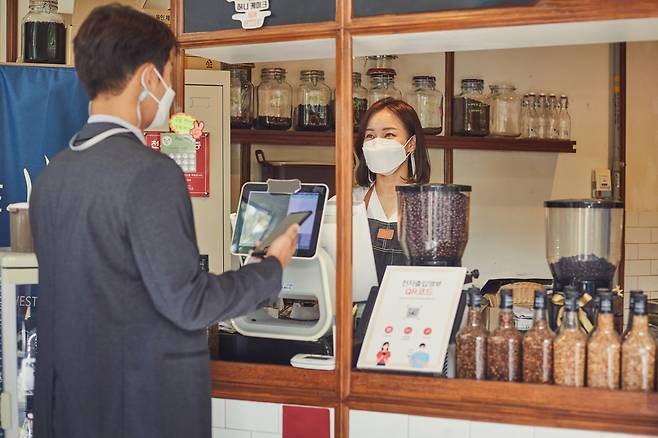
Ava Miller, an avid K-drama lover, traveled to Seoul in July last year to practice her Korean and immerse herself in authentic Korean culture. Staying at a hostel in Seoul, she tried to engage with locals, but whenever she started a conversation, they responded with short answers, and the dialogue didn’t flow as she had hoped.
“Everyone was quietly eating or washing dishes, not making eye contact with each other,” the 29-year-old Australian marketer said, describing her unsuccessful attempts to start a conversation with other guests at the hostel.
Her attempt at small talk with local staff at a nearby franchise cafe also fell flat. “In my country, customers and cafe staff often talk about the weather and other everyday topics,” she said.
This led her to conclude that, contrary to what K-dramas often portray, Koreans aren’t inclined to engage with strangers or try to make friends, unless necessary.
Miller's observation and experience are not isolated. Many visitors to Korea have shared similar culture shocks.
As potential proof of Koreans' aversion to small talk, a hair salon booking mobile platform, Mamedene, has a checkbox feature that lets users inform hair designers that they prefer not to talk during their hair treatment.
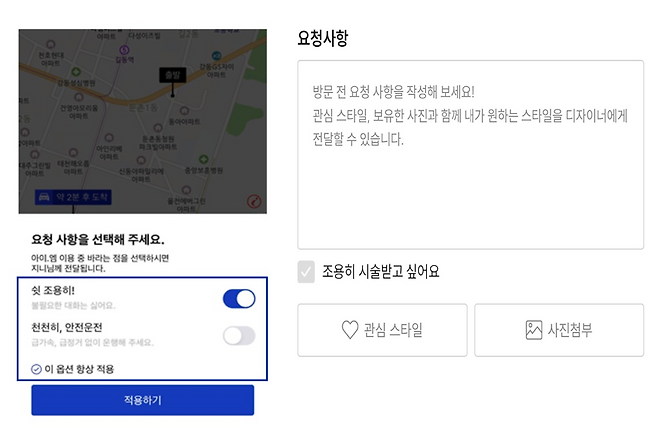
A similar feature is available on some local taxi-hailing apps. i.M. Taxi by Jin Mobility allows passengers to avoid conversations with taxi drivers by selecting an option, which reads “Shh! Quiet. I don’t like unnecessary conversations,” before reserving a ride.
Why are many Koreans less accustomed to, or even dislike, small talk? The Korea Herald spoke with locals and experts to explore their discomfort with casual conversation.
Bang Eun-jung, a 26-year-old graduate student in Seoul, finds one-time conversations with strangers "pointless" since they won’t lead to lasting relationships.
Recalling her trip to the UK two years ago, Bang said she was surprised when an English barista asked about everything from her travel itinerary to her job in Korea.
“It was a culture shock to engage in such casual conversations with someone I’d never see again," she told The Korea Herald, adding, "I usually see no particular reason to chat with strangers.”
University student Park Ji-yoo, who lives in Songdo, Incheon, went further, saying it is "really stressful" to encounter people who ask strange questions.
Some office workers, under pressure to sport a polite and friendly demeanor at work, particularly around seniors, prefer to avoid similar social settings at least outside work.
Han Dong-jin, a 36-year-old HR manager at a pharmaceutical company in Seoul, said that small talk feels like an extension of work.
"Not just me, but I think all office workers wear a social mask. Since I have to be polite and professional with different people every day. When I’m at a cafe or restaurant, I just want to let myself relax," he said.
“After exchanging a few words, silence follows, and that moment feels awkward. It’s frustrating to force myself to come up with things to say. I’m not unfriendly, but I just want to enjoy my own time without worrying about others.”
Small talk can be an effective way to break the ice, but it sometimes intrudes into personal territory, said Shim Ryu-jin, a 32-year-old mom of a 3-year-old son.
"When I’m in a taxi or on the subway with my baby, people often say how cute he is, and I really appreciate it. But some people ask personal questions like what my husband does for a living or whether we’re planning for a second child, and this makes me so uncomfortable,” she said.
"Even when small talk starts with good intentions, depending on who's speaking and the topic, it can sometimes get annoying."
Some experts attribute Koreans' relative unfamiliarity with small talk to cultural and historical factors.
Traditionally, Koreans lived in tight-knit neighborhood communities and formed strong bonds within various groups from school to work. This led to clear boundaries being drawn with outsiders.
"In a communal culture, which was a predominant feature of Korean society for a long time, people mostly knew each other," said Lee Dong-gwi, a professor of psychology at Yonsei University. "Whereas in other places where people were more nomadic, they likely encountered strangers much more often than we did."
These tight-knit communities, however, began to erode as industrialization and urbanization rapidly progressed in South Korea. Still, people's attitudes toward strangers didn't quite shift, the professor explained.
Professor Jin Gyung-sun of the Psychology Department at Sungshin Women's University sees it as a phenomenon more common among digitally-savvy younger generations. Unlike older generations, for whom face-to-face communication is the norm in work and other settings, younger generations grew up when many social interactions shifted to virtual spaces.
For them, the unpredictability of face-to-face conversations could fuel small talk anxiety, the scholar said.
"Interactions among tech-savvy younger people are shifting more and more online, where it’s easier to block or delay conversations. Basically, people have more control over the conversation (when it's online)," said professor Jin.
"But when it comes to face-to-face chats with strangers, you can’t really predict how things will go, so it’s harder to control. People who aren’t into small talk probably don’t want to deal with that uncertainty."
Copyright © 코리아헤럴드. 무단전재 및 재배포 금지.