South Korea’s synthetic rubber firms stand out in slumping petrochemical market
이 글자크기로 변경됩니다.
(예시) 가장 빠른 뉴스가 있고 다양한 정보, 쌍방향 소통이 숨쉬는 다음뉴스를 만나보세요. 다음뉴스는 국내외 주요이슈와 실시간 속보, 문화생활 및 다양한 분야의 뉴스를 입체적으로 전달하고 있습니다.
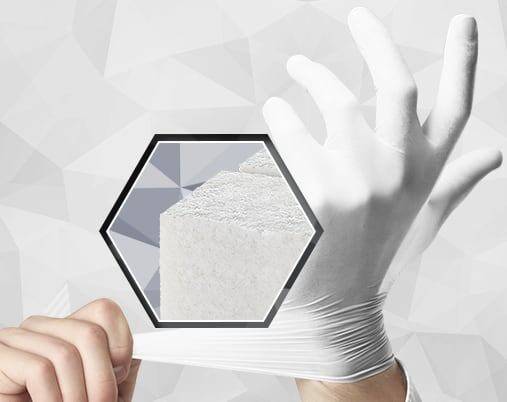
As the global petrochemical industry continues to contend with a prolonged downturn—driven by overcapacity in China and a broader economic slowdown—synthetic rubber operations run by select South Korean companies are emerging as stable profit engines. Technical expertise is critical in synthetic rubber production, which requires the precise formulation of raw materials to meet customer-specific performance criteria. These capabilities are developed over time through long-term relationships with clients, creating a high barrier to entry for latecomers.
As the global petrochemical industry continues to contend with a prolonged downturn—driven by overcapacity in China and a broader economic slowdown—synthetic rubber operations run by select South Korean companies are emerging as stable profit engines.
Technical expertise is critical in synthetic rubber production, which requires the precise formulation of raw materials to meet customer-specific performance criteria. These capabilities are developed over time through long-term relationships with clients, creating a high barrier to entry for latecomers.
According to industry data on Mar. 24, Kumho Petrochemical Group reported 2024 revenue of 7.155 trillion won ($4.8 billion) and operating profit of 272.8 billion won ($180 million). While revenue rose 13.2% year-on-year, operating profit declined 24%. However, the company’s synthetic rubber division posted 2.7952 trillion won ($1.9 billion) in revenue and 100.8 billion won ($68 million) in operating profit, marking year-on-year increases of 29.3% and 4.1%, respectively.
Kumho Petrochemical currently holds a leading global market share—around 25%—in nitrile butadiene latex (NBL), a synthetic rubber widely used in medical and research applications, automobiles, electronics, and everyday items such as kitchen and sanitary gloves. In 2023, the company expanded its NBL production lines, boosting annual capacity from 710,000 tons to 946,000 tons.
Driven by steady demand, NBL remains a bright spot for the company. Kumho Petrochemical exports 80% to 90% of its NBL output to Malaysia, home to major glove manufacturers including Top Glove Corp. In January, U.S. President Donald Trump imposed a 50% tariff on Chinese-made medical gloves, with plans to double the rate to 100% next year. If Chinese products lose price competitiveness in the U.S. market, demand for Malaysia-made alternatives is expected to rise.
Another key product for Kumho Petrochemical is styrene-butadiene rubber (SSBR), used in high-performance tires for electric vehicles. SSBR offers superior abrasion resistance, making it suitable for EVs, which weigh about 30% more than traditional internal combustion engine vehicles. In 2022, the company doubled its SSBR production capacity to 123,000 tons and plans to expand to 158,000 tons in the fourth quarter of this year by adding an additional 35,000 tons.
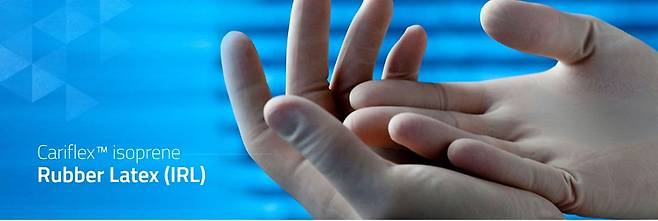
Cariflex, a synthetic rubber subsidiary of DL Chemical, has also proven to be a strong performer, consistently delivering operating profit margins around 20%. DL Chemical acquired the U.S.-based firm in 2020 for 620 billion won ($422 million). Cariflex is the only company globally to produce synthetic rubber and latex using an anionic catalyst process and currently holds the top global market share in polyisoprene synthetic rubber, used in surgical gloves.
Between 2020 and 2024, Cariflex generated 1.2665 trillion won ($860 million) in revenue and 247.4 billion won ($160 million) in operating profit, with a cumulative operating margin of 19.5% over the five-year period—an unusually high figure in the petrochemical sector. The company’s products are recognized for their low impurity levels and superior transparency compared with competitors.
“A critical factor in the synthetic rubber market is the ability to formulate the right recipe of raw materials to meet customer demands,” said an industry official. “This requires extensive know-how developed over many years, making the field far less accessible to new entrants than the broader commodity petrochemical space.”
Copyright © 조선일보. 무단전재 및 재배포 금지.
- 경찰 간부, 한화 ‘스카이박스’ 공짜 관람에 대기발령
- 영화 ‘짝패’ 20주년 류승완 “그때 제작비가 없어서 저 장면이...”
- 6년간 이용자 605명 불과한데…서울대 ‘시진핑 자료실’ 방치 지적
- 공소청, ‘최서원 명예훼손’ 안민석 2심도 징역형 구형
- 개인정보 팔아 억대 챙긴 건보공단 직원… 피해자는 석 달째 유출 사실 몰라
- 이혼 소장에 주소 노출돼 살해… 법원장 “교과서대로 처리…제도 바꿔야”
- 앤스로픽 매출 성장 둔화에, 투자자들 몸값 1.5조달러로 낮춰
- ‘한동훈 딸 스펙’ 고발 사건, 서울중수청에 배당됐다
- 박연규 표준연 부원장, 세계 측정표준 핵심 기구 ‘국제도량형위원회(CIPM)’ 위원 선출
- 이상현 사이클연맹 회장, 체육학회 우수 논문상 수상