Can’t cancel that subscription? Korea is cracking down on ‘dark patterns’
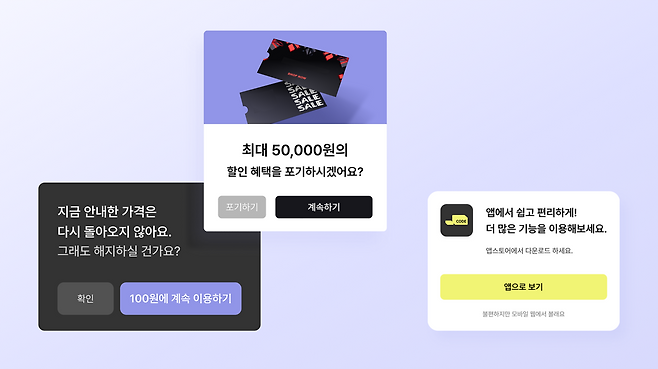
From frustratingly difficult-to-cancel subscriptions to hidden shipping fees, dark patterns -- manipulative online design tactics that trick consumers into spending more -- are widespread in South Korea’s e-commerce market. Now, the government is taking action.
Starting Feb. 14, the Korea Fair Trade Commission will enforce new regulations under the revised Electronic Commerce Act aimed at curbing misleading practices that obscure pricing, complicate cancellations and pressure users into unwanted purchases.
Dark patterns pervade South Korea’s digital landscape. A 2024 report by the Korea Consumer Agency found that 47 new types of dark patterns emerged last year, adding to the 429 cases identified in a 2023 investigation of major online shopping platforms. The most common complaints included:
- Hidden fees, such as shipping charges, that only appear at the final stage of checkout
- False urgency, where sales countdowns reset indefinitely to pressure shoppers into hurried purchases
- Preselected add-ons, such as travel insurance automatically included when booking flights
- Obstructed cancellations, making it unnecessarily difficult to unsubscribe from a service
- Repeated pop-ups, aggressively urging users to reconsider their decisions
The rapid evolution of these deceptive tactics has made enforcement difficult. New variations of dark patterns are discovered almost weekly, according to the KCA.
What the new regulations change
The KFTC’s new regulations introduce stricter consumer protection rules in four key areas:
- Subscription services: Businesses must notify users at least 30 days before converting free trials into paid subscriptions or raising prices. Without this, they face fines or up to a one-year business suspension.
- Transparent pricing: Retailers must clearly display the total cost upfront rather than revealing extra fees (such as shipping or service charges) in later steps of the transaction. If certain costs cannot be displayed immediately, the reason must be clearly explained.
- No more forced add-ons: Companies cannot pre-select optional services or products without user consent. For example, airline websites can no longer automatically add travel insurance to ticket purchases.
- Simpler cancellations: Deliberately hiding, complicating or obscuring the cancellation process is now prohibited.
Companies that violate these rules face fines that increase with repeated offenses, up to 5 million won ($3,450) for the third violation and subsequent offenses. Repeat offenders may also face a one-year suspension of operations.
Is the law strong enough?
While the law is an important step toward fairer digital commerce, experts warn that enforcement challenges remain. The fines are relatively small, especially for major Korean tech firms and e-commerce giants. Unlike more direct legislation in the US and European Union, like the California Online Privacy Protection Act and the EU’s Digital Services Act, South Korea’s approach does not provide a clear mechanism for compensating consumers who have already been misled.
“Right now, the Korea Fair Trade Commission can only respond within the limits of its enforcement powers through continuous monitoring. If a more long-term solution is needed, it should be addressed through stricter legislation. Stronger penalties are necessary to deter businesses that repeatedly engage in these deceptive practices,” said Lee Jung-hee, a professor of economics at Chung-Ang University.
Copyright © 코리아헤럴드. 무단전재 및 재배포 금지.