Topping economy reshapes furniture with customizable designs
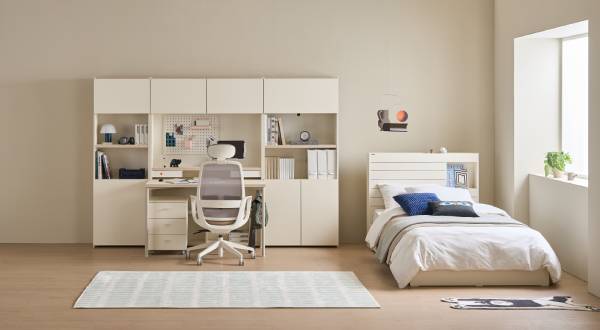
This trend of adding unique options to existing products, dubbed the “topping economy,” is reshaping consumer preferences in South Korea. Much like adding toppings to a pizza, consumers are now tailoring furniture to their tastes. Professor Kim Nan-do of Seoul National University highlighted this trend in Trend Korea 2025, naming the topping economy as one of the top 10 consumer trends for 2025.
Furniture companies are responding with a variety of customizable and modular products. Hyundai Livart plans to launch its “Assemble” customizable study furniture line in early 2025. This range will combine five popular lines - Fove, Myon, New Libro, Flex, and Birkin - into 68 customizable options, allowing consumers to mix and match items like desks, bookcases, and wardrobes. Even individual components such as desk tops and wardrobe doors can be swapped for a personalized setup.
Hanssem recently expanded its Sam Kids furniture line with a “tall wardrobe” series, featuring modular storage units like corner cabinets, open shelving, and end units to fit various needs. Iloom, a furniture brand under the Fursys Group, introduced the Roy series for students, offering options such as motion desks, leg styles, and side panels to adapt to individual learning styles and preferences. Users can also select colors for desks, beds, and storage units.
Shinsegae Casa is leveraging technology to enhance customization. The company offers a “self-planner” service via its online shopping platform, Guud.com, allowing customers to design furniture configurations based on their lifestyle and space requirements. This service, initially launched with the “New Museo” built-in wardrobe system, lets users finalize and purchase designs entirely online.
The growing appeal of customizable furniture is reflected in sales figures. Hyundai Livart reported a steady 10 percent average monthly sales growth for its customizable products through October 2024. In November 2024 alone, sales more than doubled compared to the same month the year before.
One standout product is Hyundai Livart’s Arte Collection, which allows customers to mix and match components from six dining table designs. Currently, 727 unique combinations are possible.
“Consumers are drawn to customizable and modular furniture that offers a bespoke feel without a hefty price tag as inflation rises,” a furniture industry insider said. “Interest is also growing in the ability to modify existing furniture by adding new options after purchase.”
Copyright © 매일경제 & mk.co.kr. 무단 전재, 재배포 및 AI학습 이용 금지
- 오늘의 운세 2024년 12월 31일 火(음력 12월 1일) - 매일경제
- 불 타는 꼬리칸서 “살려달라”...소방대원이 밝힌 승무원 구조 순간 - 매일경제
- 사망 승객의 소득 수준·연령에 따라 보험금 다르다?…제주항공 유족 보상금 규모는 - 매일경제
- [속보] 법원, ‘내란 혐의’ 윤대통령 체포영장 발부…현직 처음 - 매일경제
- "9개 도크 건조선박으로 꽉차"… 5년간 인력 7천명 늘어 - 매일경제
- 최대한 돌렸나…사고난 비행기 48시간 동안 운항횟수 보니 ‘깜짝’ - 매일경제
- “트럼프 ‘30년 전 성폭력’ 재판 또 졌다”…74억원 물어줘야 - 매일경제
- “무서워서 못 타겠어요”…제주항공 하루 만에 6만여건 예약 취소 - 매일경제
- “얼죽신하더니, 불 꺼진 집 왜 이리 많아”…서울 아파트 거래 4개월째 감소 - 매일경제
- MLB.com “김하성, 밀워키-탬파베이에 현실적인 FA 목표” - MK스포츠