No longer 'otaku'?
전체 맥락을 이해하기 위해서는 본문 보기를 권장합니다.
Hongdae, the area around Hongik University known for its underground scene, became the nexus of anime culture, hosting large-scale exhibitions of popular series such as "Attack on Titan," "Cardcaptor Sakura," the works of Ito Junji and "Detective Conan."
"For years, admitting you watched anime in places like middle school was akin to social death," Park recalls. "People assumed it was all explicit or just weird. But now, it's something you see proudly shared on Instagram, with people posting that they've visited manga exhibitions in hot places like Hongdae. All manga and anime events were held in secluded areas before. Times have really changed."
이 글자크기로 변경됩니다.
(예시) 가장 빠른 뉴스가 있고 다양한 정보, 쌍방향 소통이 숨쉬는 다음뉴스를 만나보세요. 다음뉴스는 국내외 주요이슈와 실시간 속보, 문화생활 및 다양한 분야의 뉴스를 입체적으로 전달하고 있습니다.
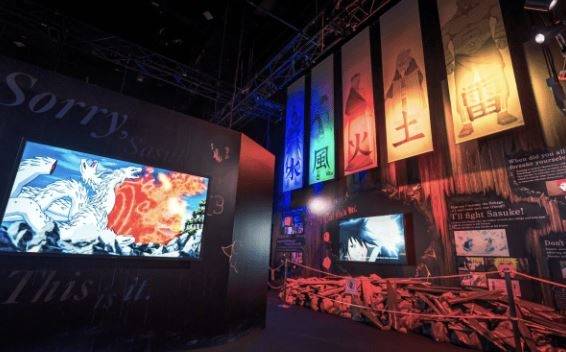
Once a domain of misfits, Japanese anime and manga are seeing a renaissance in South Korea.
The term otaku — borrowed from Japan and laden with pejorative undertones — long stigmatized those who indulged in Japanese comics and animation.
To be labeled an otaku in South Korea often meant social exile for an assumed obsession with "weird cartoons." But the tide has turned and 2024 has seen a full-blown embrace of Japanese comics and animation -- with Generation Z at the forefront of the phenomena.
Korea becomes haven for manga, anime events

Riding high on the demand for Japanese comics and animation, Korea, this year, witnessed a slate of high-profile exhibitions transforming cultural hubs such as the Hongdae and Yongsan areas of Seoul into sanctuaries for anime devotees.
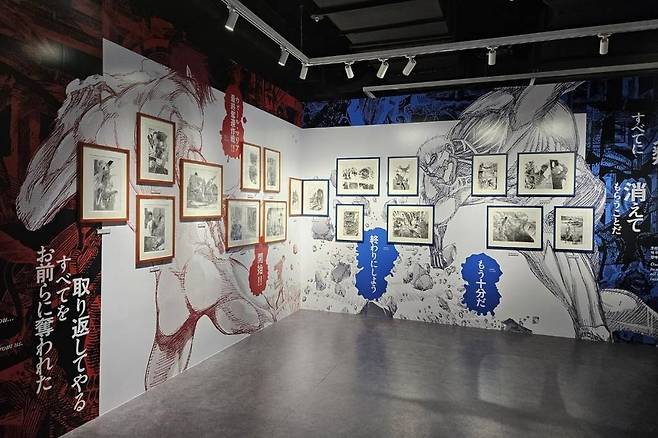
Hongdae, the area around Hongik University known for its underground scene, became the nexus of anime culture, hosting large-scale exhibitions of popular series such as "Attack on Titan," "Cardcaptor Sakura," the works of Ito Junji and "Detective Conan."
And the list goes on.
Exhibitions of "Berserk," "Fullmetal Alchemist" and "Jujutsu Kaisen" also took over the bustling streets and shopping hubs of Seoul throughout the year. In early 2025, the highly anticipated "Bleach" exhibition is set to take place in Hongdae.
But it wasn’t just the exhibitions that drew crowds — a slew of Japanese manga artists, traditionally elusive, also made a series of special visits to Korea.
In September, Junji made his long-awaited return to Korea, the first in 10 years. His fan meeting and live drawing event sold out in just 17 seconds. Mori Kaoru, the acclaimed author of "A Bride’s Story," visited Korea for the first time in June to meet her fans.
Other big names, including Kui Ryoko (creator of "Dungeon Meshi"), Endo Tatsuya ("Spy x Family"), Yamamori Mika ("Daytime Shooting Star") and Wayama Yama ("Let's Go Karaoke!"), all visited South Korea this year, turning the country into an anime and manga haven.
For fans like 25-year-old Park Sun-woo, the shift in cultural dynamics is nothing short of extraordinary.
“For years, admitting you watched anime in places like middle school was akin to social death,” Park recalls. “People assumed it was all explicit or just weird. But now, it’s something you see proudly shared on Instagram, with people posting that they’ve visited manga exhibitions in hot places like Hongdae. All manga and anime events were held in secluded areas before. Times have really changed.”
Streaming services play big role
The shift owes much to the advent of streaming giants like Netflix, which have democratized access to anime, experts say.
According to Han Chang-wan, a professor at the Department of Comics and Animation Tech at Sejong University, the limited scope of traditional Korean broadcasting relegated animation to the realm of children's programming. Netflix, however, turned this on its head, he said.
“After Hollywood studios such as Disney and Universal Studios reclaimed their content for their own platforms, Netflix filled the gap with Japanese animation. Currently, 90 percent of Netflix’s animation offerings are anime,” said Han.
“What was once niche is now mainstream, simply because access is no longer a hurdle," he said.
As Japan’s anime empire flourishes, a question emerges: Where is Korea’s equivalent?
Despite the global acclaim of K-dramas, K-pop and Korean cinema, animation remains a laggard in the Hallyu wave, experts say.
“The industrial framework for animation in Japan is very tightly woven,” said Lee Yong-cheol, head of the comics industry team at the Korea Manhwa Contents Agency.
“Japan’s ecosystem efficiently transforms hit manga into equally successful anime, often with modest budgets. Korea lacks this structure," said Lee.
Han argues that the solution lies in fostering a homegrown animation powerhouse akin to Studio Ghibli.
“With (government-led) support, we need to build star studios that can cultivate their own intellectual properties and negotiate on equal footing with platforms like Netflix,” he emphasized. He noted that without it, Korea risks losing out in an industry with enormous potential.
Copyright © 코리아헤럴드. 무단전재 및 재배포 금지.