Busan film fest ends with lingering controversy over streaming platform presence
전체 맥락을 이해하기 위해서는 본문 보기를 권장합니다.
Actor of the Year for females went to Park Seo-yun for the memorable impression she made in the film "Humming."
Organizers had to explain several times why an R-rated, period action flick was chosen as the opener, saying that the movie simply had "the highest quality as a commercial film with popular appeal."
이 글자크기로 변경됩니다.
(예시) 가장 빠른 뉴스가 있고 다양한 정보, 쌍방향 소통이 숨쉬는 다음뉴스를 만나보세요. 다음뉴스는 국내외 주요이슈와 실시간 속보, 문화생활 및 다양한 분야의 뉴스를 입체적으로 전달하고 있습니다.
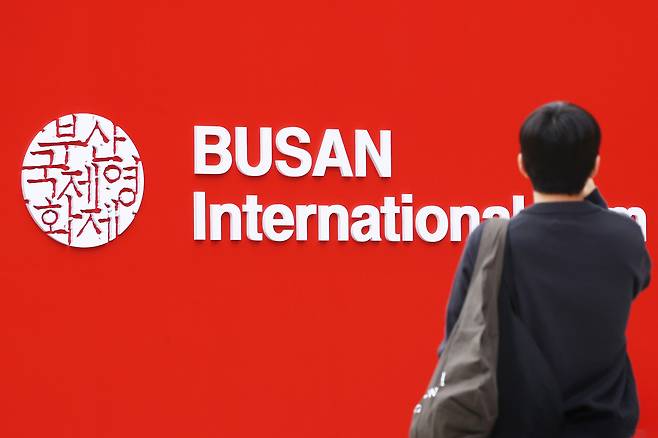
The 29th Busan International Film Festival ended Friday after a 10-day run during which it hosted 145,238 guests and screened 224 films from 63 countries.
The BIFF organizers said the seat occupancy rate at its 28 screens in seven Busan theaters reached 84 percent, a slight increase over last year's 82 percent. This marks the highest seat occupancy in the festival’s history, surpassing even the pre-pandemic years when it featured more than 300 films.
This year’s New Currents Award went to director Park Ki-woong’s “The Land of Morning Calm” and director Maw Naing’s “Cry of Silence.”
The Jiseok Award, for more established filmmakers, was given jointly to Rima Das for “Village Rockstars 2," a film that depicts harmony between nature and mankind through the struggles of a young girl, and Tom Lin Shu-Yu for “Yen and Ai-Lee,” a bold portrayal of a traumatic mother-and-daughter relationship.
The Actor of the Year award for males went to Yoo Lee-ha for his role in “The Final Semester,” a film that connects audiences to the joys and sorrows of young workers in Korea. BIFF praised Yoo's subtle portrayal of the character Chang-woo, a teenager finding his way as a breadwinner.
Actor of the Year for females went to Park Seo-yun for the memorable impression she made in the film “Humming."
BIFF’s newly established Documentary Audience Award went to Jo Se-young’s “K-Number,” which follows an overseas Korean adoptee Mioka Miller who has visited Korea multiple times since 2008 in search of her family, each attempt ending in failure. K-Number refers to a method of classifying Korean adoptees.

Despite BIFF’s efforts to diversify its awards section and bring in a wider range of guests by screening content from streaming platforms, questions were raised about the presence of streaming platforms at Asia's largest film festival.
Netflix's big-budget period action title “Uprising” opened this year’s festival, which has long positioned itself as a gateway for emerging filmmakers and independent films.
Organizers had to explain several times why an R-rated, period action flick was chosen as the opener, saying that the movie simply had “the highest quality as a commercial film with popular appeal.”
Major streamers like Netflix and Disney+ lit up most of Busan's electric signage and billboards with promotions of upcoming titles that will not be released in theaters.
Next year, the 30th BIFF will take place Sept. 17 to 26, while the 20th Asian Contents & Film Market will be held Sept. 20 to 23.
By Kim Da-sol(ddd@heraldcorp.com)
Copyright © 코리아헤럴드. 무단전재 및 재배포 금지.