Samsung Electronics posts $6.8 bn profit in Q3
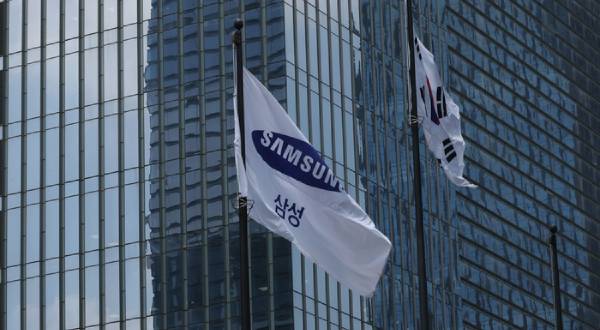
The company announced on Tuesday that its operating profit was estimated at 9.1 trillion won ($6.76 billion), a 274.49 percent increase from the same period during the previous year. However, after topping 10 trillion won in operating profit for the first time in seven quarters in the second quarter, it slipped back below that threshold.
Sales for the third quarter hit a record 79 trillion won, up 17.21 percent from the previous year and surpassing the previous record of 77.78 trillion won set in the first quarter of 2022.
According to a consensus from 18 securities firms compiled by Yonhap Infomax, third-quarter operating profit for the company was expected to exceed 10.3 trillion won, more than quadrupling year-on-year, with sales anticipated to rise 19.98 percent to 80.87 trillion won. Initial estimates had projected operating profit in the 14 trillion-won range, which was revised downward to 10 trillion won.
The shortfall in third-quarter profit was attributed to weaker-than-expected sales of smartphones and personal computers, leading to higher memory module inventory levels of 12 to 16 weeks as well as resulting in lower-than-expected memory shipments and prices.
According to market tracker DRAMeXchange, the average fixed transaction price of PC DRAM products fell 17.07 percent in September 2024, the steepest drop since April 2022, while NAND flash prices also declined by 11.44 percent from the previous month.
Although demand for artificial intelligence (AI) and server memory remains strong, Samsung’s high-bandwidth memory (HBM) has not delivered visible results compared to competitors. The company is conducting quality tests on its 5th-generation HBM3E products with plans to supply to Nvidia Corp., a key AI customer.
One-time costs, including performance bonuses, along with weak foundry orders, unfavorable exchange rates and inventory valuation losses, also impacted the performance of the Device Solutions (DS) division, which is responsible for semiconductors.
“Despite strong demand for servers and HBM, the memory business was affected by inventory adjustments from mobile customers and increased supply from Chinese memory companies, alongside one-time costs and currency effects,” Samsung said. The company also noted that commercialization of the HBM3E for key customers saw a “longer-than-expected delay.”
Although Samsung did not disclose division-specific performance, analysts estimate the DS division recorded an operating profit of around 5.3 trillion won. Within DS, the memory business is believed to have generated around 6 trillion won in operating profit while the non-memory business, including foundries, continued to post losses.
The Mobile Experience (MX) division is estimated to have posted an operating profit of around 2.5 trillion won, while the display division likely posted profits of 1.4 trillion to 1.6 trillion won, amid intensifying organic light-emitting diode (OLED) competition.
The outlook for the fourth quarter of 2024 remains dim, with smartphone and PC demand, which account for 40 percent of DRAM demand, unlikely to recover significantly. NH Investment & Securities analyst Ryu Young-ho predicted that, given seasonal trends in the information and technology sector, a strong recovery in demand will likely not happen until after the first quarter of 2025.
But other analysts downplay concerns about Samsung’s recent underperformance and declining stock price, noting that factors such as HBM technology gaps are already reflected and demand for HBM is expected to remain strong as AI market expansion continues.
Following the announcement of the third quarter results, Jun Young-hyun, head of the DS Division, made a rare statement emphasizing the company’s commitment to using the current crisis as an opportunity for recovery.
Copyright © 매일경제 & mk.co.kr. 무단 전재, 재배포 및 AI학습 이용 금지
- “병장보다 월급 적은데 때려치우련다”…육군 부사관 전역자가 임관보다 많아 - 매일경제
- [속보] 박경귀 아산시장 당선무효…벌금 1500만원 확정 - 매일경제
- “여보, 그래도 ‘그랜저’ 삽시다”…망했다더니 여전히 ‘대체불가’ 세단 1위 [최기성의 허
- “모든 국민에 나눠주는 건 단순무식”…이재명에 직격탄 날린 시장님 - 매일경제
- ‘5만 전자’ 개미들 처절한 곡소리에...삼성반도체수장, 결국 ‘반성문’까지 내놨다 - 매일경
- “아버지 사업 망하자 주 4일 대사관 클럽서”…유명 여가수의 충격적 과거 - 매일경제
- “이영애, 김건희 여사와 연관”…명예훼손 사건 재수사 나선 고검, 무슨일이 - 매일경제
- 얼굴이 눈물 범벅…‘황재균과 이혼’ 지연, 팬미팅서 결국 울었다 - 매일경제
- 이제 학교서 핸드폰 걷어도 됩니다…“인권침해 아냐” 10년만에 뒤집혀 - 매일경제
- 행크 애런상 후보 발표...오타니, 양 리그 석권 도전 - MK스포츠