From Farm to Cup: How Osulloc’s Jeju Tea Factory is redefining luxury tea in S. Korea
이 글자크기로 변경됩니다.
(예시) 가장 빠른 뉴스가 있고 다양한 정보, 쌍방향 소통이 숨쉬는 다음뉴스를 만나보세요. 다음뉴스는 국내외 주요이슈와 실시간 속보, 문화생활 및 다양한 분야의 뉴스를 입체적으로 전달하고 있습니다.
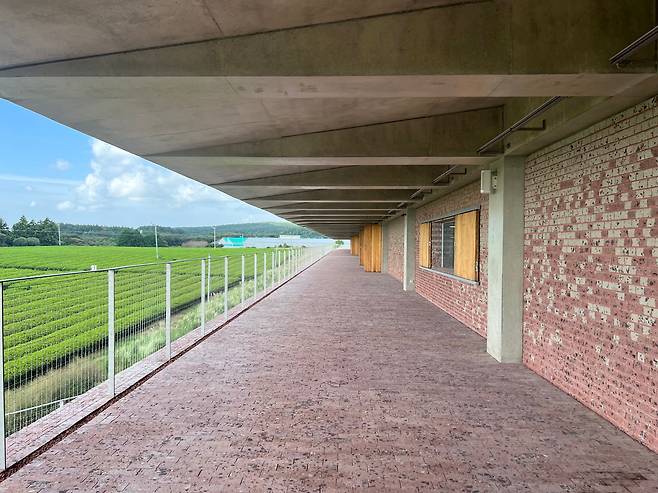
On the morning of Sept. 30, at the Hannam Tea Garden in Namwon-eup, Seogwipo City, Jeju, a red-brick building stood quietly next to the vast fields of tea. At first glance, it resembled an art gallery or museum, but it was, in fact, Osulloc’s tea factory, which was completed just last year.
Approaching the building, a sweet yet slightly bitter aroma filled the air. Thanks to a specially designed scent-diffusing device, the fragrance of the tea being processed inside was carried outdoors.
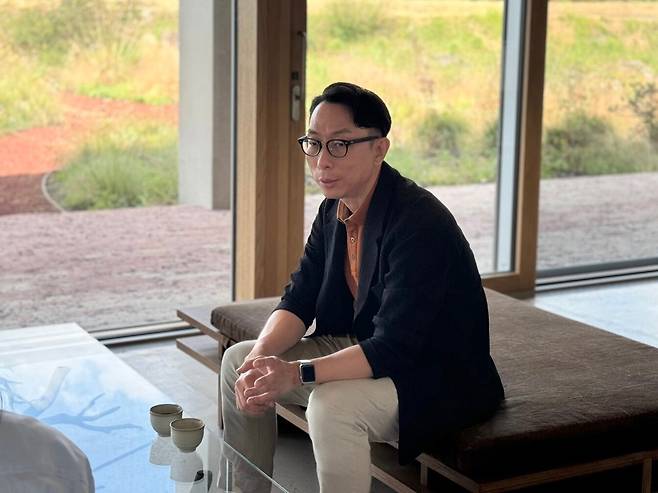
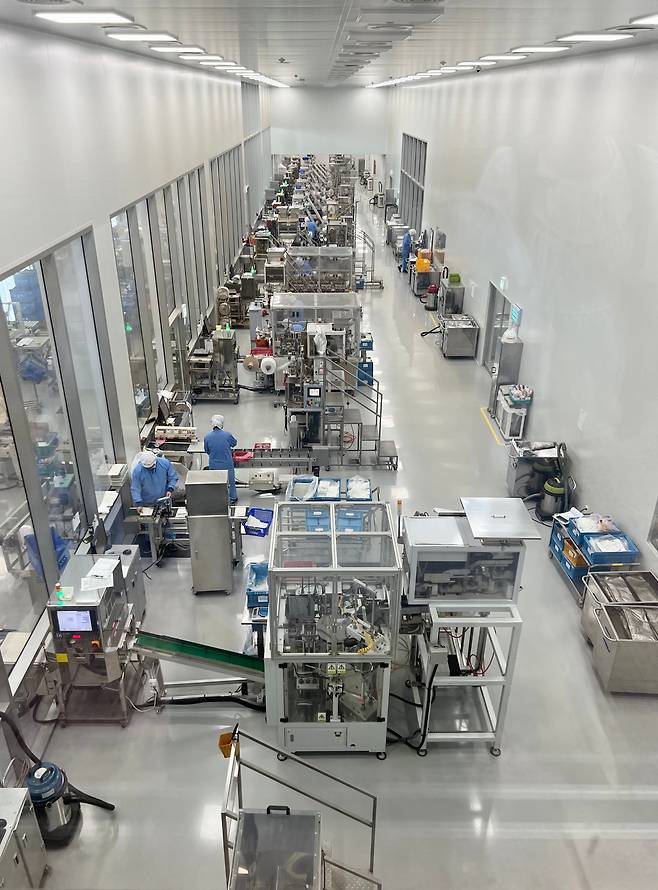
“Right now, we’re making a tea called ‘Moonlight Walk,’ which has a hint of added fragrance, and that scent is escaping from the factory,” said Lee Min-seok, head of Osulloc’s farm research center. “We’ve designed the building so that visitors can observe the tea production process through large viewing windows while enjoying the aroma.”
Osulloc’s tea factory officially began operations in September of last year. Amorepacific Group, which manages both Osulloc Farm, responsible for production, and the sales company Osulloc, consolidated its offices, research centers, and production facilities into this new tea factory. The construction of the factory cost approximately 70 billion won ($50 million).
“It took about eight years from the planning stage to construction,” Lee said. “I believe Osulloc is the only tea company in the world where everything—from growing the raw materials to producing the final product—happens in one place.”
Osulloc’s journey in making Jeju its tea business hub dates back to 1979, when Amorepacific founder late Suh Sung-hwan first started cultivating tea in the rocky fields of Dosun, on the southwestern slopes of Halla Mountain. What began with the creation of the Dolsongyi Tea Farm eventually expanded to include three major plantations in Seogwipo: Seogwang, Hannam, and the original Dosun fields, spanning a total of about 3.3 million square meters.
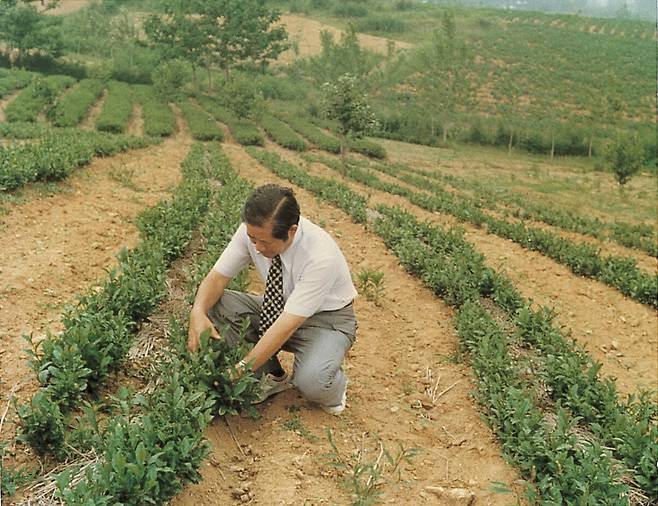
While most food companies typically purchase raw materials to produce their goods, Osulloc took the unconventional route of starting from farming, a philosophy deeply rooted in Amorepacific’s founding values.
Suh’s mother, Yoon Dok-jeong, began by selling camellia oil she extracted herself, which later grew into a cosmetics business. Suh, having learned from her, also understood the significance of raw ingredients and thus ventured into tea farming.
This direct connection to the land became the foundation for Osulloc’s success as a luxury tea brand. In 1980, the company launched Suloc Tea, leading the way in popularizing tea in S. Korea. In 2015, it unified its tea brands under the Osulloc name, and by 2019, the business was spun off into an independent entity. Osulloc even discontinued its popular teabag line, which had once made up 80% of sales, to focus on premium products.
One of its standout offerings is ‘Ilrohyang,’ a handcrafted tea made from young tea leaves carefully selected and roasted by skilled artisans. Only 1,000 units are produced annually, with each 60-gram pack priced at approximately $130.
Osulloc also streamlined its operations by reducing its more than 20 cafes to just eight experiential stores, such as the Jeju Tea Museum, Bukchon Teahouse, and Hannam Teahouse, among others. The Tea Museum, which opened in 2001 at the Seogwang Tea Garden, now attracts 1.8 million visitors each year, with 30% of them being international tourists.
Thanks to these efforts, Osulloc’s annual sales, which hovered around $37 million at the time of the spin-off, surged to $62.2 million last year. The company, which had been running a deficit, turned a profit, recording an operating profit of $4 million. What was once a cosmetics-centric business for Amorepacific has now found new growth in its tea business, with Osulloc becoming a key driver for the group’s expansion.
The establishment of the Osulloc tea factory in Jeju is a key part of its premium strategy. By streamlining the process of harvesting, processing, and packaging the tea, Osulloc aims to solidify Jeju’s reputation as a world-class tea production site. Last month, the sales company Osulloc also relocated its headquarters to Jeju, reinforcing the brand’s identity as a Jeju-born company.
The Osulloc tea factory covers an area of 23,000 square meters, with a building space of 7,200 square meters. It has the capacity to produce 646 tons of tea annually and ship 86 million units of products. As production output has increased by 1.5 times compared to before, the company is now accelerating its plans for global expansion.
Since it began selling on Amazon, the largest e-commerce platform in the U.S., in Mar. 2020, Osulloc has consistently achieved over 100% growth each year. Going forward, the company plans to focus on establishing its luxury tea brand image by entering major retail chains overseas.
Copyright © 조선일보. 무단전재 및 재배포 금지.
- 민주당 등 원내6당, 개헌안 발의…계엄 국회 통제권 강화
- ‘계엄 관여 군인 재판’ 내란재판부서 군사법원으로 이송...특검, 사건 이첩 요구
- “보완수사권 전면 부정은 정치적 구호”…4차 검찰개혁 토론회
- 마크, NCT 탈퇴…“멤버들에 평생 미안하고 고마워”
- 日스타 미치에다 슌스케 “韓작품 하고싶어…한국 팬들에 감사”
- 박상용 검사, 국조특위서 선서 거부…서영교 “나가서 대기하라”
- 李 대통령, 10일 민주노총과 정책 간담회
- 중동 전쟁 장기화…국토부, 건설현장 비상경제 TF 가동
- 靑 “혼잡시간 피해 대중교통 이용시 인센티브”
- 한국 원전 기틀 닦은 이종훈 前 한전 사장 별세