S. Korea’s private education spending surges by 1.1 tn won in one year
이 글자크기로 변경됩니다.
(예시) 가장 빠른 뉴스가 있고 다양한 정보, 쌍방향 소통이 숨쉬는 다음뉴스를 만나보세요. 다음뉴스는 국내외 주요이슈와 실시간 속보, 문화생활 및 다양한 분야의 뉴스를 입체적으로 전달하고 있습니다.
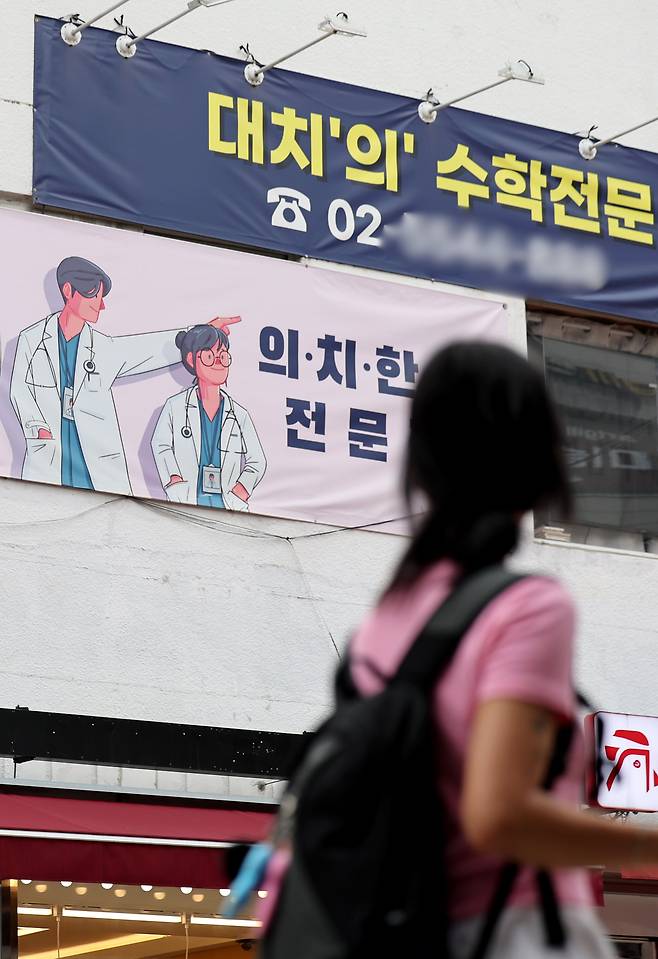
Shin, a 42-year-old parent from Gangseo-gu, Seoul, expressed concerns about rising private education costs. Shin, who has children in the 3rd and 6th grades, mentioned a recent text from their children’s math cram school announcing a monthly tuition hike of 20,000 to 30,000 won. Prices for workbooks and taekwondo lessons have also risen. “I’ve heard costs double in middle school, and I’m already worried,” Shin said.
Inflation in South Korea, initially driven by rising food prices, is now affecting private education. Although the headline inflation rate fell to 2% in August, private education costs, a significant burden for families, continue to surge. Many hagwons, or private cram schools in Korea, have increased tuition this year, citing inflation.
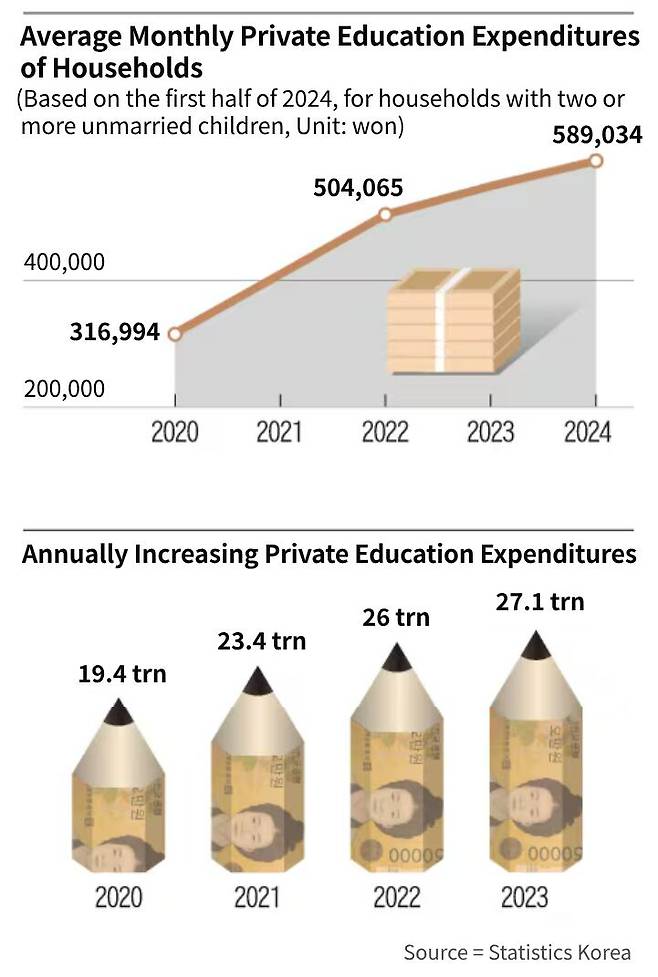
Statistics Korea reports that households with four or more members, including at least two children, spent an average of 589,034 won ($445.97) monthly on private education in the first half of this year, up 7% from last year and an 86% jump from four years ago. Nationwide, private education spending rose by 1.1 trillion won (4%) last year, reaching 27.1 trillion won ($20.52 billion).
An English hagwon in Gwangju, Gyeonggi Province, recently raised its beginner-level class tuition by 200,000 won to 240,000 won per month, citing inflation and rising labor costs. A math cram school in Seoul’s Gangdong-gu increased its fees for elementary students by 20,000 won in March, and parents on online communities are voicing their frustration. One parent noted a 35,000 won hike in September, questioning whether to continue sending their child to the cram school. Others shared similar concerns, with comments like “It’s too expensive” and “I’m barely left with anything after all these expenses.”
Families with children enrolled in multiple cram schools feel the pressure even more. Choi, a parent of a middle school student, reported that piano, taekwondo, and math lessons had increased by a combined 80,000 won this year. Lee, another parent, shared that after their child was placed in a top-tier math class at a cram school, they now pay an additional 100,000 won per month.
Experts warn that upcoming changes in the education system, such as the high school credit system—where students choose subjects like in college—could further drive hagwon costs up. With growing uncertainty around college admissions, more parents may turn to private cram schools. Park Nam-gi, a professor at Gwangju National University of Education, stated, “Parents feel they have no choice but to rely on cram schools offering tailored solutions for the new system.”
Copyright © 조선일보. 무단전재 및 재배포 금지.
- [단독] “드러누워 막았어야” 말한 금감원장, 이번엔 “명확한 답 안 나올 듯”
- 삼성전자·SK하이닉스 주춤한 사이 중국 반도체는 ‘재평가’...ETF도 질주
- SK하이닉스 美 ADR 9.3% 급락...공모가와 3.35달러 차이로 내려와
- [WEEKLY BIZ LETTER] 인플레가 불러온 증세 효과… 英, 소득세 70% 더 걷힐듯
- 세균 검출된 中 마라맛 곤약, 판매 중단 권고 후에도 버젓이 판매
- 1500원 아이스크림 나눠 먹고… ‘특수절도범’ 된 발달장애인들
- “JFK공항에서 맨해튼까지 단 7분”...‘하늘 나는 택시’ 시대 여는 美 조비 공장 가보니
- 돈 새는 이유, 집 안에 있다… 부자들은 이미 버린 물건 4가지
- 한국인도 노벨상 받을 수 있을까… 김빛내리, ‘亞 최초’ 나카소네상
- [더 한장] 폭염·열대야에 해변으로 향하는 피서객