Morgan Stanley warns of challenges, but experts remain optimistic about AI demand
이 글자크기로 변경됩니다.
(예시) 가장 빠른 뉴스가 있고 다양한 정보, 쌍방향 소통이 숨쉬는 다음뉴스를 만나보세요. 다음뉴스는 국내외 주요이슈와 실시간 속보, 문화생활 및 다양한 분야의 뉴스를 입체적으로 전달하고 있습니다.
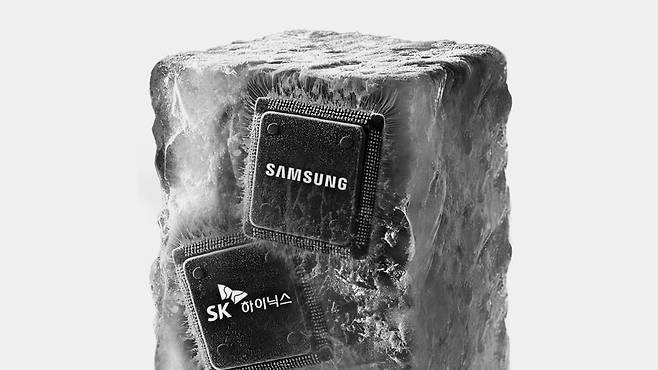
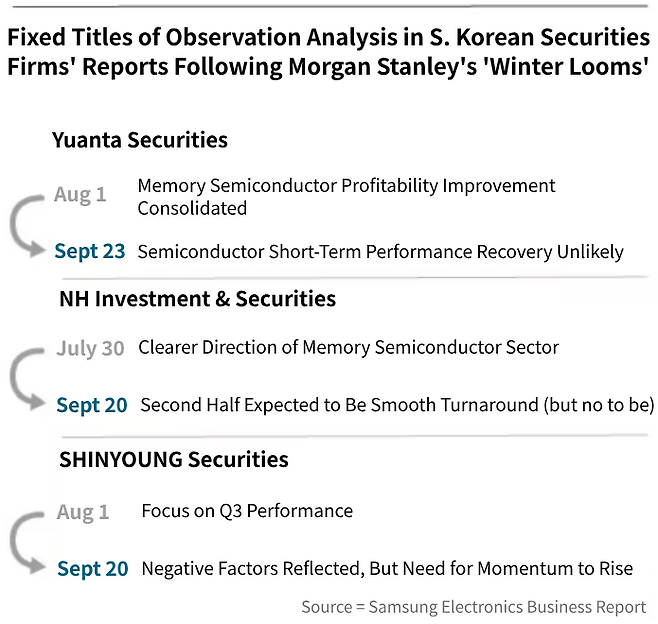
Earlier this year, Samsung Electronics (Semiconductor Division) and SK Hynix each reported around 8 trillion won (about $60.22 billion) in operating profit, sparking optimism that South Korea’s semiconductor industry had finally turned the corner after a four-year slump, signaling a “spring for semiconductors.” However, a recent report titled “Winter Looms” by American investment firm Morgan Stanley has cast a shadow over this optimism, warning that South Korean semiconductor companies are poised to face significant challenges. The report highlights that a drop in demand for memory semiconductors like DRAM, coupled with an oversupply of high-bandwidth memory (HBM), a critical AI component, could result in a prolonged downturn in the semiconductor market extending until 2026.
So, what has changed in the semiconductor industry in just a few months? And what is the outlook for this crucial domestic sector? To gain insights, we consulted senior industry insiders and experts. They generally concur that while the traditional DRAM market has deteriorated more than expected due to weak demand for PCs and smartphones amid economic slowdowns in the U.S. and China, a rapid industry decline is unlikely, thanks to ongoing demand for AI semiconductors in data centers.
The core of the “semiconductor winter” argument centers on the vulnerability of general-purpose DRAM, which makes up nearly half of the memory semiconductor demand used in smartphones and PCs. Concerns are mounting over the performance of Apple’s new iPhone 16 series, which has historically driven the smartphone market in the second half of the year. According to TF International analyst Ming-Chi Kuo, pre-orders for the iPhone 16 series have only reached 37 million units, marking a 13% drop from the previous model. Particularly notable is the continued slump in China’s smartphone market, which accounts for 20% of global demand. Counterpoint Research reports that smartphone shipments in China saw just a 2% uptick in the first quarter of this year compared to the same period last year.
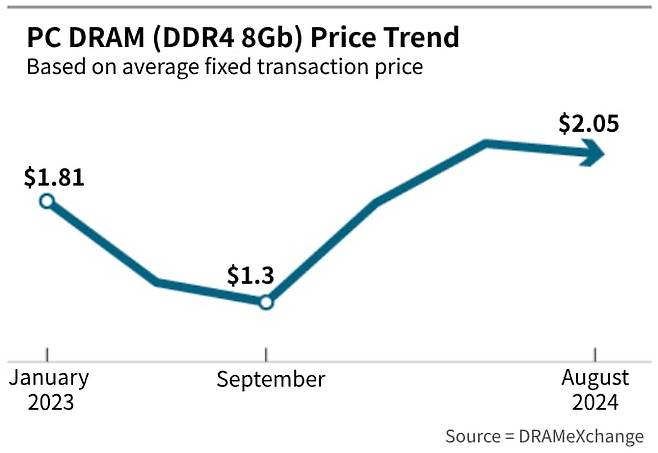
The sluggish sales of smartphones and PCs have left manufacturers with excess general-purpose DRAM inventories from last year, pushing prices down. For instance, the price of PC DRAM (DDR4 8Gb) peaked at $2.10 in May but began to decline, reaching $2.05 last month.
◇The Rise of China’s CXMT
The aggressive expansion of ChangXin Memory Technologies (CXMT), China’s largest memory semiconductor company, is also contributing to the industry’s downturn. As China strives for self-sufficiency in semiconductors, the government is backing CXMT at a national level. CXMT’s low-cost DRAMs are increasingly being used in smartphones and home appliances made by Chinese manufacturers, posing a direct threat to Samsung Electronics and SK Hynix’s market share in China. A recent report by Nomura Securities predicts that CXMT’s DRAM production capacity, currently at 160,000 wafers per month, will rise to 200,000 by the end of this year and reach 300,000 next year. Morgan Stanley has cautioned that CXMT’s production expansion is already contributing to an oversupply of general-purpose DRAMs like DDR4. If CXMT continues to flood the market while smartphone and PC manufacturers are still holding significant inventories, DRAM prices could decline even further.
◇Samsung Electronics’ Pyeongtaek Plant Expansion
Another factor under scrutiny is the potential impact of Samsung Electronics’ new Pyeongtaek Semiconductor Plant 4 (P4). Originally intended to produce both DRAM and foundry (semiconductor contract manufacturing) lines, the plant has reportedly been repurposed to focus exclusively on DRAM production due to rising demand for memory semiconductors. The DRAM supply surplus could intensify when mass production at P4 begins next year.
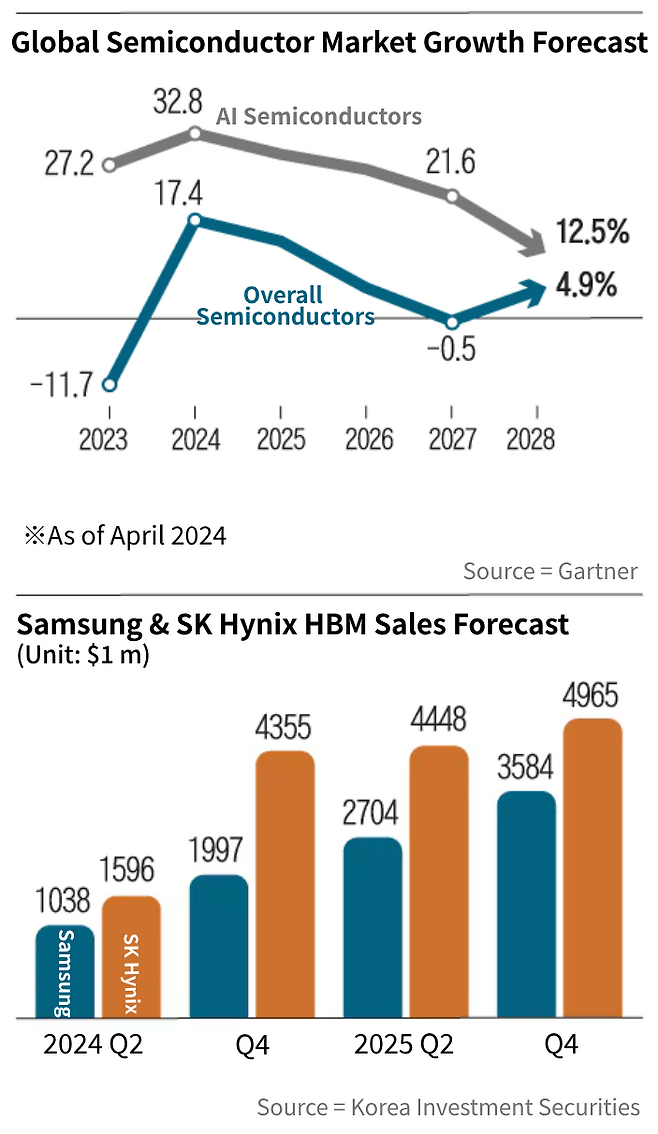
While the outlook for the semiconductor industry may not be as promising as anticipated earlier this year, many believe it won’t be as dire as Morgan Stanley’s report suggests. The reasoning is that continued investment in AI will sustain demand for HBM and server memory semiconductors used in data centers. As one industry insider noted, “Although the recovery in PC and smartphone demand is slower than expected, sales of enterprise-grade large-capacity storage devices (eSSD) and advanced memory like DDR5 for AI data centers remain strong.”
Copyright © 조선일보. 무단전재 및 재배포 금지.
- 80대 교수도 아미 “방탄 군백기에 BTS 연구 더 집중했죠”
- SDV 시대, 실제 車 없이도 車 기능 검증한다…현대차 ‘미래차 실험실’ 가보니
- HD현대일렉트릭, 1조1212억원 규모 북미 데이터센터 공급 계약 체결
- 대검 간부 “진상조사단, 법령 위반 소지...감찰부 기능 무력화”
- 회사 징계조사 때도 변호사 부를 수 있을까…대법 전원합의체, 첫 기준 세울 듯
- 인권위, 북한이탈주민 명칭 변경 “당사자 의견 충분히 들어야”
- “30·40대 연구단장 과감히 발탁” IBS 신임 원장의 ‘노벨상 연구’ 구상
- 서울런 문턱 낮춘다… 중위소득 80%까지, 5만명 더 혜택
- 효성중공업, 호주서 3100억원 규모 장기 공급계약 체결 “북미 넘어 호주로”
- 경찰, 한화 폭발 사고 “세척 기계서 시작된 것 같다”는 진술 확보