Vetocracy vis-à-vis democracy
HAN YOUNG-IK The author is a political news editor of the JoongAng Ilbo.
“Vetocracy” is a term used by American political scientist Francis Fukuyama in a 2013 article. The writer known for “The End of History and the Last Man” coined the term by replacing “demo” in “democracy” with “veto.” It is essentially democracy based on veto, referring to the extreme patrician politics of rejecting all policies and opinions of the other party.
“Vetocracy is dominating American Politics,” Fukuyama condemned the Republican Party in 2013 as legislation and policies of the Barack Obama administration were frustrating. Confrontation over Obama Care was especially serious. While the law was passed in the end, there was serious political aftermath.
Vetocracy is often mentioned in Korea when the opposition interferes with the government’s initiatives. When the Future United Party — the predecessor of the opposition People Power Party (PPP) — hindered the formation of a nominating committee for the head of the Corruption Investigation Office for High-ranking Officials (CIO) in 2020, the ruling Democratic Party (DP)’s floor leader warned, “Only vetocracy remains after four months of persuasion.” The DP had to go forward with a bill aimed at disabling the PPP’s veto rights on the nomination of the head of CIO. As the opposition party’s veto to secure political neutrality of the CIO was disabled, distrust between the parties deepened.
The problem is that the presidential election, which is approaching in 40 days, is being dominated by a negative narrative which can be summed up as “We must prevent that candidate from being elected president.” While President Moon Jae-in’s approval rating is at 40 percent at the end of his term, “all-or-nothing” public opinion is prevailing as some want to change the administration. A poll asked voters who is their “veto” candidate. Neither the DP nor PPP can shake off the temptation of vetocracy.
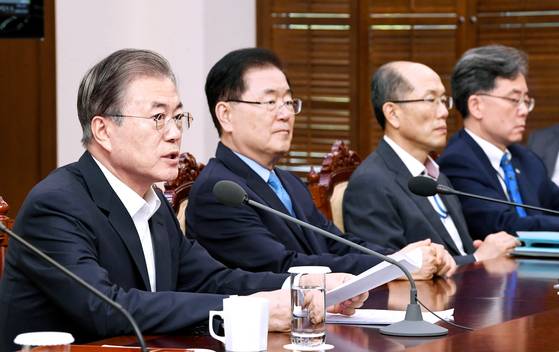
The entity that must take more responsibility for the extreme polarization of public opinion is the Blue House. But about the high approval rating of President Moon at the end of his term, I couldn’t find any repenting message other than self-praise by Moon’s protocol secretary Tak Hyun-min. He said that no leadership that fits the title is visible. It sounds empty that Moon met with religious leaders for the New Year and said the last remaining task of Korea’s democracy is mending the excessive hostility and division among people.
Copyright © 코리아중앙데일리. 무단전재 및 재배포 금지.
- Luxury, lies and life with a 'gold spoon'
- BTS's Jimin sells out his new merch drop within seconds
- Actor Kang Ye-won deletes all social media posts with YouTuber Song Ji-ah
- Tomorrow X Together, Enhypen take international markets by storm
- JYP Entertainment unveils name of new girl group set to debut in February
- Son, Hwang and Park discuss Premier League camaraderie
- YouTuber Song Ji-ah posts apology video, turns channel private
- Home food deliveries aren't a bargain anymore
- 19-year-old 'Korean Mbappe' reportedly on Wolves' radar
- Daily Covid cases top 13,000, greatest by far