In deep water, free divers' heart rates fall as low as seals', international research team reveals
전체 맥락을 이해하기 위해서는 본문 보기를 권장합니다.
The researchers said these measurements were made possible by sensors attached to the forehead and waist that use near-infrared spectroscopy. These sensors work like a smartwatch, the university explained, "using light emitting LEDs in contact with the skin to measure heart rate, blood volume, and oxygen levels in the brain."
The researchers expect their findings will help "scientists understand the physiology of marine mammals and could help find new ways to treat human cardiac patients as well as increase the safety of free divers."
이 글자크기로 변경됩니다.
(예시) 가장 빠른 뉴스가 있고 다양한 정보, 쌍방향 소통이 숨쉬는 다음뉴스를 만나보세요. 다음뉴스는 국내외 주요이슈와 실시간 속보, 문화생활 및 다양한 분야의 뉴스를 입체적으로 전달하고 있습니다.
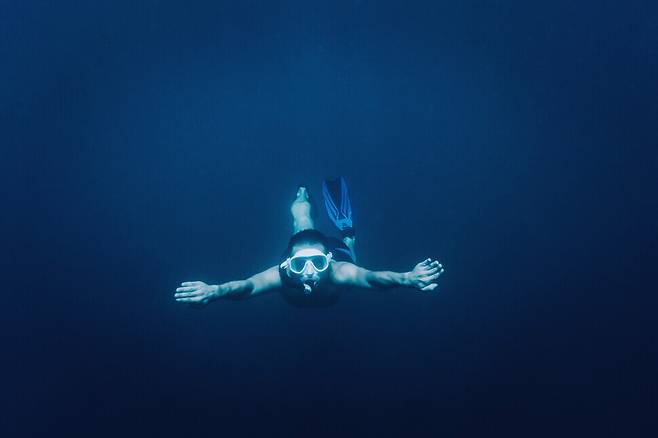
Seals and whales are air breathers that have adapted to aquatic life through a long process of evolution. But free divers, who don’t use a breathing apparatus, can train themselves to dive for long periods, pushing their physiological limits.
When scientists used the latest spectroscopic equipment to measure ocean dives by professional free divers, they found that oxygen levels in their brains were low enough to make ordinary people lose consciousness and that their heart rate fell to the level of a seal.
An international research team led by Chris McKnight, a sea mammal researcher at the University of St. Andrews, in Scotland, measured how heart rate, blood volume, and brain oxygenation changed during 17 deep-water dives by five elite free divers.
As soon as the divers took a deep breath and jumped into cold water, their heart rate fell from 120 to 60 beats a minute. That’s the diving response shown by all vertebrates — you can experience it yourself by dunking your face into a sink full of cold water and letting water fill your nostrils.
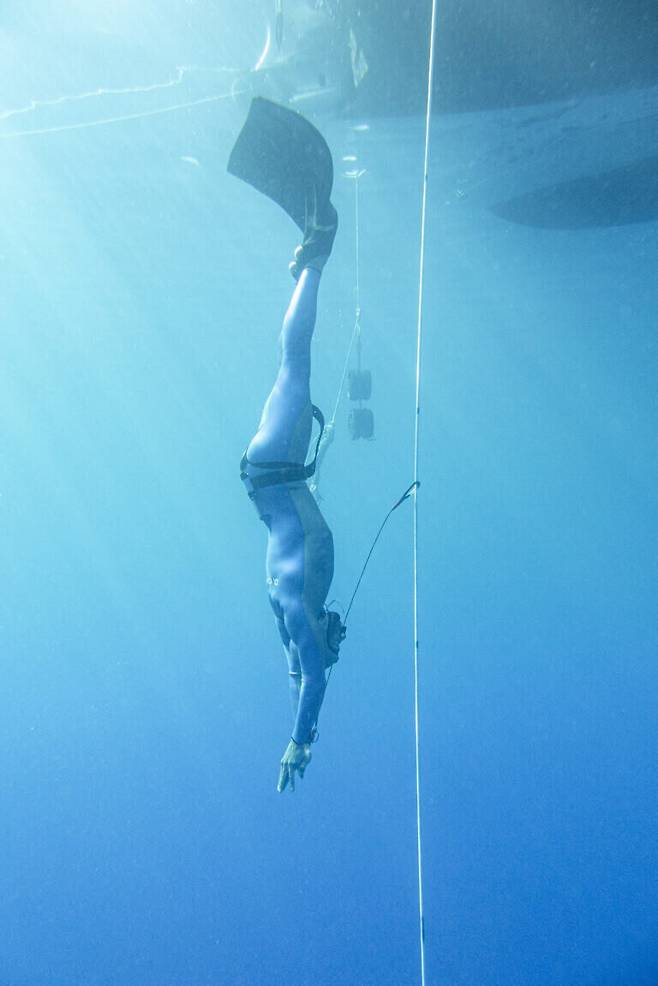
When breathing is impossible, the body seeks to slow the heart rate, which conserves oxygen, and to shunt blood to the essential organs, such as the heart and the brain.
When the free divers in the study reached 58 meters below the surface after a minute underwater, their heart rate dropped to 36 beats a minute. That’s the depth at which the body begins to sink as water pressure contracts air in the lungs, making the body less buoyant.
After 1 minute and 54 seconds, the free divers finally reached the bottom, at 107 meters below the surface. Their heart rate fell to 30 beats a minute.
While blood oxygenation remained at the initial level of 99%, brain oxygenation decreased from 70% to 64%. In another diving experiment, divers’ heart rare fell as low as 11 beats a minute — or a beat every 5.4 seconds.
When the free divers put on their flippers to return to the surface, their heart rate rose to 60 beats a minute, but oxygen levels continued to dip, to 95% in the blood and 63% in the brain.
At 30m below water, four minutes into the dive, professional divers were dispatched to ensure that none of the free divers ran out of oxygen and had a potentially fatal blackout.
When the divers finally reached the surface after 4 minutes and 36 seconds underwater, they showed blood oxygenation of 53% and brain oxygenation of just 26%.
“We measured heart rates as low as 11 beats per minute and blood oxygenation levels, which are normally 98% oxygenated, drop to 25%, which is far beyond the point at 50% at which we expect people to lose consciousness and equivalent to some of the lowest values measured at the top of Mount Everest,” said McKnight, the lead researcher on the project, in a statement published by the University of St. Andrew.
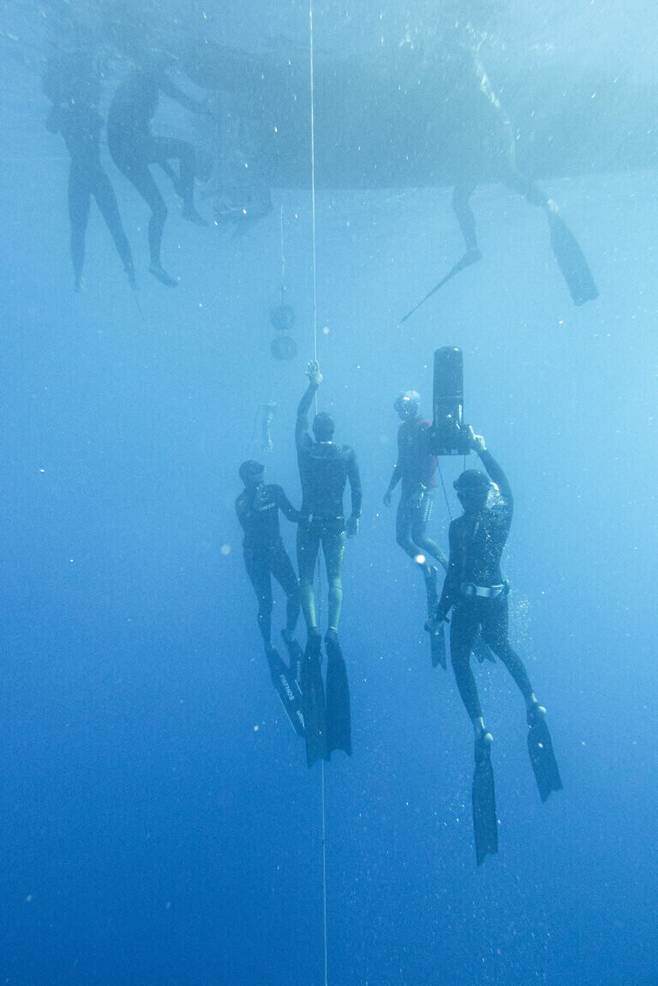
The researchers said these measurements were made possible by sensors attached to the forehead and waist that use near-infrared spectroscopy. These sensors work like a smartwatch, the university explained, “using light emitting LEDs in contact with the skin to measure heart rate, blood volume, and oxygen levels in the brain.”
“Before now, understanding the effects on these exceptional divers’ brains and cardiovascular systems during such deep dives, and just how far these humans push their bodies, was not possible,” said Erika Schagatay, a professor at Mid Sweden University and leader of the research project.
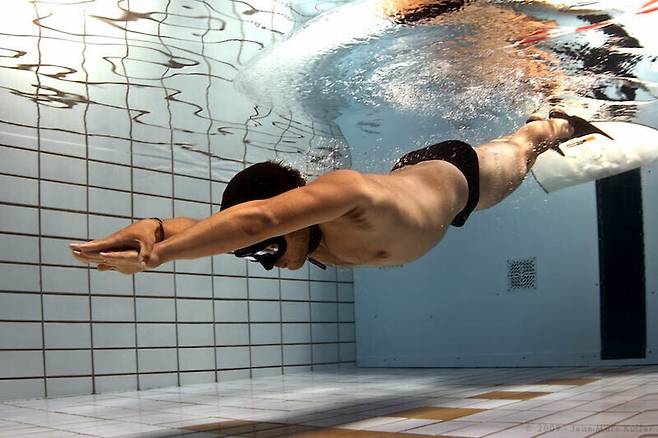
The researchers expect their findings will help “scientists understand the physiology of marine mammals and could help find new ways to treat human cardiac patients as well as increase the safety of free divers.”
The paper was published in the latest issue of the Philosophical Transactions of the Royal Society B, a scientific journal.
By Cho Hong-sup, staff reporter
Please direct comments or questions to [english@hani.co.kr]
Copyright © 한겨레신문사 All Rights Reserved. 무단 전재, 재배포, AI 학습 및 활용 금지
- 1년8개월 만에…일본 시민 다시 만난 ‘소녀상’
- [속보] 광양 산사태로 매몰된 80대 숨진 채 발견
- ‘조선일보 절독’ 인천 시의회 이어 서구 의회도 구독 중지
- 당신들의 룸살롱 경험담을 집어치우고 해야 할 일
- 미 ‘비밀문서’ 공개…전두환의 신군부 “사전발표 없이 광주 진압”
- 김포·검단 사업 3개 추가…광역교통사업 수도권 48개 vs 지방권 16개
- 이스라엘과 백신 스와프…화이자 70만회분, 내일 새벽 도착
- [아침햇발] 그들은 왜 ‘탈원전 부수기’에 올인할까? / 정남구
- 이재명 “마녀사냥 느낌…스캔들 해명, 앞으론 ‘인터넷 보라’ 하겠다”
- “학교서 한 번만 알려줬더라면…” 극단 선택한 고교생 부모의 청원