Deliveries of Hyundai, Kia cars delayed for months amid chip shortages
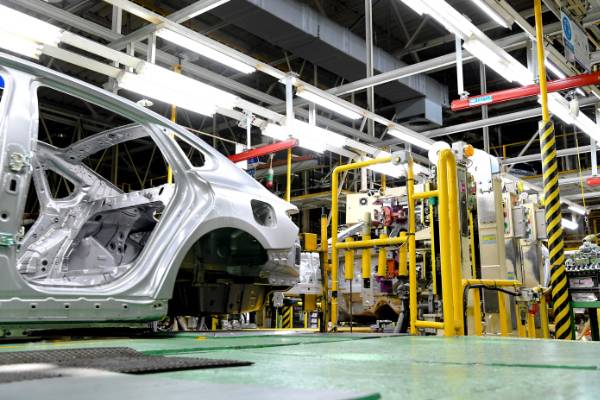
Hyundai Motor and Kia’s new models ordered this month may arrive in the second half despite their assurance that deliveries won’t be affected by chip situation, industry sources said.
Industry insiders suspect that deliveries of both existing models and new cars of the both companies are being delayed because of rapidly declining inventories from production disruption amid the global automotive semiconductor shortage.
Hyundai Motor plugged off the Asan factory dedicated to best-selling Grandeur and Sonata sedans on April 12-13 and 19-20, and the Ulsan first plant on April 7-14 to adjust the rollout of its much-hyped all-electric Ioniq 5 and Kona. This month, the production of Porter capover truck stopped at the Ulsan plant for two days on May 6-7.
The situation has begun to affect mainstay models.
Hyundai Avante buyers now have to wait for 10-11 weeks, much longer than the earlier. Tucson buyers have yet to be notified of the estimated delivery time.
For the large SUV Palisade, the average wait time has stretched to six weeks for the gasoline 2WD model, more than three months for the gasoline AWD version, and seven to eight weeks for the diesel trim.
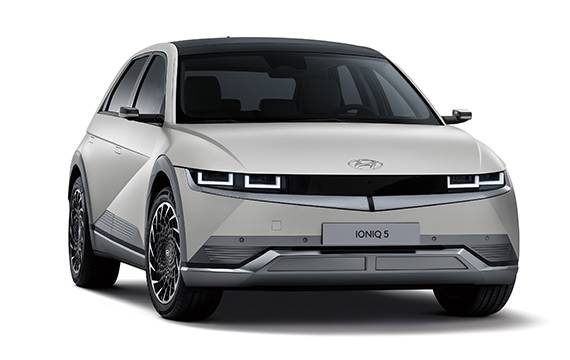
Hyundai Motor’s Ioniq 5 EV, launched last month, were able to make deliveries for just 114 units in the first month despite near 40,000 pre-orders.
The average delivery time of Kia K8, launched last month, is currently six months and Kia K5 seven to eight weeks for the LPI and hydrid trims.
To reduce the waiting time, Hyundai and Kia are persuading customers give up some high-end features like a parking assist or rear-seat reminder system by offering a price discount.
“Reduced options are just a temporary measure, and production disruption and delivery delay are inevitable,” said Kim Pil-su, a professor in automotive engineering at Daelim University, expecting car makers would continue to grapple with the chip shortage by early fourth quarter.
[ⓒ Maeil Business Newspaper & mk.co.kr, All rights reserved]
Copyright © 매일경제 & mk.co.kr. 무단 전재, 재배포 및 AI학습 이용 금지
- Korea’s DGB Financial Group to set up global headquarters to expand global biz - Pulse by Maeil Business News Korea
- LG Chem joins up with PEF in search for M&A opportunities - Pulse by Maeil Business News Korea
- Korean app-based banking market may be joined by heavyweight financial names - Pulse by Maeil Business News Korea
- S. Korea reports biggest job growth in nearly 7 yrs in April - Pulse by Maeil Business News Korea
- S. Korea’s Centroid likely invite strategic partners after $1.7bn buyout of TaylorMade - Pulse by Maeil Business News Korea
- 강경준, 상간남 피소…사랑꾼 이미지 타격 [MK픽] - 스타투데이
- AI가 실시간으로 가격도 바꾼다…아마존·우버 성공 뒤엔 ‘다이내믹 프라이싱’- 매경ECONOMY
- 서예지, 12월 29일 데뷔 11년 만에 첫 단독 팬미팅 개최 [공식] - MK스포츠
- 이찬원, 이태원 참사에 "노래 못해요" 했다가 봉변 당했다 - 스타투데이
- 양희은·양희경 자매, 오늘(4일) 모친상 - 스타투데이