[Editorial] Regarding the court's verdict against Chung Kyung-shim
전체 맥락을 이해하기 위해서는 본문 보기를 권장합니다.
The court found Chung guilty on all counts related to forging the academic records of her daughter, including forcing the president of Dongyang University to provide a commendation. In explaining its verdict, the court noted how Chung's actions have "damaged public faith in the country's university admissions system."
Regarding allegations of financial impropriety, Chung was convicted of insider trading while using an account under a false name. The court concluded that she had "sought to evade the financial transparency that South Korean society demands of high-ranking officials," adding that she had "violated her professional obligation to perform her official duties without conflicts of public and private interests."
이 글자크기로 변경됩니다.
(예시) 가장 빠른 뉴스가 있고 다양한 정보, 쌍방향 소통이 숨쉬는 다음뉴스를 만나보세요. 다음뉴스는 국내외 주요이슈와 실시간 속보, 문화생활 및 다양한 분야의 뉴스를 입체적으로 전달하고 있습니다.
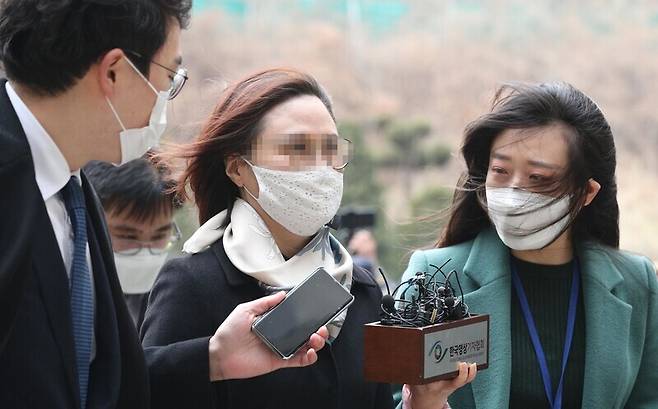
Chung Kyung-shim, professor at Dongyang University and wife of former Minister of Justice Cho Kuk, was taken into custody on Dec. 23 after receiving a stiff four-year sentence on charges of academic fraud and insider trading.
While the court dismissed some charges related to a private equity fund, it convicted Chung of 11 out of 15 charges. After 16 months, this marked the first legal decision in the Cho Kuk controversy, which started with a full-scale investigation by prosecutors in the wake of Cho’s nomination as justice minister in August 2019.
The court found Chung guilty on all counts related to forging the academic records of her daughter, including forcing the president of Dongyang University to provide a commendation. In explaining its verdict, the court noted how Chung’s actions have “damaged public faith in the country’s university admissions system.”
While this was only an initial ruling, the conviction of academic fraud poses a heavy legal and ethical burden for Chung. When parents exploit their social and professional status to secure advantages for their children in the vicious competition to get into top universities, they erode the country’s values of justice and fairness. However, Chung shouldn’t be the only one punished.
Regarding allegations of financial impropriety, Chung was convicted of insider trading while using an account under a false name. The court concluded that she had “sought to evade the financial transparency that South Korean society demands of high-ranking officials,” adding that she had “violated her professional obligation to perform her official duties without conflicts of public and private interests.”
In contrast, the court dismissed charges of misappropriating funds from Co-Link Private Equity by means of a phony consulting contract and a falsified investment report to the Financial Services Commission. This dismissal of key charges related to Co-Link Private Equity — which had been the crux of the prosecutors’ investigation of Cho — means that prosecutors will have a tough time avoiding accusations of being excessive and abusing their authority.
Critics had contended that despite the investigation’s enormous scale, the content of the actual indictment had little to do with any “abuse of power,” as demonstrated by the court’s dismissal of key charges. While the charges of academic fraud are serious in nature, the people need to know why such a heated investigation focused exclusively on one family.
Chung’s attorney announced plans to appeal, contending that there had been a “repeat of the same prejudgments and speculation that we had been fighting since the investigation began, along with the factor of prejudice.”
The next question revolves around the outcome of Cho’s trial, which relates to Chung’s in some of the charges. With many more stages to come in the long courtroom battle, we should respect the court’s verdict against Chung while patiently awaiting the final outcome — no jumping to conclusions.
Please direct comments or questions to [english@hani.co.kr]
Copyright © 한겨레신문사 All Rights Reserved. 무단 전재, 재배포, AI 학습 및 활용 금지