Young Koreans are not moving to the right (KOR)
전체 맥락을 이해하기 위해서는 본문 보기를 권장합니다.
지난주 엔비디아의 젠슨 황 최고경영자(CEO)가 방한했다. 청년들이 생각하기에 젠슨 황의 광폭 행보는 자신의 사업을 위해서다. 온라인 댓글이라는 게 원래 삐딱하기도 하지만, 젠슨 황 기사에 호의적인 댓글이 많이 달리지 않았다. 청년들 마음은 젠슨 황 치맥 장소인 홍대 앞이 아니라 투표지 부족 사태를 빚은 잠실에 가 있었다.
이 글자크기로 변경됩니다.
(예시) 가장 빠른 뉴스가 있고 다양한 정보, 쌍방향 소통이 숨쉬는 다음뉴스를 만나보세요. 다음뉴스는 국내외 주요이슈와 실시간 속보, 문화생활 및 다양한 분야의 뉴스를 입체적으로 전달하고 있습니다.
Koh Hyun-kohn
The author is the chief editorial writer at the JoongAng Ilbo.
Last week, Nvidia CEO Jensen Huang visited Korea. With his trademark charisma, he moved from industrial sites to a fried chicken restaurant, an internet cafe, a baseball stadium and a university campus. Yet public enthusiasm was noticeably weaker than during his previous visit.
When Huang visited last autumn, young people flocked to places he had visited. This time, many appeared less impressed. They understand that Huang’s highly visible appearances serve his company’s interests. There is nothing wrong with that, but neither is it a reason for excitement. The same applies to Korean business leaders who met him. If AI, semiconductors, robotics and gaming generate profits, the rewards will largely belong to those already positioned to benefit.
Watching the controversy at Samsung Electronics over profit-tied bonuses only reinforced a growing belief among many young people that they are being asked to cheer for a game in which they have little stake. Their attention was focused elsewhere — on Jamsil in Songpa District, southern Seoul, where a shortage of ballots during local elections sparked public anger.
At the heart of that frustration are a lack of jobs and widening inequality.
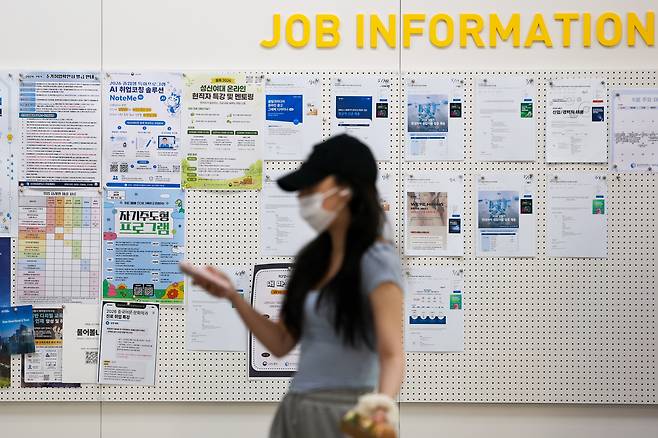
In May, the number of employed people aged 15 to 29 fell by 250,000 from a year earlier. As companies prepare for the AI era, many are hiring fewer workers. The decline of large-scale entry-level recruitment has been especially damaging. New graduates often struggle even to have their applications reviewed. Many spend years building credentials only to find themselves considered too old for entry-level positions.
The situation is likely to worsen as AI and automation spread. Greater efficiency often means fewer jobs. The divide between the minority of young people employed in advanced technology sectors and the broader youth population could widen significantly.
The sense of exclusion triggered by reports of large corporate bonuses is therefore not temporary. It reflects a deeper structural problem.
Government policy has also contributed to the frustration. Many young people believe policymakers are more focused on protecting existing workers than helping new workers enter the labor market.
The "Yellow Envelope" law is widely viewed as strengthening protections for organized labor. Critics argue that such measures may discourage new hiring. Meanwhile, Labor Minister Kim Young-hoon, a former union leader, is often associated with labor disputes and industrial accidents, while youth employment receives comparatively less attention.
President Lee Jae Myung has likewise spoken more frequently about worker protections than youth jobs. Previous administrations treated employment as a central policy priority. Many young people feel that urgency has faded.
Asset inequality has become another source of anger. Rising housing prices and stock values have widened the gap between those who already own assets and those who do not.
President Lee recently described the decline of the jeonse (lump-sum deposit) rental system as part of a normalization process. For young people struggling to find housing, such comments can sound detached from reality. Presidential policy chief Kim Yong-beom also drew criticism when he described high exchange rates, high interest rates and high inflation as the costs of success. Many felt the remark ignored the fact that those burdens fall disproportionately on younger and lower-income Koreans.
Young people increasingly interpret these developments through the lens of fairness. They feel that years of hard work and sacrifice are being dismissed. To them, labor unions, well-connected insiders and political elites often appear less like defenders of the vulnerable than beneficiaries of an unequal system.
Against this backdrop, many voters in their 20s and 30s supported opposition candidates in the recent local elections. Some commentators interpreted the results as evidence that younger Koreans are becoming more conservative.
Broadcaster Kim Eo-jun went further, arguing that right-leaning online communities created during the Lee Myung-bak administration were responsible. Such explanations are speculative and unconvincing.
Recent polling suggests a different story. Support for President Lee among voters in their 20s and 30s remains lower than among older generations. The consistent pattern is not ideological conservatism or progressivism but skepticism toward whoever holds power.
What we are witnessing is not a rightward shift. It is a broader resistance to entrenched interests and political authority.
Young Koreans are preoccupied with making a living. Without strong organizations or institutions to protect them, fairness becomes their last line of defense. Just as many criticized preferential treatment during the controversy over the conversion of temporary workers at Incheon International Airport, they reject perceived favoritism regardless of who benefits.
The same young people who condemned Cho Kuk’s hypocrisy also criticize Kim Keon Hee’s greed. Their anger over ballot shortages and their frustration with politicians seeking to exploit the controversy stem from the same impulse.
Labeling this generation as simply moving to the right misses the point. The real story is growing distrust of privilege, power and unfairness, regardless of ideology.
2030세대 우경화 아니다
고현곤 주필
지난주 엔비디아의 젠슨 황 최고경영자(CEO)가 방한했다. 특유의 친화력으로 산업 현장은 물론 치킨집, PC방, 야구장, 대학교를 종횡무진 누볐다. 그런데 관계자와 보도진이 북적였을 뿐 일반인의 열기와 호응이 예전만 못했다. 지난해 가을 방한 때는 그가 다녀간 치킨집에 청년들이 몰려들어 난리가 났다. 이번에 그런 일은 없었다. 청년들이 생각하기에 젠슨 황의 광폭 행보는 자신의 사업을 위해서다. 나무랄 일이 아니지만, 그렇다고 흥분할 일도 아니다. 그와 만난 국내 기업인도 각자의 이익을 위해서다. AI와 반도체·로봇·게임이 성장해 과실이 생기면 그들 것이다. 삼성전자 성과급을 지켜보면서 청년들 마음은 더 굳어졌다. ‘그들만의 리그’에 들러리 서지 않겠다는 것이다. 온라인 댓글이라는 게 원래 삐딱하기도 하지만, 젠슨 황 기사에 호의적인 댓글이 많이 달리지 않았다. 청년들 마음은 젠슨 황 치맥 장소인 홍대 앞이 아니라 투표지 부족 사태를 빚은 잠실에 가 있었다.
갈등의 핵심은 일자리 부족과 자산 격차다. 5월 청년층(15~29세) 취업자가 1년 전보다 25만명이나 줄었다. AI의 거대한 파고 속에 기업이 사람을 많이 뽑지 않기 때문이다. 특히 공채를 줄인 게 청년들에게 치명타다. 신입은 입사지원서도 받아주지 않는다. 대학 졸업 후 인턴 같은 스펙을 다시 쌓아야 한다. 그러다 서른 살 넘기면 이번엔 나이가 많다고 받아주지 않는다. 첫 직장을 빨리 뚫어야 뭐라도 비빌 언덕이 있는데, 그게 쉽지 않다.
AI와 로봇 도입을 본격화하면 청년층 고용은 더 나빠질 게 틀림없다. 효율은 높아지지만 일자리는 줄어든다. 국가데이터처에 따르면 제조업 취업자 중 반도체 비중은 4%뿐이다. 첨단 기술 기업에 다니는 일부 청년과 나머지 대다수 청년 간의 격차는 엄청나게 벌어질 가능성이 크다. 삼성전자 성과급에서 느낀 박탈감이 일회성이 아니라 구조적 문제라는 얘기다.
정부가 취업준비생보다 기존 노동자를 보호하는 데 더 열심이라는 점도 상황을 악화시킨다. 정부가 밀어붙인 노란봉투법은 기존 노동자를 위한 법이다. 노란봉투법 때문에 신규 채용은 외려 줄어든다. 노조위원장 출신 김영훈 고용노동부 장관은 노사 분쟁이나 사고 현장을 쫓아다니느라 정신이 없다. 이름은 고용노동부인데, 고용은 없고 노동만 보인다. 이재명 대통령도 노동자 보호에 비해 청년 일자리에 대해서는 언급 자체가 많지 않다. 예전 대통령들이 집무실에 ‘일자리 상황판’을 설치하고, 호들갑을 떨던 것과도 사뭇 다른 분위기다.
부동산·주가 급등으로 빚어진 자산 격차는 또 다른 뇌관이다. 이 대통령은 “전세 감소는 정상화 과정”이라고 말했다. 전월세를 못 구해 거리를 헤매는 청년들에게 필요한 건 냉철한 진단이 아니라 따뜻한 위로다. 김용범 청와대 정책실장의 ‘성공 비용’ 발언도 불을 질렀다. 3고(고환율·고금리·고물가)에 대해 “도약하는 과정에서 수반되는 성공의 비용”이라고 말했다. 3고의 피해가 주로 청년층과 저소득층에 돌아간다는 점을 간과했다. 주가가 올라가고, 수출기업이 잘 나가고 있으니 다들 좀 참아달라는 얘기인가. 차라리 ‘3고로 고통받는 분들에게 송구하다’고 했으면 더 나을 뻔했다.
이 모든 상황을 청년들은 불공정으로 느낀다. 열심히 버텨온 삶을 부정당했다고 여긴다. 사회 구조의 모순에 소외감과 분노가 쌓인다. 이들이 보기에 노조는 약자가 아닌 기득권이다. 용케 줄을 대 스펙을 쌓는 선후배도 기득권이다. 불공정을 해결 못 한 정부와 여야 정치권도 기득권이다. 갈등을 부추기는 거로 먹고사는 극우·극좌도 기득권이다.
2030이 이번 지방선거에서 야당에 표를 많이 줬다. 이를 두고 청년들이 우경화됐다는 해석이 나온다. 한술 더 떠 김어준은 “이명박 정부 국정원이 기획한 우경화 온라인 커뮤니티 탓”이라고 말했다. 늘 그렇듯, 음모적이고 무책임한 진단이다. 비상계엄 사태 직전인 2024년 11월 말 윤석열 전 대통령 지지율(리얼미터 기준)은 20대 15.6%, 30대 27.1%였다. 최근 이 대통령 지지율은 20대, 30대 모두 36.8%다. 2030은 진보 대통령에게 더 후한 점수를 주고 있다. 주목할 건 2024년이나 지금이나 대통령 지지율이 가장 낮은 연령층은 2030이다. 이쯤 되면 ‘보수 정부든, 진보 정부든 무조건 싫다’는 것이다. 우경화가 아니라 권력과 기득권에 저항하는 거대한 흐름이다.
청년들은 먹고사는 데 정신이 없어 보수·진보 따질 여유가 없다. 진영도, 조직도 없다. 기댈 곳 없는 청년들에게 공정은 자신을 지켜줄 최후의 보루다. 문재인 정부 때 인천국제공항 정규직 전환 사태에서 봤듯 합당한 이유 없이 특혜를 주는 것을 용납 못 한다. 조국의 위선에 돌을 던진 청년이 김건희의 탐욕에도 돌을 던진다. 투표지 부족 사태에 분노하고, 이를 정략적으로 이용하는 정치권에 항의하는 것도 같은 맥락이다. 해묵은 이념 잣대나 기득권의 용렬한 눈으로 ‘2030이 우경화됐다’고 함부로 재단할 일이 아니다.
Copyright © 코리아중앙데일리. 무단전재 및 재배포 금지.