‘DeepUSFF’ , 딥러닝 기술로 초음파 정밀도 MRI 수준까지 끌어올려
간 특화 솔루션으로 정밀한 진단-임상현장 워크플로우 향상
[의학신문·일간보사=정광성 기자] 간은 오랫동안 '침묵의 장기'로 불려 왔다. 증상이 나타나기 전까지 손상이 상당히 진행되기 때문이다. 대사 기능 이상 관련 지방간 질환(MASLD)은 전 세계 인구의 약 25%에 영향을 미치는 가장 흔한 만성 간 질환으로, 조기 발견과 정확한 진단의 중요성이 높아지고 있지만, 간 생검은 침습적이며, MRI는 비용이 높고 접근성이 제한적이다.
이러한 임상적 수요를 반영해 개발된 삼성메디슨의 DeepUSFF는 딥러닝 알고리즘을 적용한 초음파 기반 지방분율 정량화 기술로, MRI 기반 평가 지표와 비교 검증을 통해 정량 신뢰도를 확보했으며, 임상 현장의 워크플로우를 개선했다.
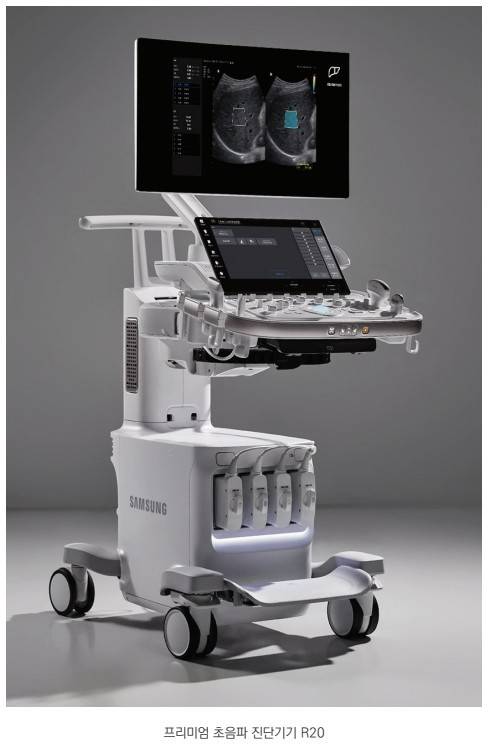
DeepUSFF는 간 내 지방 분율을 수치화해 객관적 근거 중심의 진단 환경을 구현한다. 간 지방 정량화의 표준 참조 기법인 MRI-PDFF(자기공명영상 기반 지방 함량 비율)와의 상관성 분석에 서 DeepUSFF는 다기관에서 확보한 데이터 검증에서 상관계수 r=0.89를 기록하며 높은 상관관계를 입증했다.
이는 기존 초음파 기반 기술 TAI™(r=0.75), TSI™(r=0.61)와 비교할 때 뚜렷하게 높은 수치다.
기존 TAI™는 지방에 의한 초음파 신호 감쇠를 실시간으로 측정해 지방간 변화를 즉각 수치로 제공하고, TSI™는 조 직 내 산란 분포를 정량 분석해 지방간 진행 상황을 보다 세밀하게 모니터링한다. 두 기술이 상호 보완적으로 작동하면서 의료진은 다각도의 정량 데이터를 확보할 수 있다.
진단 정확도 측면에서도 DeepUSFF는 우수한 성능을 보인다. MRI-PDFF 기준값을 적용한 경도(S1), 중등도(S2), 중증(S3) 지방간 분류에서 기존 초음파 정량화 방법 대비 모든 등급에 걸쳐 높은 진단 정확도를 달성했다. 이는 비침습적 방법으로도 MRI에 근접한 수준의 간 지방 정량화가 가능함을 보여준다.
DeepUSFF는 초음파의 접근성·실시 간성과 딥러닝의 정확성을 결합한 딥러닝 기반의 간 지방 평가 솔루션이다. 비침습적으로 MRI 수준에 근접한 정밀도 를 제공하여, MASLD의 조기 발견과 체계적인 추적 관찰에 있어 실질적인 혁신을 제시하고 있다.
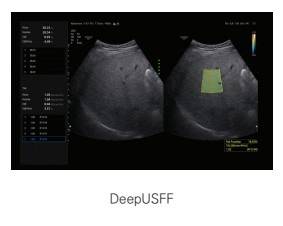
기술의 우수성만큼이나 중요한 것이 임상 현장에서의 실용성이다. 정확한 측정 위치 선정과 반복적인 수동 입력이 요구돼, 검사자의 피로도가 높고 검사 시간이 길어지는 한계가 있는 가운데 DeepUSFF는 별도의 관심영역을 지정할 필요없이 한 번의 클릭으로 즉시 지방분율(Fat Fraction) 수치를 화면에 제공한다.
이와 함께 컬러 코드로 표시되는 지방 맵(Fat Map)은 간 내 지방 분포를 직관적으로 시각화해, 검사자가 결과의 신뢰성과 측정 근거를 한눈에 파악할 수 있도록 돕는다. 또한 측정 뷰의 수용 가능성을 평가하는 신뢰도 지표를 함께 제공해, 결과 해석의 객관성을 더욱 강화했다.
전 세계 다기관 임상 데이터를 기반으로 학습된 DeepUSFF는 다양한 환자 집단과 촬영 조건에서도 일관된 결과를 도출하도록 설계됐다. 이처럼 관심 영역을 직접 설정할 필요 없이 실시간 자동 분석이 이뤄짐에 따라 검사 시간이 단축되고, 검사자에 따라 달라질 수 있는 결과 편차도 줄어 보다 객관적이고 일관된 결과를 얻는데 도움을 준다.
■ 딥러닝 AI기반 라이브 리버어시스트(Live LiverAssist™), 실시간 간 내 관심 영역 탐지
삼성메디슨의 프리미엄 초음파 진단 기기 R20에 탑재된 라이브 리버어시스트(Live LiverAssist™)는 딥러닝 기반 AI 기술을 적용해 초음파 검사 중 간 내 병변을 실시간으로 자동 탐지하고, 해당 위치를 즉시 시각화해 의료진의 진단을 지원한다.
초음파 검사에서 작은 병변 하나를 제때 포착하느냐가 환자의 예후를 가르는 분수령이 될 수 있지만 실시간으로 진행되는 동적 검사 특성상 미세 관심영역을 놓치기 쉽고, 검사자의 숙련도와 피로도 에 따라 진단 결과가 달라질 수 있다.
라이브 리버어시스트는 의심되는 국소 관심 영역을 80% 이상의 정확도로 탐지하는 성능이 확인됐으며, 검사자의 숙련도와 관계없이 일관된 탐지 결과를 제공함으로써 기관 간·검사자 간 진단 편차를 줄이는데 기여한다. 이는 단순한 검사 효율 향상을 넘어 의료 형평성과 환자 안전 확보에 중요한 역할을 할 것으로 기대된다.
비침습 방식으로 MRI 기반 평가 지표와의 비교 검증을 거친 정량 성능을 확보하고, 즉각적인 임상 의사결정을 지원하는 삼성메디슨의 AI 간 특화 솔루션은 진단 프로세스의 정밀도와 운영 효율을 동시에 고도화한다. 데이터 일관성을 강화한 솔루션으로 임상 전 과정의 효율성과 신뢰도를 동시에 끌어올려 간질환 관리의 새로운 기준을 형성하고 있다.
[위 내용은 서울 KIMES 2026 현장에서 배포하는 의학신문 특별판에서도 볼 수 있습니다.]
<English version>
Samsung Medison Delivers Precision Diagnosis and Workflow Innovation with AI-Driven Liver Solutions
The liver has long been referred to as a "silent organ," as significant damage can occur before symptoms become apparent. Metabolic dysfunction-associated steatotic liver disease (MASLD) is the most common chronic liver condition worldwide, affecting approximately 25% of the global population. As the need for early detection and accurate diagnosis continues to grow, traditional diagnostic methods still face limitations: liver biopsy is invasive, while MRI remains costly and less accessible.
Developed in response to these clinical needs, Samsung Medison's DeepUSFF is an ultrasound-based fat fraction quantification technology powered by deep learning algorithms. Through comparative validation against MRI-based assessment metrics, the technology has proven to be quantitatively reliable while also improving clinical workflow efficiency.
Correlation Coefficient of 0.89 vs. MRI PDFF, Demonstrating Higher Accuracy than Conventional Ultrasound Technologies
DeepUSFF quantifies hepatic fat fraction to enable an objective, evidence-based diagnostic environment. In correlation analysis with MRI-PDFF (MRI-derived Proton Density Fat Fraction)—the reference standard for liver fat quantification—DeepUSFF demonstrated a strong correlation coefficient of r = 0.89 through multicenter validation studies. This performance clearly exceeds that of conventional ultrasound-based techniques, including TAI (r = 0.75), and TSI (r = 0.61).
TAI™ measures ultrasound signal attenuation caused by fat in real time, immediately providing numerical indicators of fatty liver changes. TSI™, on the other hand, quantitatively analyzes scattering distribution within tissue to enable more detailed monitoring of fatty liver progression. By functioning in a complementary manner, these technologies allow clinicians to obtain multidimensional quantitative data.
DeepUSFF also demonstrates strong diagnostic performance. When classifying fatty liver severity based on MRI-PDFF thresholds—mild (S1), moderate (S2), and severe (S3)—DeepUSFF achieved higher diagnostic accuracy across all grades than conventional ultrasound quantification methods. This indicates that non-invasive ultrasound technology can now approach MRI-level performance in liver fat quantification.
DeepUSFF is a deep learning–based liver fat assessment solution that combines the accessibility and real-time capabilities of ultrasound with the accuracy of deep learning. By delivering near-MRI-level precision through a non-invasive method, it represents a significant step forward for the early detection and systematic monitoring of MASLD.
One-Click Fat Fraction Measurement Improves Clinical Workflow
Beyond technical performance, practical usability in clinical settings is equally critical. Conventional ultrasound quantification often requires careful selection of measurement locations and repeated manual input, which increases operator fatigue and prolongs examination time. DeepUSFF addresses these limitations by delivering instant fat fraction measurements with a single click, eliminating the need to manually designate regions of interest.
In addition, the color-coded Fat Map intuitively visualizes fat distribution across the liver, allowing clinicians to quickly understand the reliability and basis of the measurement results. A built-in reliability index also evaluates the acceptability of the measurement view, further strengthening the objectivity of result interpretation.
Trained on global multicenter clinical datasets, DeepUSFF is designed to deliver consistent results across diverse patient populations and imaging conditions. By enabling real-time automated analysis without the need to manually define a region of interest, the solution helps shorten examination time and reduce operator-dependent variability, supporting more objective and consistent results.
Deep Learning AI-Based Live LiverAssist™ Enables Real-Time Detection of Regions of Interest
Samsung Medison's premium ultrasound system R20 features Live LiverAssist™, a deep learning-based AI solution that automatically detects liver lesions in real time during ultrasound examinations and instantly visualizes their location to support clinicians in diagnosis. In ultrasound imaging, detecting even a small lesion at the right moment can significantly influence patient prognosis. However, because ultrasound is a dynamic, real-time examination, subtle regions of interest can easily be overlooked, and diagnostic outcomes may vary depending on operator experience and fatigue.
Live LiverAssist™ has demonstrated that the system can detect suspected focal regions of interest with over 80% accuracy, providing consistent detection results regardless of operator experience. By reducing diagnostic variability between institutions and examiners, the technology contributes not only to improved examination efficiency but also to greater healthcare equity and patient safety.
Samsung Medison's AI-driven liver solutions combine validated quantitative performance—non-invasively benchmarked against MRI-based assessment metrics—with real-time clinical decision support. By simultaneously enhancing diagnostic precision and operational efficiency, these solutions strengthen data consistency across the clinical workflow and establish a new standard in liver disease management.