Aggressive outreach drives Chinese biotech success: McKinsey's Shanghai analyst
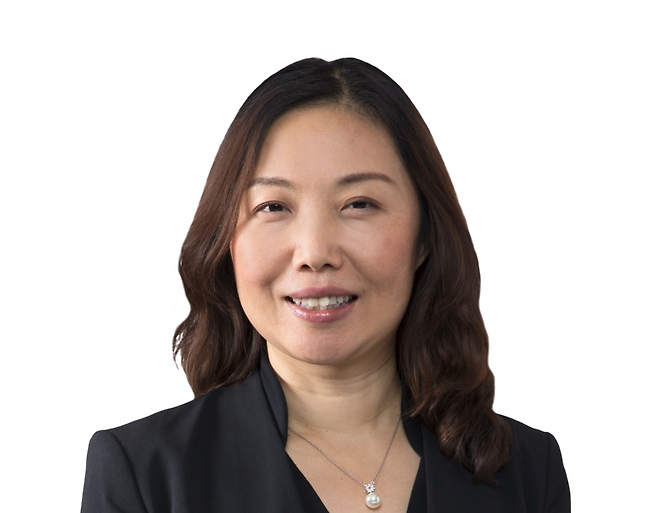
China’s biopharmaceutical and biotechnology companies are rapidly expanding their global presence, driven not only by strong drug pipelines but also by increasingly aggressive outreach to international partners, according to a China industry expert.
“If you look at the first two months of licensing or cross-border deals from Chinese innovators, the volume has already exceeded that of the first quarter last year,” said Fangning Zhang, a partner at McKinsey & Company’s Shanghai office, in an interview with The Korea Herald in Seoul last week.
Zhang said Chinese biotech firms have become far more proactive in promoting their technologies and forming global partnerships — a shift that accelerated after the COVID-19 pandemic.
“Five years ago, many Chinese biotech companies believed they had strong assets but were simply not known globally,” she said. “Because international travel was restricted during the pandemic, they realized they needed to be far more aggressive in outreach.”
As a result, Chinese biotech executives have actively leveraged financial advisers, networks and global industry conferences to raise their international profile, she added.
According to data platform PharmCube, Chinese biotech companies announced 38 out-licensing deals in the first two months of this year, on pace to surpass last year’s total of 186. After logging a record $137 billion in out-licensing deals last year, Chinese biotech companies have already secured $49 billion in such contracts so far this year.
“Chinese companies are very open. They are actively looking for collaboration opportunities,” said Zhang.
“Last year in China, we saw multiple discovery partnership deals between multinational companies and Chinese innovators. That goes beyond just licensing one or two assets. That means you are leveraging your partner’s R&D discovery and early development capabilities because they can do that efficiently in a cost-effective manner.”
Zhang pointed to efficiency, platform technology and artificial intelligence drug discovery as the three major factors behind more and more Chinese biotech firms clinching deals and partnerships with global-leading drugmakers.
“In China, you can actually deliver a discovery candidate two to three times faster at a fraction of the cost compared to the global benchmark,” she said. “In the early development for patient enrollment, China could recruit patients faster than the global reference. If you can find any place to accelerate, that’s an opportunity.”
Regarding China’s recent push to introduce a 30-working day review for the investigational new drug, or IND, process, cutting the existing review window of 60 days, Zhang described it as a part of a decadelong regulatory reform.
“The intention is still that they certainly wanted to encourage innovation domestically but at the same time they are very open to attract Western pharma companies or other players to actually drive innovation in China,” she said.
As for the “NewCo” model, which is short for “New Company” -- a popular business growth method among Chinese biotech firms that spin off promising pipelines into new entities set up in more investor-friendly jurisdictions to attract global capital -- Zhang said it is just a means to reach the ultimate goal.
“This NewCo model is among many of the vehicles or pathways for an Asia-based company to realize the true global value of its assets. It could be M&A, out-licensing or a co-development and co-commercialization partnership,” she said.
“I don’t think the question is ‘Should you do NewCo or not?’ I think the question is ‘Which assets at which stage should we actually start to think about globalization strategy?’ and then at that moment or for that specific asset or situation, (you should ask) which pathway is the best for the company given your capital financial means, given the kind of value that eventually you can capture, given the risks you could take and also the probability you can get the right partner. … It’s a multiple-factor consideration, almost like triage.”
Zhang, who worked at Pfizer as a senior associate scientist for several years, said “quite a few Western executives” whom she met during the JPMorgan Healthcare Conference held in San Francisco in January this year told her that they didn’t realize Korea is doing a lot of innovation.
“For me, it’s a little bit of indication that the kind of capabilities and the momentum that the Korean biotech sector is driving probably can be better known and better seen by the global community,” she said.
“If you have good assets but you are not out there, then you might miss the opportunity. … I think you just need to be more extroverted.”
Copyright © 코리아헤럴드. 무단전재 및 재배포 금지.