Director didn’t like ending of 'King Lear.' Here’s how he changed it
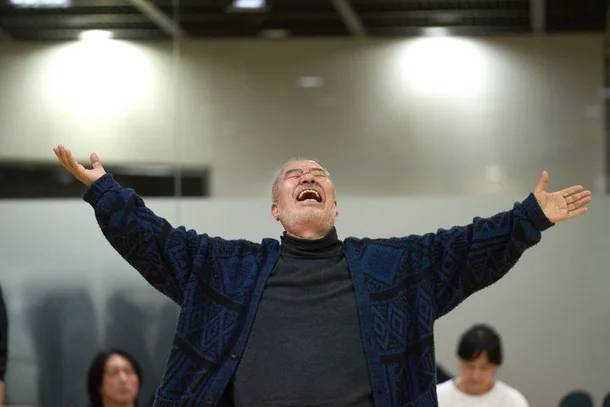
Unlike the original play by William Shakespeare, the protagonists in director Ko Sun-woong’s reinterpretation, “King Lear: An Apocrypha,” do not meet a tragic end.
The aging king still dies in the end, but only after defeating the villains. Cordelia, Lear’s youngest daughter and the only one who remains loyal to him, survives and looks toward a new love with Edgar, the son of Gloucester, who is unjustly cast out by his father.
"King Lear" has inspired countless reinterpretations, but few have gone so far as to rewrite its ending. Why alter what is widely considered the finest of Shakespeare’s four great tragedies?
Speaking to reporters on Wednesday, Ko said he had long been dissatisfied with the original ending.
“In the original, Cordelia is murdered and Lear dies from the shock,” he said. “I never found that ending very appealing. I wanted Cordelia and Edgar — both cast aside by their fathers — to come together and carry on into the next generation.”
Ko also removed many of the scenes in which Lear laments his fate — moments that appear frequently in the original text. Instead, he condenses the play’s sense of regret into the song “Void” by Cho Yong-pil, one of South Korea’s most celebrated pop singers. The song plays as background music during a scene in which Lear reflects on his choices, and midway through the play the king even sings it himself.
"There are so many scenes where Lear sighs and grieves that it can become exhausting for the audience. The audience has already seen what happened, so I didn’t think those scenes were really necessary. I replaced them with the song.”
The Fool, who accompanies Lear after the king divides his kingdom between his two eldest daughters and is cast out penniless, is replaced in this production by a turtle — an imaginary character that exists only in Lear’s mind.
Because of these bold alterations, the production adds the subtitle “Apocrypha” to distance itself from the original.
“I think the appeal of this production is that it offers perhaps the easiest way to approach Shakespeare’s tragedies, which many people find intimidating," the director said.
"King Lear: An Apocrypha" will run from March 20 to April 12 at the Haneul Theater of the National Theater of Korea in Seoul.
Copyright © 코리아헤럴드. 무단전재 및 재배포 금지.