When spring calls in Jeju
전체 맥락을 이해하기 위해서는 본문 보기를 권장합니다.
"This is Jinji Cave," he explained. "During the final years of Japanese colonial rule, Japanese troops stationed in Hamdeok began digging tunnels here as supply routes and shelters, but construction stopped when Korea was liberated. Later, during the Jeju 4.3 Uprising, residents used the cave as a refuge."
"People need a clear reason to stay in a place," said Seo Ga-yeon, country manager of Airbnb Korea. "Those reasons come from spaces travelers want to stay in, the content that enriches those spaces and the people who bring them to life."
이 글자크기로 변경됩니다.
(예시) 가장 빠른 뉴스가 있고 다양한 정보, 쌍방향 소통이 숨쉬는 다음뉴스를 만나보세요. 다음뉴스는 국내외 주요이슈와 실시간 속보, 문화생활 및 다양한 분야의 뉴스를 입체적으로 전달하고 있습니다.
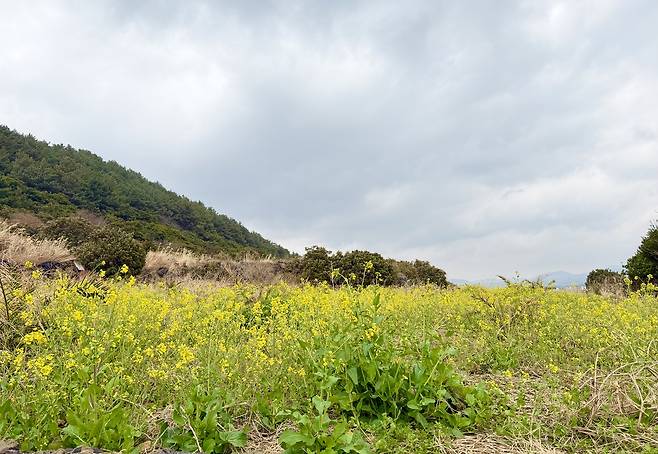
JEJU ISLAND — On South Korea’s southernmost island, spring tends to arrive a little earlier than on the mainland. By March, travelers arriving in Jeju often hope to catch one of the island’s most iconic seasonal sights: fields of bright yellow canola flowers swaying in the wind.
Along Jeju Olle Trail Course 19, overlooking Hamdeok Beach on the island’s north coast, a well-known canola field spreads across a gentle hill. Bright yellow flowers stand against a backdrop of green fields and deep blue sea, moving softly in the ocean breeze.
While canola flowers draw many visitors to the island during this time of year, Jeju offers far more than scenic fields. For travelers seeking a deeper connection with the island, a growing number of local experiences invite visitors to explore its nature, history and culture.
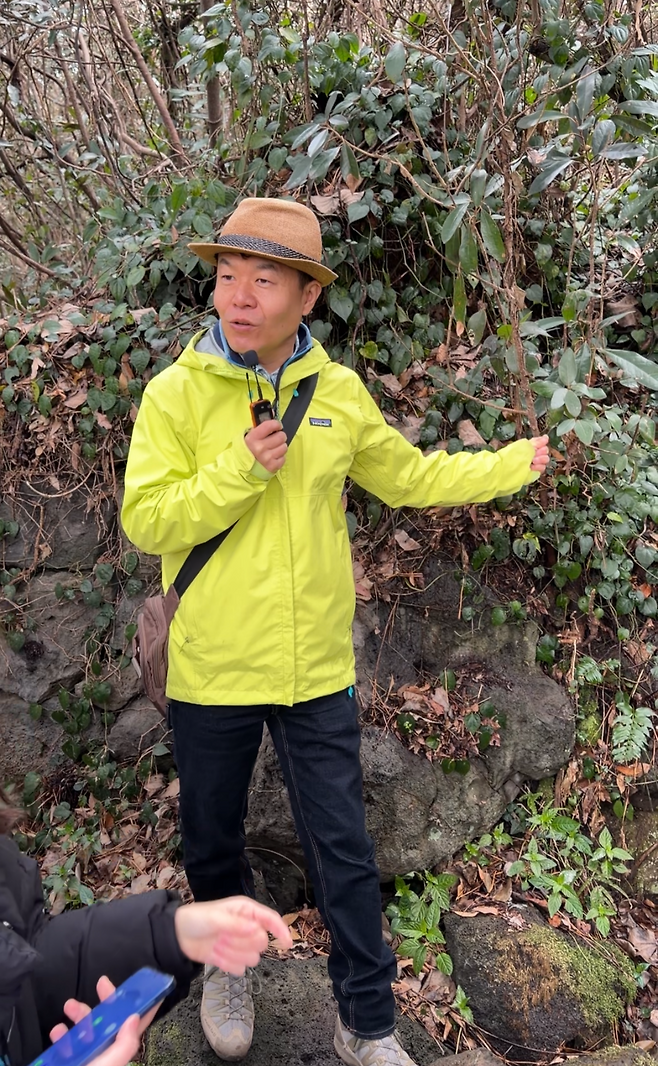
One of the most immersive ways to encounter Jeju’s landscape is by climbing an oreum — or one of the island’s distinctive parasitic volcanic cones.
“I moved to Jeju in 2016 and began running guided oreum tours for travelers in 2019,” said Choi Kyung-jin, a local guide who leads small groups up Seoubong near Hamdeok.
“This hill is especially beautiful when the canola flowers bloom. It may feel windy at the meeting point below, but once we start climbing, you’ll notice the wind becomes much calmer,” he said.
As the trail winds upward, the gusts soften, and the hill reveals views of Hamdeok’s turquoise shoreline.
Not far into the hike, Choi leads visitors to a small cave hidden along the slope.
“This is Jinji Cave,” he explained. “During the final years of Japanese colonial rule, Japanese troops stationed in Hamdeok began digging tunnels here as supply routes and shelters, but construction stopped when Korea was liberated. Later, during the Jeju 4.3 Uprising, residents used the cave as a refuge.”
Inside the dim cave, small bats cling to the ceiling. On the ground lie remnants believed to date back to the time when villagers sought shelter here.
Experiences like these allow visitors to discover lesser-known parts of Jeju while hearing stories that connect the island’s natural landscape with its history.
Choi’s hikes, like many locally led activities on the island, can be booked through platforms such as Airbnb as part of its Experiences program, which connects travelers with local hosts.
The platform has increasingly emphasized such activities as part of efforts to encourage longer stays in regional destinations.
“People need a clear reason to stay in a place,” said Seo Ga-yeon, country manager of Airbnb Korea. “Those reasons come from spaces travelers want to stay in, the content that enriches those spaces and the people who bring them to life.”
Activities hosted by locals, such as guided oreum hikes or craft workshops, are increasingly seen as ways to offer visitors more meaningful engagement with regional communities.
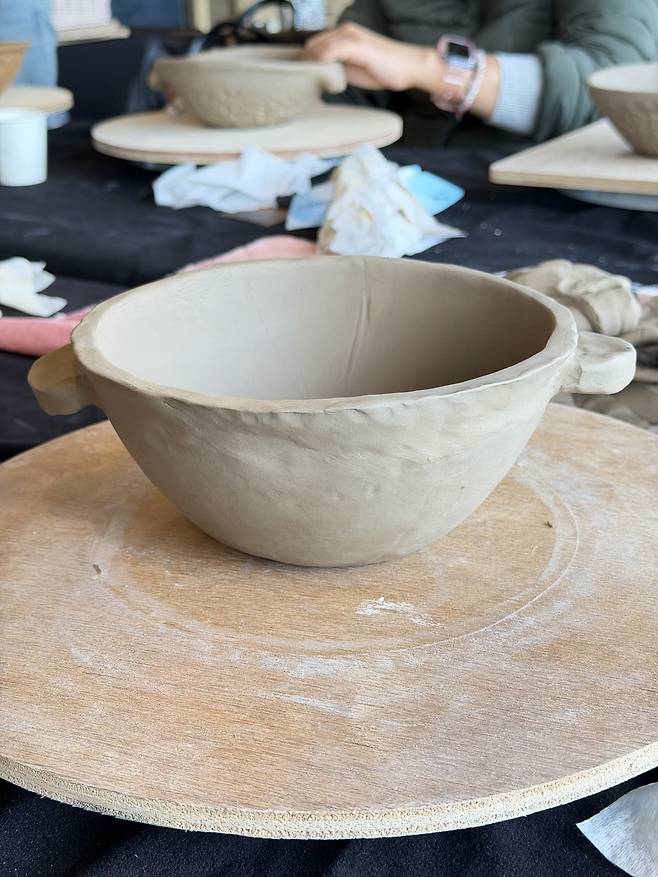
Near Sagye Beach in Seogwipo, the Noname Ceramic Studio offers one such experience.
The studio hosts pottery classes where visitors can create their own cups, plates or bowls. Surrounded by scenic sights such as Sanbangsan and Yongmeori Coast, the workshop provides a quiet, creative break during a Jeju itinerary.
Ceramic artist Ji Yeon-ju leads the class. Upon arrival, participants receive aprons, rolling pins and carving tools before choosing between white porcelain clay or earthy brown clay.
“When working with clay, you need to be very gentle,” Ji said. “If there are cracks, you should smooth them out carefully with your fingers. Otherwise, the bowl may crack during firing.”
Under her guidance, participants flatten the clay, shape it using molds, and decorate the surface with patterns or sculpted details.
At the end of the session, they carve their names into the base of the piece. The studio then fires the pottery and ships the finished work to participants about a month later.
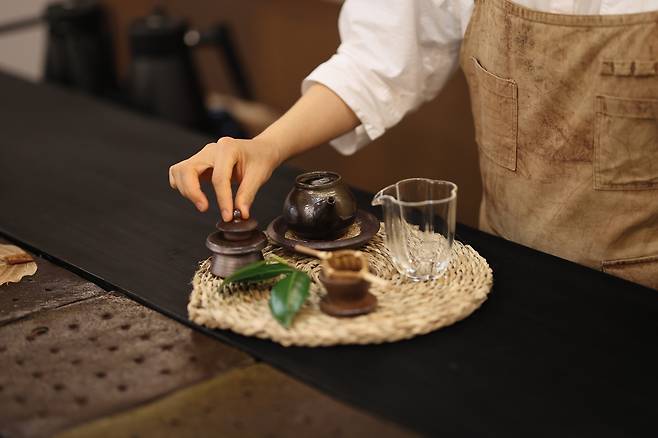
For travelers looking to slow down even more, their Jeju experience can culminate over tea.
At Hoesoodaok, a tea house, visitors are introduced to teas grown and crafted on the island.
The leaves come from a tea garden in Seongup-ri, Seogwipo, run by farmer Kim Maeng-chan, while the floral teas are produced using herbs and flowers cultivated by farmer Yang Soon-a in Jeju City.
Both farms rely on natural cultivation methods, avoiding pesticides and chemical fertilizers.
The tea house itself occupies a renovated family home that once hosted students from the now-closed Tamna University.
Guests can choose an omakase-style tea course. Over about an hour, five seasonal teas are served alongside small tea foods designed to complement each flavor.
Copyright © 코리아헤럴드. 무단전재 및 재배포 금지.