U.S. revives ‘overcapacity’ tariff probe, pressuring S. Korea key exports
The Office of the United States Trade Representative (USTR) has initiated an investigation under Section 301 of the U.S. Trade Act, a move widely seen as part of Washington’s effort to replace a temporary ten percent tariff imposed earlier under Section 122 of the same law.
Speaking Thursday, Trade Minister Yeo Han-koo said the current ten percent tariff imposed under Section 122 is a temporary measure lasting 150 days and could be replaced by Section 301 tariffs around mid-July.
The temporary tariff was introduced after the Donald Trump administration faced a U.S. Supreme Court ruling that found tariff collection under the International Emergency Economic Powers Act unlawful. In response, Washington applied the 10 percent tariff to all trading partners under Section 122.
Yeo said the Section 301 probe targets products that had previously been subject to tariffs of about 15 percent before the court ruling, adding that the measure is not aimed specifically at South Korea but is part of a broader investigation covering multiple countries.
Nevertheless, concerns remain that additional tariffs could hit South Korea’s core export sectors.
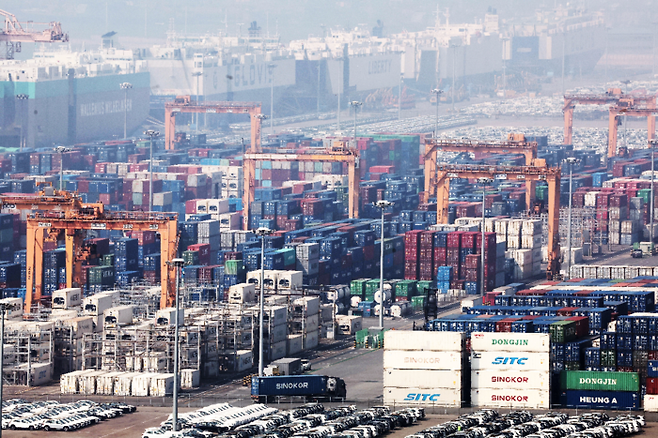
In announcing the probe, the USTR cited South Korea’s persistent trade surplus with the United States in sectors including electronics, automobiles and auto parts, machinery, steel and shipbuilding.
Automobiles generated the largest surplus last year at $27.7 billion, followed by semiconductors at $11.12 billion, general machinery at $9.11 billion, auto parts at $7.32 billion and computers at $4.84 billion.
If new sector-specific tariffs are imposed or existing rates are raised, these industries could face significant pressure.
Cheong In-kyo, a professor at Inha University, said the Section 301 investigation appears to be a step toward legitimizing tariffs after the invalidation of the earlier IEEPA-based measures.
“Section 301 tariffs technically have no ceiling, but the United States will likely apply rates similar to the existing reciprocal tariffs,” he said. “However, the situation could change if promised investments in the United States are not carried out.”
Although automobiles and steel already face tariffs under Section 232 of the U.S. Trade Expansion Act, experts say the new probe still carries risks.
Hur Jung, a professor at Sogang University, warned that Section 301 retaliation can extend beyond the specific sectors involved in trade disputes, allowing Washington to impose tariffs on unrelated products.
The South Korean government plans to limit potential damage by implementing existing bilateral investment agreements with the United States.
Speedy execution of planned investments in the U.S. could become key leverage in managing the investigation, officials said.
Potential projects under consideration for U.S. investment include nuclear power plants, LNG export terminals, shale gas production facilities and electricity grids in the energy sector.
Government officials from both countries are currently sharing lists of preferred investment projects and coordinating details.
Yeo also warned that tariffs could rise further if countries under investigation fail to honor previously agreed commitments.
South Korea’s trade ministry said it will actively engage in the investigation process and submit opinions to the U.S. authorities.
The USTR will begin accepting written comments and applications for public hearing participation through March 17. Written submissions will close April 15, with a public hearing scheduled for May 5.
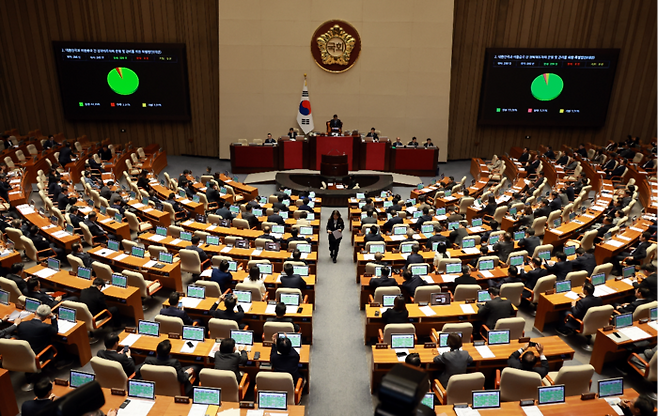
The law calls for the establishment of the Korea-U.S. Strategic Investment Corporation to oversee such investments, with government capital of 2 trillion won ($1.36 billion) and a three-member board including the chief executive.
President Lee Jae-myung said on social media platform X that the legislation demonstrated bipartisan cooperation in addressing a national priority, adding that the two countries will strengthen collaboration in strategic sectors including shipbuilding and energy.
Copyright © 매일경제 & mk.co.kr. 무단 전재, 재배포 및 AI학습 이용 금지
- “엄마아빠 노후를 내가 왜 책임져?”…확 바뀐 ‘부모 부양’ 인식 - 매일경제
- “이 숫자 보면 확실! 한국증시 거품 안보이나”…월가에서 터져나온 경고 왜 - 매일경제
- “오늘만큼은 삼전닉스 안부럽네요”…네 마녀의 날도 버틴 중소형주 - 매일경제
- “한숟갈 넣자마자 할머니 손맛이”…해외서 눈치챈 K조미료 비밀 - 매일경제
- “내가 주식을 잘하는 줄 알았다”…급등락 맛 본 개미들, ETF로 대거 피신 - 매일경제
- 서울-김포 직장인 골병 든다는 ‘골드라인’…5호선 연장으로 혈 뚫리나 - 매일경제
- “美 원전 르네상스 뜬다”…두산에너빌리티·한전기술 수혜 - 매일경제
- [기자24시] 삼성전자 노조의 과한 욕심 - 매일경제
- “이란戰에 물가 심상치않아, 이러다 스태그플레이션”…노벨상 경제학자의 경고 - 매일경제
- “도미니카, 붙어보자!” 류현진, 8강전 선발 투수 낙점 [MK현장] - MK스포츠