Why Korean memory giants aren't rushing to expand DRAM supply
전체 맥락을 이해하기 위해서는 본문 보기를 권장합니다.
"The factories are not standing still," Tseng said. "They are just scaling far more slowly than the demand chasing them."
Sui said the current squeeze reflects both forces. The shortage is "largely due to real capacity limits from the AI booming demand on HBM chipsets," she told The Korea Herald, adding that "a rational profit strategy also plays a role."
이 글자크기로 변경됩니다.
(예시) 가장 빠른 뉴스가 있고 다양한 정보, 쌍방향 소통이 숨쉬는 다음뉴스를 만나보세요. 다음뉴스는 국내외 주요이슈와 실시간 속보, 문화생활 및 다양한 분야의 뉴스를 입체적으로 전달하고 있습니다.
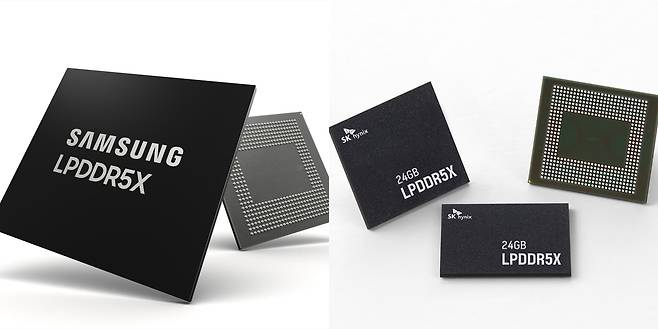
The world suddenly cannot get enough memory chips.
Artificial intelligence data centers are consuming unprecedented volumes of DRAM, pushing prices higher and squeezing supply for everything from smartphones to laptops. The two companies at the center of that boom, Samsung Electronics and SK hynix, earned more than 72.1 trillion won ($48.7 billion) in operating profit last year.
And yet the shortage continues.
The question seems obvious. If demand is booming and profits are soaring, why not simply produce more chips?
The answer lies in two places at once. Part of it is that they cannot, at least not quickly. The other part is that after a brutal industry crash just two years ago, they are treading cautiously.
Start with the "cannot": Building a semiconductor fab takes roughly three years, and one cannot speed up the physics of concrete, clean rooms and tool installation just because customers are desperate. Even inside existing factories, converting a production line to a newer chip design means months of reconfiguring equipment and waiting for yields to stabilize. Output can actually dip before it climbs.
On top of that, the math is lopsided. Clark Tseng, senior director of market intelligence at SEMI, the global semiconductor industry association, said worldwide DRAM production capacity will grow only about 4.8 percent annually through 2030. Compare that with the roughly 38 percent annual growth in AI infrastructure spending expected from the four largest cloud providers through 2028, he noted.
“The factories are not standing still,” Tseng said. “They are just scaling far more slowly than the demand chasing them.”
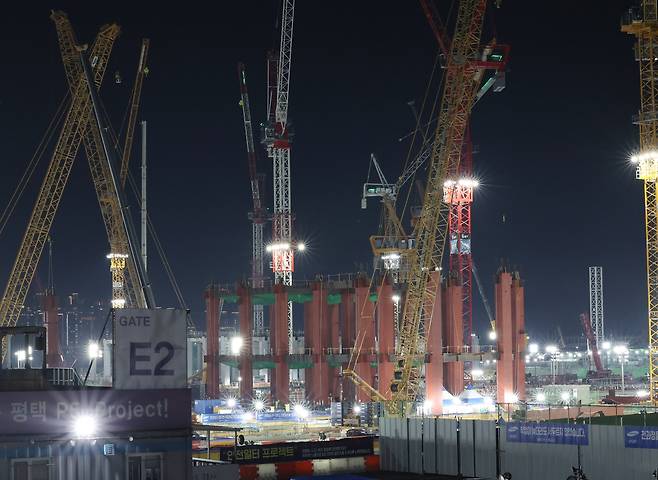
What makes the gap feel even wider is where the new capacity is going. Samsung is reportedly adding DRAM lines at a plant in Pyeongtaek, Gyeonggi Province, which could process up to 120,000 extra wafers a month by early 2027 -- a meaningful bump against an estimated monthly total of around 660,000. But those lines are aimed at HBM4, the next generation of high-bandwidth memory for AI accelerators, not the DDR5 commonly used in laptops.
The company has also restarted the construction of a nearby megafab, but that project is years from producing chips.
An industry official said that both Korean chipmakers are running every available factory at full capacity, and that real relief depends on entirely new facilities that simply take time.
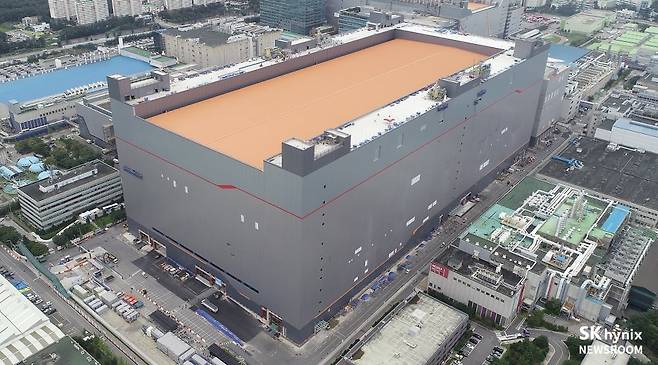
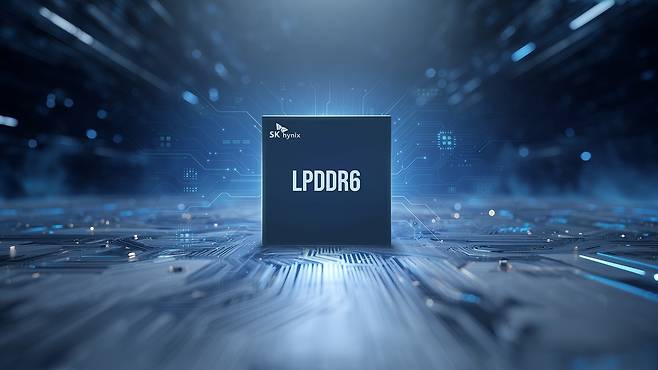
SK hynix has been even more explicit about its own priorities. Executives described a "dual-track" strategy: expanding capacity on its 1b process at the new M15X facility in Cheongju, North Chungcheong Province, to serve HBM demand, while converting older lines at M16 in Icheon to the newer 1c process.
But the 1c push is not about commodity chips. The company has tied it to higher-value products like server DDR5 and GDDR7 graphics memory -- segments where margins are far stronger than standard mobile or PC DRAM. So even outside HBM, new capacity is being steered toward premium customers.
Linda Sui, founder and principal analyst at Smart Analytics Global and a veteran of more than 20 years tracking the device industry at TechInsights and Strategy Analytics, estimates that SK hynix allocated over 20 percent of its DRAM capacity to HBM in 2025, with Samsung at a comparable level. Both ratios, she said, are climbing further this year.
That is where the "will not" begins.
In 2023, Samsung's semiconductors division and SK hynix lost a combined 22 trillion won after pandemic-era overproduction collided with collapsing demand. The lesson was as expensive as it was recent: Capacity that arrives at the wrong moment can destroy margins just as fast as scarcity creates them.
Sui said the current squeeze reflects both forces. The shortage is "largely due to real capacity limits from the AI booming demand on HBM chipsets," she told The Korea Herald, adding that "a rational profit strategy also plays a role."
Timing is the critical risk. "A more aggressive expansion of let's say, 15 to 20 percent might not immediately crash prices in today's constrained market," Sui said. The real danger is what happens later. "If manufacturers aggressively expand manufacture capacity right now, they might face an oversupply scenario in 2028," she warned, as AI spending begins to normalize.
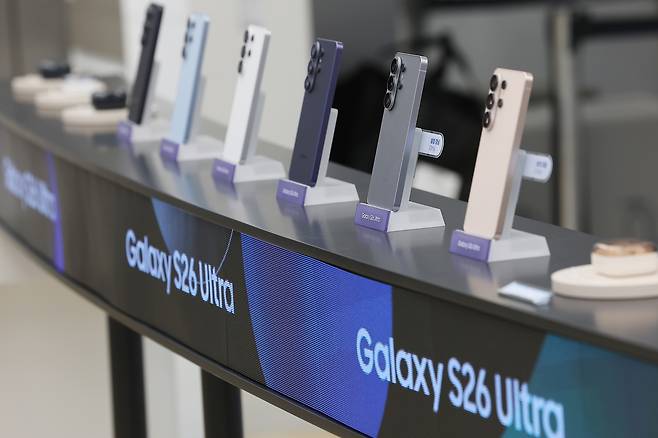
Meanwhile, the downstream toll is spreading. Qualcomm CEO Cristiano Amon said in February that "industrywide memory shortage and price increases are likely to define the overall scale of the handset industry" this year. IDC now expects global smartphone shipments to fall 12.9 percent in 2026 and PC shipments 11.3 percent, even as revenues hold up better because higher memory costs are lifting average selling prices. Samsung reportedly doubled its commodity DRAM contract prices in the first quarter alone.
Samsung Electronics and SK hynix declined to comment on their production plans.
Sui expects the market to reach a new equilibrium by late 2027. Until then, Korea's memory giants are expanding under two constraints at once: the physical reality that new capacity takes time, and the hard-learned conviction that not every shortage is a reason to flood the market.
Copyright © 코리아헤럴드. 무단전재 및 재배포 금지.