Korea to introduce clawback rules targeting financial executives
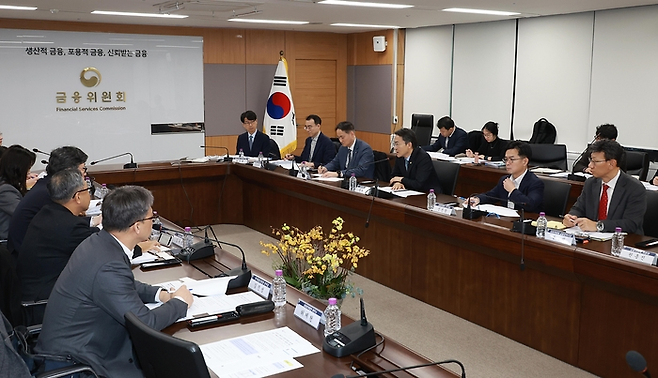
According to the financial industry on Wednesday, a task force formed by the Financial Services Commission to advance governance reforms for financial institutions plans to include stronger accountability measures for current and former executives in its upcoming governance reform proposal.
Clawbacks would be triggered when products overseen by an executive generate losses large enough to require revisions to a company’s financial statements or when illegal conduct occurs during the sales process.
In such cases, incentive pay linked to the product’s sales performance could be reclaimed from the responsible executive.
The regulator also plans to tighten rules on how incentive pay is distributed.
Current provisions only require bonuses to be paid over at least 3 years, allowing some financial companies to pay more than 90 percent in the first year. The revised rules would require payments to be spread evenly over a fixed period. Deferring payouts would allow companies to suspend remaining installments if losses or legal issues emerge later, strengthening the effectiveness of clawbacks.
The FSC said the system would also apply to former executives.
“Existing provisions at financial firms have been limited to internal rules, preventing companies from reclaiming pay after an executive leaves,” said an official. “Formal adoption of a clawback regime would create a legal basis to recover incentive pay from former executives.”
Industry officials, however, warn that disputes over the size of recoverable compensation could increase.
Securities firms generally tie incentives to clearly defined deals such as project financing or mergers and acquisitions. Banks, however, rely more heavily on broader performance evaluations, making it harder to determine how much a specific product contributed to an executive’s compensation.
Questions have also been raised about enforcement if former executives have already spent their payouts. Authorities are reportedly reviewing options such as requiring incentive pay to be held in dedicated trust accounts.
A say-on-pay mechanism requiring shareholder approval of individual executive compensation is also under review.
Currently, shareholder meetings approve only the overall compensation cap for directors. The proposal would extend approval to pay packages for individual executives.
The reforms are also expected to expand disclosure of executive compensation.
Financial firms currently disclose pay in aggregate by category, such as registered directors, outside directors and audit committee members, rather than by individual executives. Individual disclosure is required only for executives earning at least 500 million won ($337,883), and the top five highest-paid executives and employees.
Authorities plan to widen the scope of individual disclosures so shareholders can better assess whether performance-based pay is justified. The disclosure requirement, which currently applies only to companies required to file business reports, would also be extended to all financial firms subject to financial sector governance rules.
Meanwhile, proposals to impose term limits on outside directors, including a single 3-year term, are not expected to be included in the reform package. Task force members reportedly agreed that setting fixed limits could unduly restrict corporate autonomy.
Other ideas, such as requiring outside directors with expertise in information technology security or consumer protection, or allowing the National Pension Service to recommend outside directors, are also unlikely to be mandated.
For financial holding companies, the reforms would tighten approval requirements for chairmen seeking additional terms.
Instead of a simple majority vote at shareholder meetings, the proposal would require support from two-thirds of attending shareholders for a second term and three-quarters for a third term.
Copyright © 매일경제 & mk.co.kr. 무단 전재, 재배포 및 AI학습 이용 금지
- “빈소 없애고 3일장 안 해요”…고인의 마지막길, 추모도 조용해진다 - 매일경제
- [속보] 미국, 한국 대상 ‘무역 301조’ 조사 착수…“과잉생산·무역장벽 들여다볼 것” - 매일경
- 1400만원까지 뛸 수 있다고?…인류의 ‘보물’ 금의 역사 [어쩌다 금속 이야기] - 매일경제
- “변호사 필요없어요”...채팅 성희롱 고소당한 대학생, GPT 켜고 경찰 조사 - 매일경제
- 하버드 돌연 자퇴한 천재훈남…2년뒤 ‘10억달러 CEO’로 컴백 - 매일경제
- 無빈소·無염습·無형식 … 조용히 퍼지는 '조용한 추모' - 매일경제
- 분리과세로 세금 깎아준다더니 … 건보료가 개인 투자 발목잡나 - 매일경제
- “월 220만원 들지만 마음은 편해요”…고급 호텔들 앞다퉈 선보이는 ‘이것’ - 매일경제
- “공격할 곳이 거의 남아 있지 않다”…이란 전쟁 곧 끝난다는 트럼프 - 매일경제
- 한국, 8강 상대 윤곽 드러났다...도미니카 vs 베네수엘라 D조 최종전 승자와 대결 예정 [WBC] - MK스