Foreign investors pile into Kosdaq as market dynamics shift
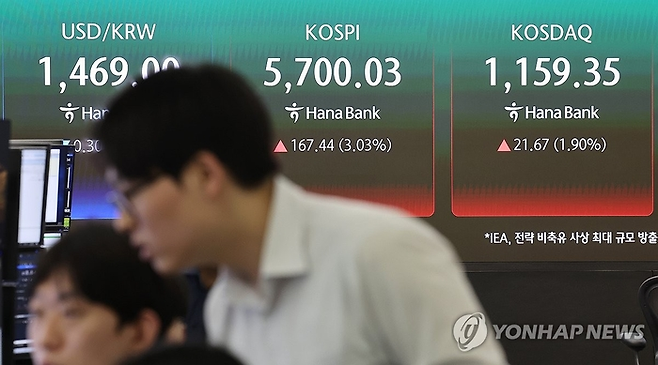
Global funds have flowed steadily into the Kosdaq this year, and the share of trading by foreign investors has risen rapidly in recent weeks, signaling a shift in the supply-demand dynamics of the tech-heavy market.
According to the Korea Exchange on Wednesday, foreign investors accounted for 26.87 percent of total Kosdaq trading value this month as of the day, up five percentage points from 21.87 percent recorded in the previous month.
The figure stood at just 17.04 percent in March last year and around 13 percent in 2024. During the early stages of the COVID-19 pandemic in 2020, the share hovered at roughly 10 percent, but it has recently climbed close to 30 percent, highlighting the growing influence of foreign investors.
As foreign participation expands, the share of trading by retail investors has been declining. Retail investors accounted for 70.99 percent of Kosdaq trading value in January, but the figure fell to 69.1 percent last month and further to 62.12 percent this month.
Foreign investors have also been net buyers of Kosdaq stocks every month this year, increasing their holdings in the market.
They purchased a net 525 billion won worth of Kosdaq shares in January, followed by net buying of more than 1.2 trillion won in both February and March.
The proportion of Kosdaq shares held by foreign investors has also been rising since the government began rolling out policies to revitalize the market in December last year. As of Monday, foreign ownership reached 5.57 percent.
Foreign ownership in the Kosdaq had previously declined for an extended period, falling to 3.73 percent in 2024 when the previous administration launched its “value-up” program. The recent rise suggests a clear shift in foreign investors’ perception of the market.
Historically, the Kosdaq has been seen as structurally difficult for foreign investors to enter due to wide differences in liquidity across stocks and a market structure dominated by retail investors, which tends to amplify volatility.
Large institutional funds often found it difficult to deploy and withdraw sizable capital efficiently. In addition, uncertainties surrounding earnings visibility, disclosure reliability and corporate governance have often been cited as risks compared with large-cap Kospi companies.
The limited impact of inclusion in major global indices — which typically drives passive fund inflows — has also meant that foreign investors tended to focus on select individual stocks rather than the Kosdaq market as a whole.
Against this backdrop, the simultaneous rise in foreign trading activity and ownership suggests more than a short-term shift in market liquidity. Analysts say it may indicate a gradual change in global investors’ perception of the Kosdaq.
Confidence in the South Korean government’s capital market reform policies is also encouraging global funds to move into the Kosdaq.
After achieving the symbolic “Kospi 5000” milestone, the government has set revitalizing the Kosdaq market as its next policy objective. Financial authorities have also moved to strengthen market integrity, announcing measures in December last year to enhance trust and innovation in the Kosdaq and unveiling new delisting rules aimed at removing poorly performing companies this year.
Kim Hak-kyun, head of research at Shinyoung Securities, said both domestic and foreign investors are increasingly feeling the impact of policy changes.
“As confidence in policy effectiveness spreads, funds are moving accordingly,” he said. “After the Kospi rally, expectations are forming that the next opportunity will be in the Kosdaq, and foreign brokerage houses are increasingly promoting Kosdaq stocks to global investors.”
Copyright © 매일경제 & mk.co.kr. 무단 전재, 재배포 및 AI학습 이용 금지
- “빈소 없애고 3일장 안 해요”…고인의 마지막길, 추모도 조용해진다 - 매일경제
- [속보] 미국, 한국 대상 ‘무역 301조’ 조사 착수…“과잉생산·무역장벽 들여다볼 것” - 매일경
- 1400만원까지 뛸 수 있다고?…인류의 ‘보물’ 금의 역사 [어쩌다 금속 이야기] - 매일경제
- “변호사 필요없어요”...채팅 성희롱 고소당한 대학생, GPT 켜고 경찰 조사 - 매일경제
- 하버드 돌연 자퇴한 천재훈남…2년뒤 ‘10억달러 CEO’로 컴백 - 매일경제
- 無빈소·無염습·無형식 … 조용히 퍼지는 '조용한 추모' - 매일경제
- 분리과세로 세금 깎아준다더니 … 건보료가 개인 투자 발목잡나 - 매일경제
- “월 220만원 들지만 마음은 편해요”…고급 호텔들 앞다퉈 선보이는 ‘이것’ - 매일경제
- “공격할 곳이 거의 남아 있지 않다”…이란 전쟁 곧 끝난다는 트럼프 - 매일경제
- 한국, 8강 상대 윤곽 드러났다...도미니카 vs 베네수엘라 D조 최종전 승자와 대결 예정 [WBC] - MK스