Korea moves to ban deepfake use in education superintendent elections
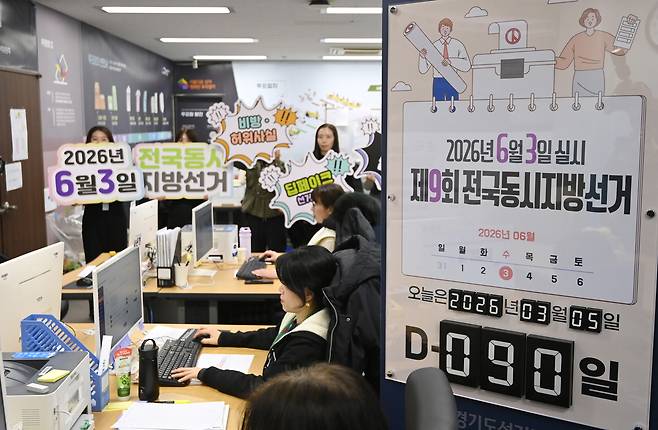
South Korea is moving to ban the use of deepfake content in the upcoming regional education superintendent elections slated for June 3, 2026.
According to the National Assembly’s legislation information system, a bill to amend the Act on Local Education Autonomy passed the Education Committee’s bill review subcommittee on Feb. 26.
The bill seeks to apply deepfake regulations under the Public Official Election Act to local superintendent elections, and was first introduced by Rep. Kim Moon-soo of the Democratic Party of Korea in November 2025.
An amendment to the election law banning the production, editing and use of AI-generated content within 90 days of an election was passed in December 2023 amid growing concerns over the potential impact of deepfakes in spreading misinformation during elections. The law also stipulates that candidates must clearly label deepfake content as AI-generated if it is used before the 90-day preelection period.
Violations of the regulation can result in up to seven years in prison or a fine of between 10 million won and 50 million won ($6,700 and $33,700).
The law currently only applies to presidential, legislative, mayoral and local council elections, limiting the legal grounds for extending these regulations to local education superintendent elections.
“There is concern that the lack of regulation on the use of deepfake content in local education superintendent elections may negatively affect the fairness of the elections,” said Choi Seon-yeong, the National Assembly’s Education Committee chief of staff.
Experts expect the bill to move quickly through the legislative process ahead of the June 3 elections, especially after the National Election Commission and police said they would strengthen crackdowns on deepfake use and the spread of misinformation.
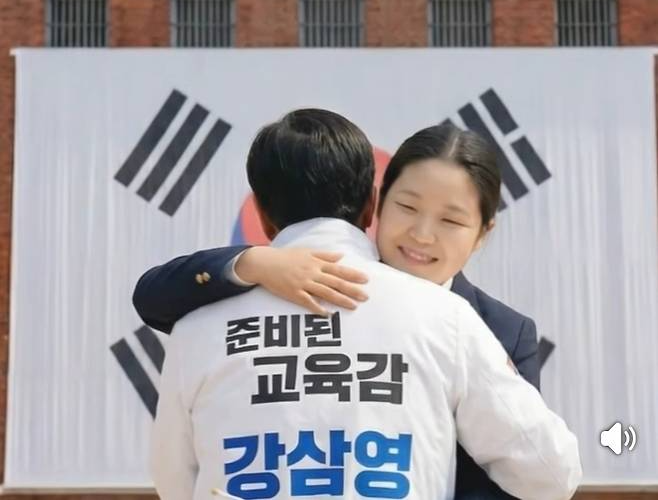
Concerns over the use of deepfakes in education superintendent elections resurfaced last week, when Kang Sam-young, a candidate in the race for Gangwon Province education superintendent, posted an AI-generated video on Facebook.
The video depicted independence activist Yu Gwan-sun embracing Kang in front of what appears to be Seodaemun Prison, a former Japanese colonial-era prison used to detain Korean independence fighters. In the altered video, Yu — who died at age 17 after being tortured by Japanese authorities — appears wearing a modern school uniform as she embraces Kang and pats him on the back. The video was posted to mark the March 1 Independence Movement, in which Yu played a key role.
Kang deleted the video after it drew backlash from education circles. He apologized, saying the post had been uploaded by someone on his campaign team and that he had no prior knowledge of its contents.
Copyright © 코리아헤럴드. 무단전재 및 재배포 금지.