Food prices may rise again as Iran tensions rattle supply chains
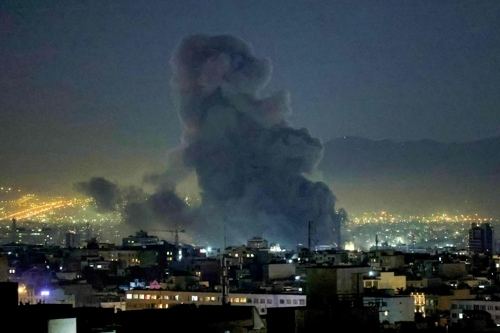
Industry officials said on Tuesday that major domestic retailers are closely monitoring developments in the region, amid growing fears that Iran could move to block the Strait of Hormuz, a key artery for global oil shipments. Such a move could trigger a spike in crude oil prices and renewed volatility in the won-dollar exchange rate, adding to cost pressures across industries.
Roughly 20 percent of the world’s seaborne crude oil passes through the Strait of Hormuz, making it one of the most strategically vital shipping routes. A closure would likely deliver a significant shock to South Korea’s distribution and manufacturing sectors.
Food companies are particularly vulnerable, as they rely heavily on imports of key raw materials such as wheat and raw sugar. A surge in oil prices and the exchange rate would directly lift import costs, squeezing profit margins and heightening overall financial strain.
Tensions escalated further after Iran’s Islamic Revolutionary Guard Corps warned of possible attacks on vessels attempting to transit the strait. According to Reuters, a senior IRGC official said via Iran’s semi-official ISNA news agency that the strait had been closed, adding that forces would target ships seeking passage.
Oil markets reacted sharply. On Sunday (local time), West Texas Intermediate crude for April delivery settled at $71.23 per barrel on the New York Mercantile Exchange, up 6.3 percent from the previous session. Prices briefly surged to $75.33, marking a 12 percent intraday jump — the highest level since June last year.
On the same day, Brent crude futures for May delivery on the Intercontinental Exchange in London climbed as high as $82.37 per barrel, up 13 percent intraday. They closed at $77.74, up 6.7 percent from the previous trading day.
With geopolitical risks spreading into domestic inflation and broader industry, policymakers face mounting pressure to maintain price stability. Officials say efforts to diversify crude oil imports and reduce dependence on the Middle East may help cushion short-term shocks, though prolonged instability would inevitably weigh on the economy.
A food industry official said, “While the government is maintaining its price stabilization stance, the burden has grown considerably amid rising concerns that instability in the Middle East could be prolonged. If raw material prices and exchange-rate volatility expand simultaneously, it will be difficult for companies to manage costs.”
Some analysts, however, say the short-term impact may remain limited as the government is taking parallel countermeasures. Efforts to diversify supply chains and reduce dependence on the Middle East are also gaining traction.
Another industry official said, “The government is moving preemptively, including by seeking alternative crude oil supplies from regions outside the Middle East, so the likelihood of an immediate severe shock is limited. However, if the situation drags on, the impact will be unavoidable.”
Copyright © 매일경제 & mk.co.kr. 무단 전재, 재배포 및 AI학습 이용 금지
- [속보] 외신 “이란 차기 최고지도자로 하메네이 차남 선출” - 매일경제
- 오늘의 운세 2026년 3월 4일 水(음력 1월 16일) - 매일경제
- [속보] 경찰 “강북 모텔 연쇄살인 피의자, 싸이코패스로 판명” - 매일경제
- [속보] 코스피 매도 사이드카 발동…코스피200선물 5% 급락 - 매일경제
- ‘요격률 90%’ 천궁-II, 이란 미사일 요격…국산 방공무기 첫 실전 등판 - 매일경제
- “나라가 망할 판, 현금은 무용지물”...미·이스라엘 공습에 이란 코인 거래량 폭증 - 매일경제
- “강선우에게 딸 보살필 기회 주는 게 법의 눈물”…선처 호소한 박지원 - 매일경제
- 유조선 10척 그대로 불탔다...이란 폭격에 호르무즈 해협 ‘완전 봉쇄’ - 매일경제
- “2000가구 대단지에 30평 전세가 없어요”…사라진 서울 전세 - 매일경제
- “경계해야 할 타자”…‘2G 연속 홈런’ 김도영에 日 매체도 주목 - MK스포츠