Hyundai Motor union rejects Atlas robot deployment without labor agreement
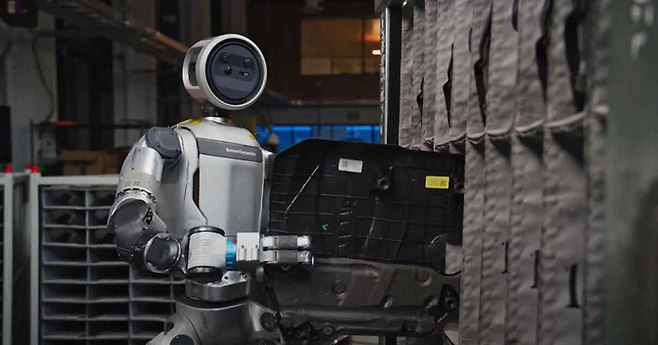
According to the union Thursday, the Hyundai Motor branch of the Korean Metal Workers’ Union said the introduction of AI-based humanoid robots would be impossible without union consent. The stance follows Hyundai Motor Group’s unveiling of its next-generation electric humanoid robot Atlas at CES 2026 in Las Vegas earlier this month.
In a statement, the union said it would “never tolerate unilateral action without labor agreement,” arguing that robot deployment could have significant implications for jobs and overall labor structures. Hyundai Motor Group has said Atlas is slated for eventual use at its production facilities and that it plans to establish a robot foundry plant in the United States by 2028 to enable mass production.
The union warned that robot adoption would inevitably lead to job reductions and workforce transitions. It also cited overseas production expansion as a growing source of conflict, claiming that reduced domestic output is linked to capacity expansion at Hyundai Motor Group Metaplant America in Georgia.
“If AI robot deployment and overseas production expansion proceed simultaneously, the domestic employment base could weaken further,” the union said, stressing that “not a single robot can enter production sites without labor agreement.”
From an investor perspective, analysts point to the potential cost benefits of automation. According to brokerage estimates, labor costs at Hyundai Motor Group’s core affiliates average 130 million won ($89,000) per employee annually, while annual maintenance costs for a humanoid robot are estimated at 14 million won per unit. Kim Gwi-yeon, an analyst at Daishin Securities, said replacing just 10 percent of production workers with humanoid robots could improve annual profits by 1.7 trillion won, citing longer operating hours and lower fixed costs.
Behind the union’s sensitivity to new technology adoption lie broader anxieties over workforce replacement and aging. On Thursday, the Kia Motors branch of the Korean Metal Workers’ Union said it faces a 2.8 billion won wage shortfall for full-time union officials as retirements outpace new hiring, a situation that could spread to other companies as union membership declines.
Copyright © 매일경제 & mk.co.kr. 무단 전재, 재배포 및 AI학습 이용 금지
- “로봇 한 대도 못 들어온다”…현대차 노조, ‘아틀라스’ 현장 투입에 결사반대 - 매일경제
- [단독] “직장에선 잘 참다가 집에 오면 폭발”…병인줄도 모르고 사는 지독한 병 [심층기획, 아
- “교통비 등 월 23만원 파격 할인에 아저씨들도 우르르”…무슨 카드길래 - 매일경제
- “아파트만 집인가”…규제로 막히자 주택수요 여기로 우르르 - 매일경제
- [단독] 이 대통령 만난 코스피5000특위…‘디지털자산 활용한 코스닥3000 달성’ 제안 - 매일경제
- 한 돈 100만원 찍은 금값…“여윳돈 생길 때마다 계속 금 사모은다” - 매일경제
- 극도로 보수적이던 이 남자, 갑자기 마음 바뀌었다…AI 전쟁에 애플 ‘가세’ - 매일경제
- 3년반만 걸려 3000선, 4개월만에 4000선…가팔라지는 코스피 상승세, 6000도? - 매일경제
- “야쿠르트 아줌마 아닌 영웅입니다”...고독사 노인 마지막 길 지켜준 60대 여성 - 매일경제
- “뭔가 서류를 잊은 거 같다” 이정후, LA 공항에서 구금됐다 풀려났다 - MK스포츠