Korea’s consumer sentiment improves in Jan. on robust stock market, exports
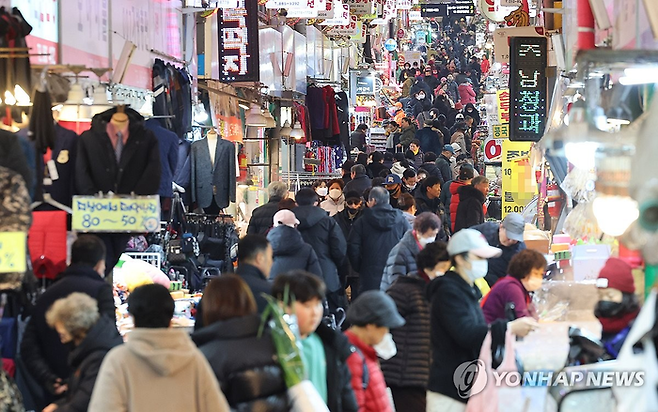
According to data released by the Bank of Korea on Friday, the country’s composite consumer sentiment index (CCSI) stood at 110.8 in January, up 1 point from 109.8 in December 2025.
The index jumped 2.7 points in November last year, influenced by the conclusion of tariff negotiations and a third-quarter growth rate that exceeded market expectations, before falling 2.5 points in December.
It then rebounded slightly after one month.
The CCSI factors in six major individual indices – current living conditions, prospective living conditions, prospective household income, prospective household spending, current economic conditions, and prospective economic conditions.
A reading above 100 means that people are more optimistic than pessimistic about the economy while vice versa for a reading below 100.
Compared with December, the sub-index of prospective economic conditions posted the largest increase among the six indices, rising 2 points to 98.
The index of prospective household spending gained 1 point to 111, while that of current economic conditions rose 1 point to 90, and current living conditions 1 point to 96.
Prospective household income and prospective living conditions remained unchanged at 103 and 100, respectively.
“The index of prospective economic conditions rose by 2 points due to expectations of continued export growth and government economic growth strategies, while the current living conditions index increased by 1 point amid rising stock prices and a recovery in consumption,” said Lee Hye-young, head of the BOK‘s economic sentiment survey team.
Prospective housing prices index also climbed 3 points to 124, indicating a growing share of consumers expecting home prices to rise over the next year.
“This is the highest level since 125 in October 2021,” Lee noted. “It also remains above the long-term average of 107, suggesting that expectations for rising housing prices are still strong.”
The prospective interest rates index, which reflects expectations for interest rates six months ahead, rose 2 points to 104 in January, influenced by higher market interest rates and weakening expectations for a policy rate cut.
Expected inflation for the following year remained unchanged from the previous month at 2.6 percent.
Copyright © 매일경제 & mk.co.kr. 무단 전재, 재배포 및 AI학습 이용 금지
- “로봇 한 대도 못 들어온다”…현대차 노조, ‘아틀라스’ 현장 투입에 결사반대 - 매일경제
- [단독] 이 대통령 만난 코스피5000특위…‘디지털자산 활용한 코스닥3000 달성’ 제안 - 매일경제
- "로봇 1대도 현장투입 안돼" 아틀라스 거부한 현대차 노조 - 매일경제
- “1주택자 보호하겠다”…이 대통령 발언에 ‘다주택자’ 셈법 복잡해지나 - 매일경제
- 한 돈 100만원 찍은 금값…“여윳돈 생길 때마다 계속 금 사모은다” - 매일경제
- 은행자금 증시로 대이동…‘개미 빚투’ 29조 사상 최대 - 매일경제
- “삼성전자 아직도 저평가…올해 ‘20만 전자’ 간다” - 매일경제
- [단독] “1·2세대 실손 웃돈주고 사라”…재매입 제도 학을 떼는 보험사들 - 매일경제
- 트럼프가 조롱하더니…마크롱 ‘탑건’ 선글라스 ‘대박났네’ - 매일경제
- “뭔가 서류를 잊은 거 같다” 이정후, LA 공항에서 구금됐다 풀려났다 - MK스포츠