K-pop agencies fight malicious comments — why it’s not enough

In recent weeks, South Korea’s major entertainment agencies have taken increasingly visible steps to confront malicious comments and the spread of misinformation targeting their artists.
On Tuesday, SM Entertainment publicly identified X accounts accused of repeatedly posting malicious comments and false claims regarding its artists through its official X account. The agency said the move followed repeated incidents of defamation, harassment and false information that caused psychological harm to its artists, adding that criminal complaints had already been filed and that further cases across multiple platforms would be pursued without leniency.
Also, earlier this month, Hybe and its subsidiary label Belift Lab disclosed that they had tracked overseas IP addresses and initiated legal proceedings against a malicious overseas poster accused of uploading defamatory content about its artists. Since the individual was based overseas, Hybe pursued the case through foreign legal channels, an uncommon move for a Korean entertainment agency.
These recent moves reflect a broader industry shift away from the long-held notion that celebrities must simply endure malicious comments as the price of fame. Agencies are increasingly demonstrating that they are willing to escalate matters, whether that is through naming accounts, pursuing international cooperation, or committing significant legal resources.
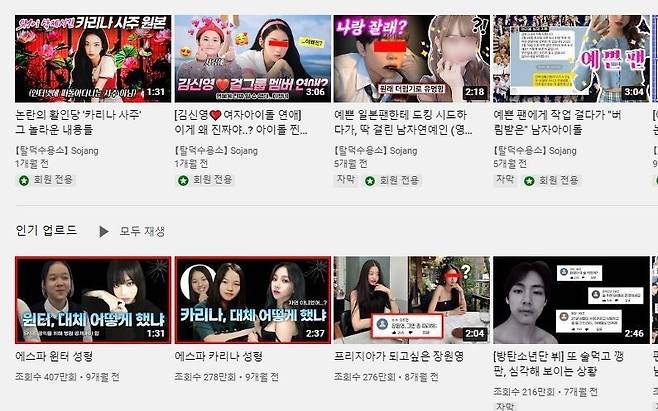
A frequently cited turning point came in 2024, when Starship Entertainment filed a lawsuit against the YouTube channel Sojang, which had repeatedly uploaded false and defamatory content targeting major celebrities, including Jang Wonyoung, a member of girl group Ive.
While legal action against malicious content creators was not unprecedented, the scale and persistence of Starship’s response drew attention across the industry. The company sought cooperation from Google headquarters to obtain account-related information and pursued the case through multiple legal avenues, signaling a level of determination that was rarely seen in similar disputes before.
Within the industry, the case is widely regarded as a benchmark — not because it resolved the problem, but because it demonstrated how far an agency could go when protecting an artist became a legal priority rather than a symbolic gesture.
Limits to legal action
Still, industry observers caution that even the most determined legal responses face inherent structural limits.
“Legal action is reactive, since lawsuits, investigations and court rulings can only begin after harmful content has already been created, shared and consumed,” said an industry official on the condition of anonymity. “By the time an agency mobilizes a legal response team, it’s almost too late, as the damage has already occurred. Agencies almost have no choice but to act in a form of damage control rather than true prevention.”
Another major constraint lies outside agencies’ jurisdiction — social media platforms with their headquarters based outside of Korea, such as YouTube and X.
“While agencies can document harmful posts and file complaints, the platforms on which such content circulates may be based overseas. Social media platforms cannot delete malicious content just because they are asked to. They have to go through their own form of review process — and this process alone can last for days, even weeks,” said entertainment lawyer Chong Kyong-sok of Liwu Law Group.
Chong added that filing suits against malicious posters based overseas takes even longer.
“To obtain data about a malicious poster, legal representatives must gather data based on their posts and clearly explain why the content is malicious or defamatory. Gathering such data alone and filing it takes months,” Chong explained.
While containing malicious comments and the spread of false information entirely is impossible, Chong added that assertive action against such posters is key.
“Sustained pressure (against malicious posters) is important and serves several purposes. It deters repeat offenders but also sends a clear message that harmful content will not be ignored. It also reassures artists and fans that their concerns are and will be taken seriously, even if the process behind it looks slow,” said Chong. “For such measures to be even more effective, agencies should work toward establishing a flexible response guideline against malicious content that can be tweaked according to each artist’s needs to ensure a more consistent and coordinated approach across the industry.”
Copyright © 코리아헤럴드. 무단전재 및 재배포 금지.