Seoul says it is reviewing Trump’s Board of Peace proposal
전체 맥락을 이해하기 위해서는 본문 보기를 권장합니다.
Trump initially pitched the Board of Peace as a mechanism to help end the Israel–Hamas war in Gaza and oversee postwar reconstruction, as part of his 20-point "Comprehensive Plan to End the Gaza Conflict."
The proposed charter does not mention the Palestinian territory and instead defines the Board of Peace as "an international organization that seeks to promote stability, restore dependable and lawful governance, and secure enduring peace in areas affected or threatened by conflict."
이 글자크기로 변경됩니다.
(예시) 가장 빠른 뉴스가 있고 다양한 정보, 쌍방향 소통이 숨쉬는 다음뉴스를 만나보세요. 다음뉴스는 국내외 주요이슈와 실시간 속보, 문화생활 및 다양한 분야의 뉴스를 입체적으로 전달하고 있습니다.
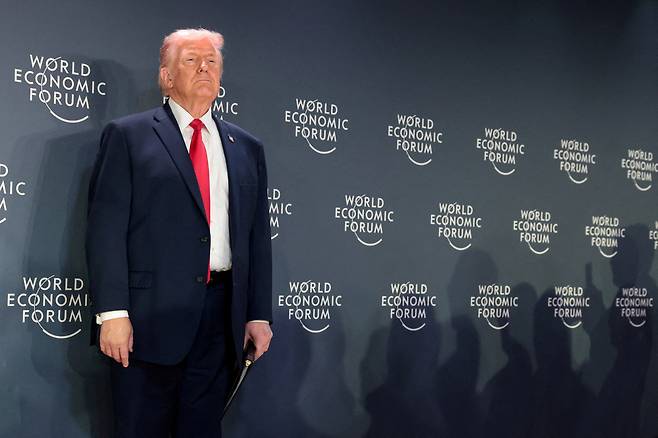
South Korea is reviewing whether to join the Board of Peace proposed by US President Donald Trump, the Foreign Ministry said Thursday.
Trump has invited South Korea, among dozens of countries, to join his Board of Peace initiative aimed at resolving global conflicts, particularly the war in Gaza.
“With regard to the US proposal for South Korea to join the Board of Peace, our government is currently reviewing the matter, taking into consideration a range of factors, including the committee’s potential contribution to peace and stability and the role that South Korea could play,” Deputy Foreign Ministry Spokesperson Lee Moon-bae said during a regular briefing.
The comments came in response to a report by the local media outlet, which said the South Korean government “has been actively considering joining the Board of Peace,” citing an unnamed senior official at Cheong Wa Dae.
A Foreign Ministry official, speaking on condition of anonymity, said the government is conducting a comprehensive review of the proposal, including the Charter of the Board of Peace.
“The charter needs to be examined from multiple angles — bilateral considerations, the regional security environment and international law — which is why a thorough, holistic review is required,” the official said.
The Korea Herald has learned that the charter requires in-depth scrutiny by multiple government departments.
When asked whether Seoul could decide as early as later in the day or Friday, the official declined to set any timeline, stressing the risks of rushing a decision.
“This is something that needs to be reviewed carefully, because a hasty decision could lead to mistakes. I won’t prejudge it as something that can be decided today or tomorrow,” the official said.
The official again withheld an assessment when asked whether the Board of Peace would offer tangible help to Gaza.
“While it is US-led, it has UN approval and a mandate from the UN. Within that scope, wouldn’t it fall under the UN framework? If it goes beyond that, I think further review would be needed," the official answered.
Criticism has grown that the draft charter appears to go beyond Trump’s original Gaza-focused plan, prompting concerns it could undercut — or even supplant — parts of the UN framework.
Trump initially pitched the Board of Peace as a mechanism to help end the Israel–Hamas war in Gaza and oversee postwar reconstruction, as part of his 20-point “Comprehensive Plan to End the Gaza Conflict.”
The plan was endorsed by the UN Security Council in November last year through Resolution 2803, which welcomed the board’s establishment and authorized the board and UN member states to help set up a temporary International Stabilization Force in Gaza.
But a draft charter circulated by the White House last week suggests the initiative’s remit may extend far beyond Gaza.
The proposed charter does not mention the Palestinian territory and instead defines the Board of Peace as “an international organization that seeks to promote stability, restore dependable and lawful governance, and secure enduring peace in areas affected or threatened by conflict.”
Albania, Armenia, Azerbaijan, Bahrain, Belarus, Hungary, Kazakhstan, Morocco and Vietnam have already signed on. A group of Muslim-majority countries — Egypt, Indonesia, Jordan, Pakistan, Qatar, Saudi Arabia, Turkey and the United Arab Emirates — have said they will join the board. Some countries, including France, Norway and Sweden, have declined to participate.
Copyright © 코리아헤럴드. 무단전재 및 재배포 금지.