Public support lifts momentum for new nuclear builds
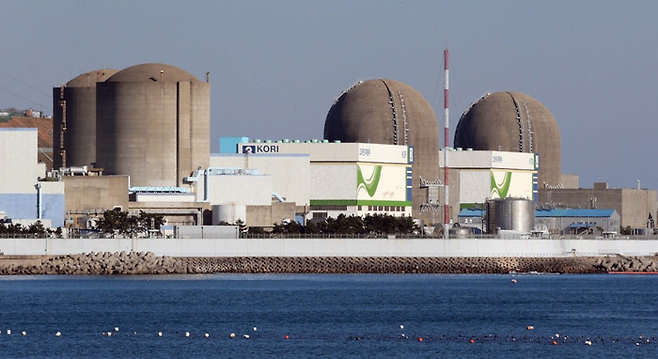
According to results released Wednesday by the Ministry of Climate, Energy and Environment from a government-commissioned public survey on the new-build plan, close to 70 percent of respondents said the country should proceed with constructing new reactors. In a Gallup Korea poll, 32.5 percent said the projects “must proceed” and 37 percent said they “should preferably proceed,” bringing combined support to 69.5 percent. A separate Realmeter survey showed 61.9 percent in favor when the same two responses were combined.
The surveys covered 1,519 adults by phone (Gallup Korea) and 1,505 adults via automated response (Realmeter), with margins of error of ±2.51 and ±2.53 percentage points, respectively, at a 95 percent confidence level.
The government is expected to reflect the findings. At a press conference Wednesday, President Lee said the nuclear issue had become overly politicized but added that safety considerations could be reviewed if needed. He stressed that energy policy should not be repeatedly overturned with each change of administration, warning that reversals undermine predictability and hinder business decision-making and long-term planning.
Lee noted that the national plan already includes two new reactors and pointed to the rapid expansion of the global nuclear market, including exports, as factors that should be considered objectively.
Still, critics say revisiting already-approved plans has wasted time. Sonn Yang-hoon, emeritus professor of economics at the University of Incheon, said that under the original schedule, site selection should have been completed by now, and restarting the process could delay construction by up to a year, resulting in economic losses.
The delay in selecting sites—now estimated at at least a year—has likely added around 1 trillion won ($682 million) to power generation costs. According to Korea Electric Power Corp., the average cost of nuclear power stood at 66.1 won per kilowatt-hour as of last November, roughly 70 won cheaper than liquefied natural gas at 135.7 won. Assuming two 1-gigawatt reactors see their commercial operation delayed by a year and are replaced by LNG generation at an 80 percent utilization rate, the additional cost is estimated at roughly 1 trillion won.
As a result, the ministry is expected to accelerate preparations. Korea Hydro & Nuclear Power’s site selection committee, launched in March last year, has been idle since August following the inauguration of the new government.
Experts say the public consultation should also pave the way for faster approvals to extend the operating life of existing reactors and for additional new builds, as electricity demand surges with the AI transition and the push for carbon neutrality. Under the 11th plan, domestic data center power demand is projected to rise from 8.2 terawatt-hours last year to 17 TWh in 2030 and 30 TWh in 2038.
President Lee also highlighted the intermittency of renewables, noting that power generation depends on sunlight and wind conditions. Sonn argued that delays in approvals for life extensions should be addressed by lengthening the current 10-year extension period to 20 years, adding that while some countries operate reactors for up to 80 years, South Korea’s system effectively limits use to 40 years.
Cho Hong-chong, a professor of economics at Dankook University, said that if public opinion has been sufficiently reflected, authorities could consider adding more new reactors in the future. “As power demand grows, stable baseload sources like nuclear power are essential—and so are affordable electricity prices,” he said.
At the same time, the survey signaled continued support for renewables. In the Gallup Korea poll, renewable energy ranked first among generation sources respondents said should be expanded, at 48.9 percent, ahead of nuclear power at 38 percent. The top reasons cited were environmental friendliness (32.4 percent) and benefits for future generations (25.6 percent).
Copyright © 매일경제 & mk.co.kr. 무단 전재, 재배포 및 AI학습 이용 금지
- “여보, 돈 없어도 벤츠는 타야죠”…‘모닝 값’에 나오더니, 불티나게 팔렸다 [최기성의 허브
- "스마트폰 시대 끝난다 … 요리·길 안내 'AI 안경'이 대체할 것" - 매일경제
- [단독] “친구야, 다음은 내 차례일까?”…남들처럼 살고싶은 40대 참전 가장들 [심층기획, 아직
- [속보] ‘단식 8일차’ 장동혁 “더 큰 싸움 위해 단식 중단”…병원 이송 - 매일경제
- “낡은 노후 주택 몸값이 34억?”…입주권에 뭐길래 현금 부자들 술렁 - 매일경제
- "조합원 70%가 이주비 대출 0원" 날벼락 - 매일경제
- “코스피 5000 돌파” 공약 달성한 이 대통령…ETF계좌 보니 ‘대박’ - 매일경제
- “IMF 때랑 뭐가 다른지 모르겠어요”…공인중개사 신규 개업 ‘뚝’ - 매일경제
- ‘영업익 1조’ 달성 2년만에 2조 찍었다…새 이정표 세운 삼성바이오 - 매일경제
- “누군가에게는 일생일대의 기회” 김하성·송성문 빠진 WBC 대표팀은 대안 고민중 [MK현장] - MK스