Tech founders return to the front lines as downturn deepens
According to industry sources Wednesday, Socar recently appointed former chief executive Lee Jae-woong as chief operating officer, marking his return six years after stepping down in the wake of legislation that effectively banned Tada’s ride-hailing operations. The move is seen as an effort to regain leadership in the mobility ecosystem amid rapid advances in autonomous driving and robotaxis.
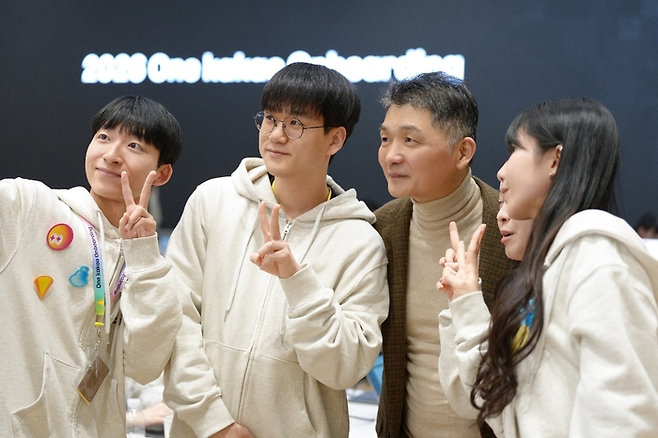
Kakao founder and its Future Initiative Center head, Brian Kim, made his first official public appearance in two years earlier this month, visiting a training session for new recruits. While Kim has not formally declared a management comeback, his reemergence has stirred speculation across the IT sector.
The atmosphere mirrors last year’s return of Naver founder and board chairman Lee Hae-jin, who came back after seven years to spearhead global expansion and push the company’s sovereign AI strategy. Since his return, Naver has pursued aggressive deals, including a comprehensive share swap with Dunamu and acquisitions of Poshmark and Wallapop, alongside partnerships with Nvidia, Disney and Market Kurly.
Former lawmaker Kim Byung-kwan, founder of Webzen, has also decided to return. Webzen last month proposed appointing Kim as an internal director at an extraordinary shareholders’ meeting, during which he increased his stake to 28.61 percent by purchasing additional treasury shares.
Developer Supercat, closely tied to Nexon, has likewise reinstated its founder. As project cancellations, talent departures and declining performance mounted, Kim Won-bae stepped in as chief executive, concluding that new leadership was needed for the company’s survival.
The trend has produced tangible results in some cases. At Wemade, the return of former chief executive Park Kwan-ho was followed by a turnaround to profitability the next year, driven by swift investment decisions and restructuring.
Industry observers caution, however, that reliance on founder leadership also reflects a shortage of next-generation talent. While founders can galvanize organizations in the short term, companies risk long-term challenges if leadership development and governance reforms fail to keep pace.
Copyright © 매일경제 & mk.co.kr. 무단 전재, 재배포 및 AI학습 이용 금지
- “중고거래 하고 받은 돈에, 이럴수가”…나도 모르게 당하는 ‘이것’ - 매일경제
- “여보, 돈 없어도 벤츠는 타야죠”…‘모닝 값’에 나오더니, 불티나게 팔렸다 [최기성의 허브
- "스마트폰 시대 끝난다 … 요리·길 안내 'AI 안경'이 대체할 것" - 매일경제
- [속보] 코스피, ‘꿈의 오천피’ 시대 열렸다…삼전·SK하닉 3%대 급등 - 매일경제
- "조합원 70%가 이주비 대출 0원" 날벼락 - 매일경제
- 동남아 현지직원 자녀 한국초청…K문화 풀코스 대접한다는 이 기업 - 매일경제
- 트럼프, ‘그린란드 관세’ 철회…“그린란드 논의 틀 마련해” - 매일경제
- ‘영업익 1조’ 달성 2년만에 2조 찍었다…새 이정표 세운 삼성바이오 - 매일경제
- [단독] 삼성전자 ‘특허전담조직’ 직원이 회사기밀 빼돌렸다가 구속 - 매일경제
- “누군가에게는 일생일대의 기회” 김하성·송성문 빠진 WBC 대표팀은 대안 고민중 [MK현장] - MK스