Old Korean words come alive in new baby animal stamps
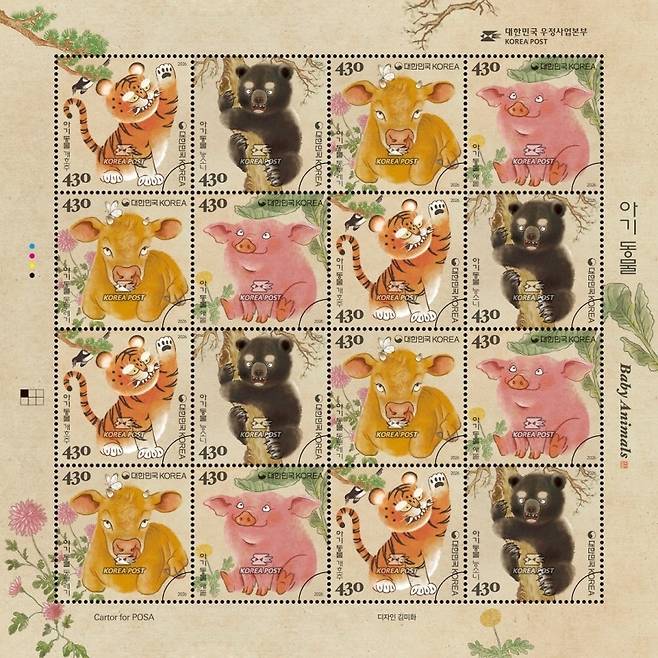
South Korea will release a new set of commemorative stamps featuring baby animals depicted with their lesser-known Korean names, in a move expected to attract collectors interested in linguistics as well as wildlife, the Ministry of Science and ICT said Wednesday.
Korea Post will issue 480,000 stamps on Jan. 28 showcasing four traditional terms that were historically used to describe young animals but have largely faded from modern speech.
The series features four traditional terms: "gaehoju," meaning a tiger cub; "neungsoni," a bear cub; "dongburegi," a calf old enough to grow its first horns; and "aedot," the word for a year-old pig.
Unlike the common words Koreans now use for young animals — such as "gangaji" for puppy or "songaji" for calf — these terms come from older literature and regional vernacular.
Korea Post said the vocabulary reflects how past generations distinguished each stage of an animal’s growth with precise, affectionate naming.
“Although these words are no longer part of everyday language, preserving them through stamps helps maintain the cultural diversity and ecological sensibility embedded in our heritage,” Korea Post said in a statement.
The collection is expected to appeal to both domestic and international philatelists, especially collectors of stamps related to fauna, folklore or endangered languages.
Commemorative releases often see strong demand in Korea, where annual stamp launches interest hobbyists and investors alike.
Copyright © 코리아헤럴드. 무단전재 및 재배포 금지.