Seoul Subway microplastics up to 3.7 times outdoor levels: study
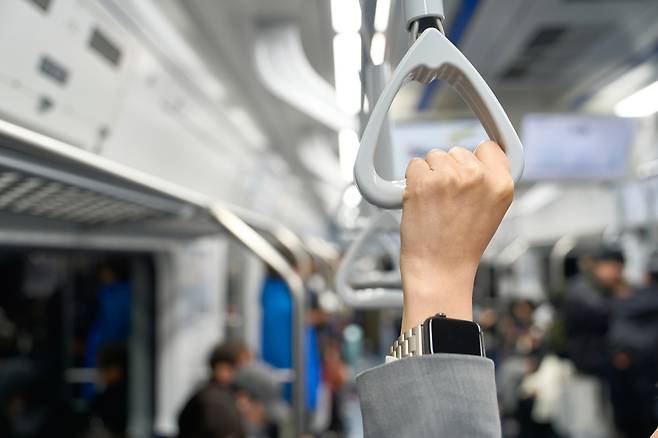
Airborne microplastics in the Seoul Subway, used by more than 7 million people a day, are up to 3.7 times higher than outdoor levels, a new study has found, underscoring growing health concerns in the city’s tightly enclosed underground network.
Microplastics are tiny particles created when plastic products break down through friction, heat or ultraviolet exposure. While an internationally unified definition has not been established, the term generally refers to particles less than 5 millimeters in diameter, including nanoscale fragments under 1 micron.
In research published in the Journal of Hazardous Materials, a team from Yonsei University reported that the concentration of microplastics attached to airborne particulate matter, or PM10, in the subway air reached as high as 5.94 particles per cubic meter.
Stations with the highest passenger density recorded levels between 2.68 and 5.94 particles per cubic meter, while other stations ranged between 1.25 and 3.45. Tests inside homes showed concentrations of 1.98 to 2.04 particles, while nearby outdoor air measured between 0.43 and 1.24.
Researchers attributed the elevated microplastic levels as high as 3.7 times those outdoors to the subway’s limited natural ventilation, which restricts the outflow of contaminants.
They pointed to sources such as rail-wheel friction, brake wear, synthetic fibers shed from passengers’ clothing and materials released from interior paint and coatings — all of which accumulate in underground spaces.
“The concentration of microplastics in subway air is clearly higher not only than outdoors, but also than typical indoor residential environments,” the team wrote, noting that pollutants generated underground are not adequately dispersed.
The team collected air samples over one year, starting in March 2022, from three subway stations -- two nearby outdoor locations and two indoor residential spaces in Seoul.
The study’s calculation of respiratory deposition using an International Commission on Radiological Protection model also drew attention.
For Korean adults, the estimated lifetime accumulation of microplastics in lung tissue averaged 28.3 particles per gram, with 13.7 accumulating in the alveoli, the deepest part of the respiratory system.
This is five to 10 times higher than amounts previously detected in the lung tissue of patients with chronic obstructive pulmonary disease, bronchiectasis or lung cancer.
Because microplastics tend to bind with carcinogenic heavy metals such as nickel, chromium and arsenic, researchers warned that inhalation could simultaneously heighten inflammation, oxidative stress and long-term risks of respiratory disease and cancer.
While the team emphasized that a structural shift toward biodegradable plastics is the ultimate solution, they noted that such a transition will take time.
As immediate measures, they recommended strengthening the circulation of outside air in subway stations and train cars and more active operation of existing ventilation and purification systems.
“Compared with rail systems in countries like Switzerland, where many sections run above ground, Korea’s deep underground subway lines are structurally disadvantaged in terms of air quality,” said Park Jun-hong, a professor of civil and environmental engineering at Yonsei University, who led the study.
“For now, wearing masks that filter both particulate matter and microplastics remains the most practical way to reduce long-term health risks.”
Copyright © 코리아헤럴드. 무단전재 및 재배포 금지.