As regions merge, who speaks for schools?
As South Korea accelerates plans to merge cities and provinces, education stakeholders warn that the push for administrative efficiency is coming at the expense of educational autonomy.
Critics say the mergers, framed as a response to population decline, risk reshaping core elements of education governance, from the structure of local education offices to teacher assignments and superintendent elections, without meaningful consultation with educators, students or parents.
On Jan. 14, the National Association of Superintendents of Education of Korea, which represents the heads of all 17 provincial and metropolitan education offices, visited the National Assembly to raise concerns about the proposed mergers.
“The voices of local education offices and the broader education community are largely neglected in the current discussion process on the proposed merger between Daejeon and South Chungcheong Province,” the association said in a statement.
“We are deeply concerned that the pursuit of administrative efficiency through local government integration is undermining the essence of educational autonomy.”
Administrative integration does not automatically determine how education governance will be reorganized.
Any consolidation of education offices or changes to the superintendent election system must be defined through a separate special law.
With those provisions still undecided, educators said the government is advancing political negotiations on integration while leaving the future shape of education governance largely undefined.
Incentives for integration
The warnings come as the government pushes forward with incentives for regions that agree to merge.
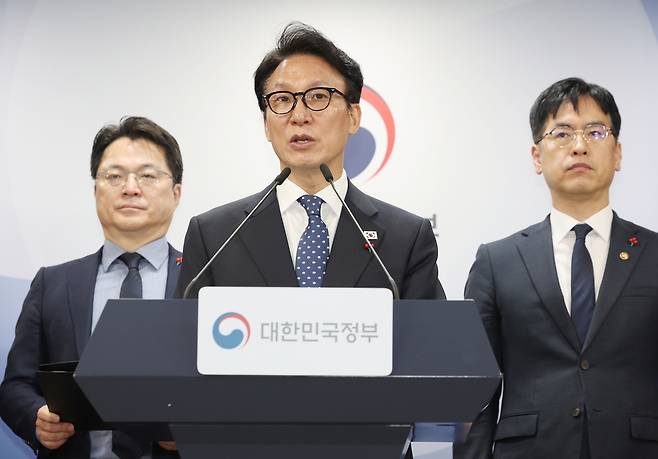
On Jan. 16, Prime Minister Kim Min-seok unveiled an incentive package offering 20 trillion won ($13 billion) in financial support, administrative status comparable to Seoul, priority consideration for public institution relocation and additional industrial aid.
Legislation to merge Daejeon and South Chungcheong Province was introduced in September 2025, stipulating that a single mayor would be elected for the combined region in the June local elections. A separate bill to merge Gwangju and South Jeolla Province followed in December.
Discussions about additional mergers — between Daegu and North Gyeongsang Province, and between Busan and South Gyeongsang Province — are also underway.
Lack of consultation
Local education offices fear that rapid administrative integration, coupled with simultaneous reforms to education governance, could cause confusion in schools.
“Education is not a secondary issue in administrative integration,” the superintendents’ association said. “Rather, administrative integration is a grave matter for parents and students that could fundamentally change the structure of education and school life.”
“But there was no opinion-gathering or consultation with education circles,” it added.
Teachers echoed the concern.
“In this highly consequential decision that reshapes the education system, educators, students and parents, the parties directly affected, have been treated merely as recipients of explanations,” said Park Se-byeol, a teacher in Gwangju.
“Because administrative integration is not spearheaded by education circles, it is unclear how deeply education-related issues will be discussed, and there isn’t much time left.”
Urban-rural divide

Education experts warn that mergers could obscure meaningful differences between urban and rural education needs.
“The demands of city-oriented education and countryside-oriented education are fundamentally different,” said Jung Sang-shin, head of the Daejeon Future Education Research Association. “Even after integration, there must be institutional space to mediate and coordinate regional education policies.”
Teachers share the anxiety.
“Each city and province has different educational goals,” said Kim, a middle school teacher in South Chungcheong Province who asked to be identified only by his surname. “Different regions say they want to nurture different types of talent. These differences need to be aligned before integration.”
Job stability concerns
For many teachers, the proposed mergers raise immediate concerns about involuntary transfers.
“If education offices are integrated as well, teachers in Daejeon could end up being assigned to other parts of South Chungcheong Province,” Kim said.
“I know many teachers in Daejeon who took the public school teacher recruitment exam specifically to stay in the city. They may not welcome being transferred elsewhere.”
Under the current system, applicants must choose a region when taking the exam. Urban centers such as Daejeon typically attract larger applicant pools, making competition significantly stiffer than in rural areas.
One superintendent or two?
One of the most contentious questions is how education leadership should be structured after integration — whether a merged region should elect a single superintendent or maintain multiple education chiefs.
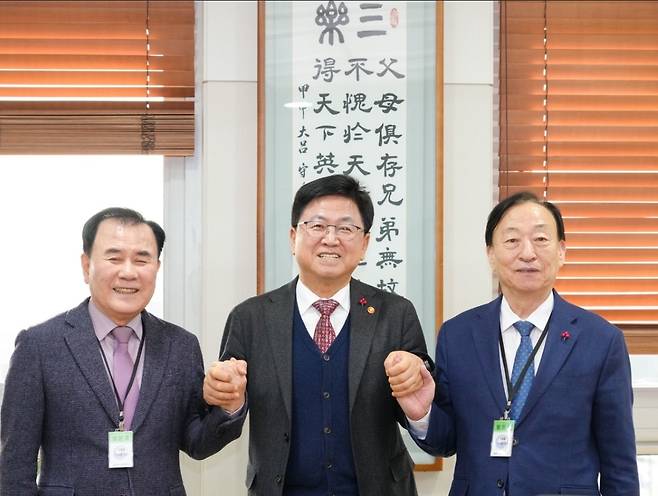
In the case of Gwangju and South Jeolla Province, local mayors, governors and incumbent superintendents agreed on Jan. 14 to move toward electing a single superintendent.
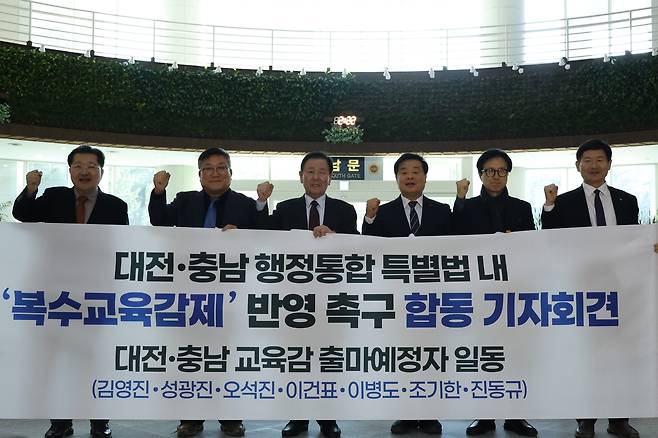
By contrast, seven prospective superintendent candidates in Daejeon and South Chungcheong Province held a press conference on Jan. 13 calling for a dual-superintendent system.
The Education Ministry has proposed a compromise: unifying the superintendent position while appointing two deputy superintendents to reflect regional diversity.
Legal circles note that the current single-superintendent model is widely regarded as the norm under Article 31 of the Constitution. Still, concerns remain that a unified election could disadvantage smaller regions.
According to local media reports, South Chungcheong has about 1.84 million eligible voters, compared with roughly 1.24 million in Daejeon.
Critics warn that a single constituency could allow South Chungcheong’s larger electorate to dominate superintendent elections, sidelining Daejeon’s education priorities.
School closures and governance risks
Beyond leadership structures, education experts caution that expanding education office jurisdictions could accelerate school closures in depopulating areas and weaken targeted support for struggling schools.
A Jan. 14 report by the National Assembly Research Service warned that larger education districts risk fragmenting accountability and marginalizing rural communities. The report recommended maintaining the existing education governance framework for at least four years after any administrative integration.
Copyright © 코리아헤럴드. 무단전재 및 재배포 금지.