Hyundai Steel to shut half of Incheon rebar plant amid deepening losses
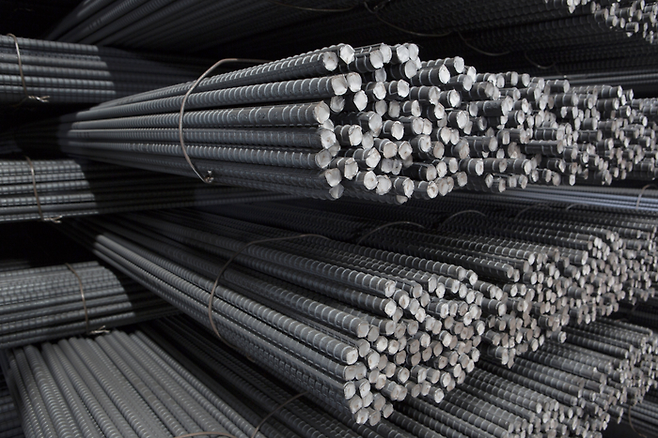
The decision to reduce production capacity by roughly 50 percent at one of the country’s largest rebar hubs reflects mounting pressure from shrinking demand and rising fixed costs. With domestic rebar demand having fallen by several million tons over the past decade, maintaining large-scale facilities with annual capacity of around 800,000 tons has become increasingly unsustainable, industry observers say.
According to steel industry sources on Tuesday, Hyundai Steel recently held labor-management consultations and decided to shut down electric arc furnace steelmaking and small-section rolling facilities at its Incheon plant, which together produce about 800,000 tons of rebar annually.
The closure will effectively remove half of the plant’s total rebar capacity of roughly 1.6 million tons per year. The volume corresponds to about 10 percent of South Korea’s total rebar demand, estimated at around 7.8 million tons in 2024, and is being interpreted as the opening salvo of an industrywide shake-up.
Hyundai Steel said the decision was made to respond to declining rebar demand stemming from a slowdown in the domestic construction market and to secure the long-term competitiveness of its long steel business. The facilities in question have already been idle since January 4.
Unlike a one-month shutdown implemented in May last year, the latest move represents a structural adjustment rather than a temporary production cut. The Incheon plant, Hyundai Steel’s flagship rebar production base, has faced repeated shutdowns amid prolonged construction weakness and oversupply. As losses mounted with each ton of rebar produced, the company opted to go beyond short-term curtailments and move toward trimming non-core facilities and reshaping its long steel portfolio.
Hyundai Steel said it plans to minimize workforce reductions. The company has no plans for forced layoffs tied to the shutdown and is expected to redeploy idle workers through consultations with labor unions, following precedents set at its Pohang No. 2 plant.
South Korea’s rebar industry has faced a “demand cliff” in recent years as the construction sector cooled sharply. Total domestic rebar demand fell from more than 11 million tons in 2021 to about 7.78 million tons in 2024, marking the lowest level since records began. Demand last year is also widely expected to have remained around the 7 million-ton range.
Industry officials say the move confirms that the long-standing strategy of weathering downturns through regional supply adjustments and partial production cuts has reached its limits. Other steelmakers are now increasingly likely to pursue selective restructuring, starting with aging and high-cost rebar lines, raising the prospect of broader realignments of regional production bases and heightened price volatility.
“In a market where rebar demand has dropped sharply due to the construction slowdown, companies have entered a phase where survival requires shutting facilities rather than merely cutting output,” a steel industry official said. “This decision looks like a signal that deeper restructuring across the rebar business could follow.”
Copyright © 매일경제 & mk.co.kr. 무단 전재, 재배포 및 AI학습 이용 금지
- 분식집하다가 ‘극단 선택’ 50대 의사…면허 박탈된 사연에 부글부글 - 매일경제
- “연비 20㎞/ℓ 기름 냄새만 맡아도 달린다”…하브 원조맛집의 위엄 - 매일경제
- “집값만 보면 강남인줄”…평당 1억 거래 속출한다는 경기도 ‘이 동네’ - 매일경제
- 오늘의 운세 2026년 1월 21일 水(음력 12월 3일) - 매일경제
- [단독] “제13차 연평해전, 들어보셨나요?” … 참전영웅에게 날아온 어이없는 ‘초청장’ [심층
- 암 진단받아도 74%는 5년 이상 산다…전립선암, 남성암 1위로 - 매일경제
- 트럼프 “알래스카 천연가스 사업, 한국과 일본 덕에 전례없는 자금 확보” - 매일경제
- “유산 10% 기부하면 세금 10% 감면” …여야, 법안 공동발의 추진 - 매일경제
- [속보] 군경, ‘북 무인기’ 피의자 3명 사무실·자택 압수수색 - 매일경제
- 벨트란·존스, 美 야구 명예의 전당 입성 확정...추신수는 아쉬운 탈락 - MK스포츠