Volatile lithium, cobalt prices shake up Korea’s battery industry
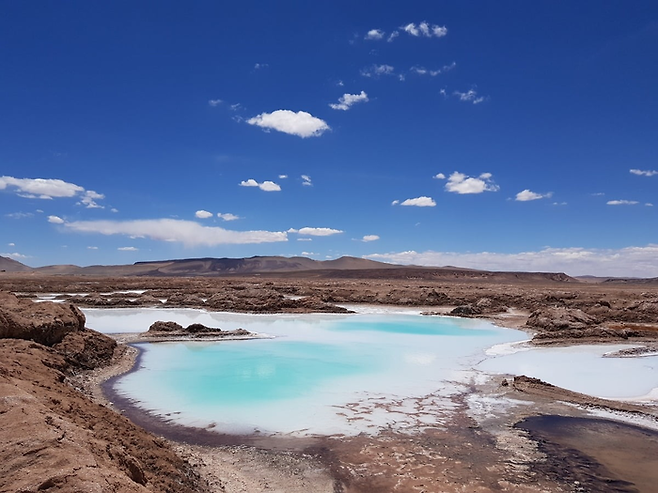
According to Korea Mine Rehabilitation and Mineral Resources Corp. (KOMIR) on Tuesday, prices of major battery raw materials such as lithium and cobalt have continued to rise sharply since the beginning of this year.
Raw material prices, which had remained sluggish throughout last year due to a temporary slowdown in electric vehicle (EV) demand, have rebounded as supply adjustments by major producing countries coincided with growing expectations for expanded demand for energy storage systems (ESS).
Lithium prices, in particular, have shown a pronounced upward trend since the end of last year.
According to the KOMIR’s Korea Resources Information Service, the price of lithium carbonate stood at $16.66 per kilogram as of January 14, up 73 percent from the previous year’s average and 39 percent from the previous month’s average.
This represents more than double the recovery from the low point recorded in the middle of last year.
Cobalt prices have also strengthened.
As of the same date, cobalt was priced at $54.49 per kilogram, up 59 percent from the previous year’s average and 3.7 percent from the previous month.
Analysts cited export restrictions by the Democratic Republic of the Congo, a major producer, and growing supply chain instability as key factors driving prices higher.
Manganese prices, while not surging sharply, have also maintained a steady upward trend, reaching their highest level in about one year.
These raw materials are essential components in battery manufacturing, and price volatility has a significant impact across the battery industry.
Lithium is a core battery material in which ions move during charging and discharging to store and release electricity, directly affecting energy density.
Cobalt enhances the structural stability and lifespan of cathode materials, suppressing performance degradation even in high-voltage and high-temperature environments.
Manganese is used to reduce cobalt content while reinforcing battery safety and cost competitiveness.
Industry observers noted that recent increases in prices of these key battery minerals are closely tied to changes in China’s industrial and trade policies.
As the Chinese government adjusts export controls and subsidy policies to maintain its leadership over battery and critical mineral supply chains, global raw material supply conditions have tightened again.
In particular, policy shifts such as stricter export controls on batteries and related materials or reductions in value-added tax rebates have gained traction this year, adding upward pressure on prices.
Expectations for expanded ESS demand have also been partially factored in, observers said.
Industry views on the short-term price surge are mixed.
Battery materials companies tend to view rising lithium and cobalt prices as a near-term positive.
This is because profitability could improve under contract structures where cathode materials are produced using raw materials secured at past lows and sold at current market prices.
This is why some see the recent rebound in mineral prices as a potential catalyst for earnings recovery.
Manufacturers of finished batteries, on the other hand, face growing burdens.
Rising raw material prices inevitably lead to higher component procurement costs, weighing on margins.
Analysts noted that lithium prices remain only about one-third of their historical peak, suggesting room for further upside.
However, there are also views that the sustainability of the rally may be limited, given that the rebound appears to be driven by supply-side policy risks rather than by a broad-based expansion in EV demand.
“Materials companies can benefit from price differences between the time of purchase and the time of sale, but the impact will vary depending on contract structures,” said a battery industry official.
“From the perspective of finished battery manufacturers, if costs rise without a corresponding expansion in demand, the burden will increase, making it essential for growth in core industries that drive the battery market to proceed in tandem,” the official added.
Copyright © 매일경제 & mk.co.kr. 무단 전재, 재배포 및 AI학습 이용 금지
- 분식집하다가 ‘극단 선택’ 50대 의사…면허 박탈된 사연에 부글부글 - 매일경제
- “연비 20㎞/ℓ 기름 냄새만 맡아도 달린다”…하브 원조맛집의 위엄 - 매일경제
- “집값만 보면 강남인줄”…평당 1억 거래 속출한다는 경기도 ‘이 동네’ - 매일경제
- 오늘의 운세 2026년 1월 21일 水(음력 12월 3일) - 매일경제
- [단독] “제13차 연평해전, 들어보셨나요?” … 참전영웅에게 날아온 어이없는 ‘초청장’ [심층
- 암 진단받아도 74%는 5년 이상 산다…전립선암, 남성암 1위로 - 매일경제
- 트럼프 “알래스카 천연가스 사업, 한국과 일본 덕에 전례없는 자금 확보” - 매일경제
- “유산 10% 기부하면 세금 10% 감면” …여야, 법안 공동발의 추진 - 매일경제
- [속보] 군경, ‘북 무인기’ 피의자 3명 사무실·자택 압수수색 - 매일경제
- 벨트란·존스, 美 야구 명예의 전당 입성 확정...추신수는 아쉬운 탈락 - MK스포츠