Even in bitter cold, runners keep going, thanks to one clear innovation
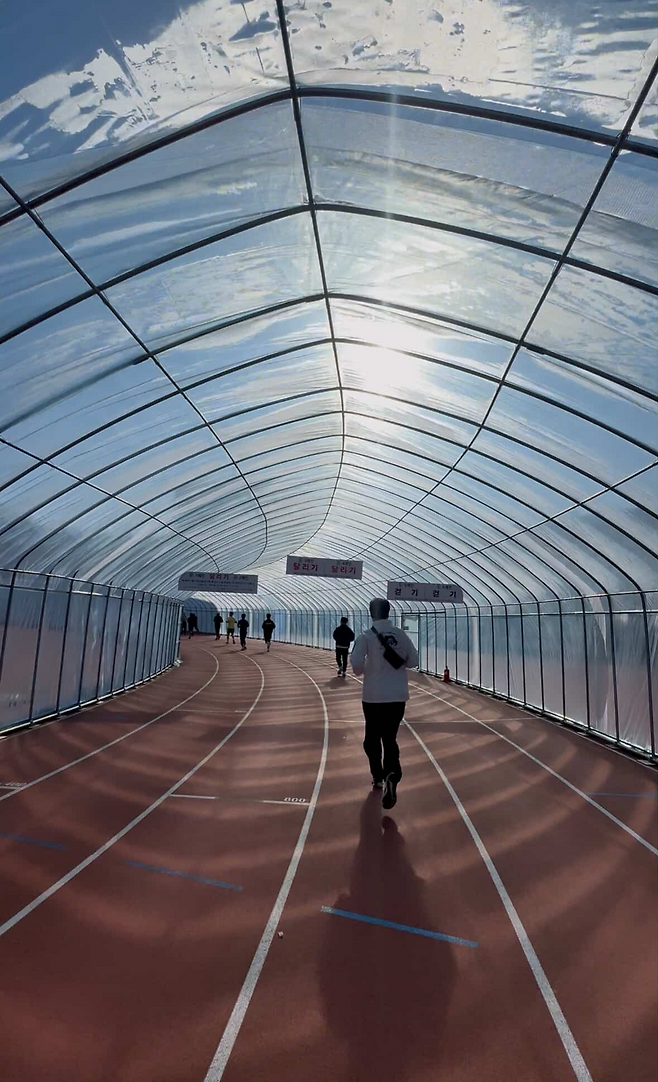
As the bitter cold tightens its grip, greenhouse-shaped outdoor tracks are emerging as a popular refuge for runners to maintain their routines despite the freezing temperatures.
These tunnel-like spaces, formed by placing transparent plastic sheets used in agricultural greenhouses over existing running tracks like a roof, have recently been introduced at public sports facilities in several cities.
By shielding runners from the wind, the plastic structure creates a noticeably warmer environment, with temperatures feeling at least 5 to 10 degrees Celsius higher than outside in winter, officials said.
The greenhouse-style track at Paju Stadium in Geumneung-dong, Gyeonggi Province, which opened last month, draws roughly 600 to 700 visitors per weekday, according to the Paju city government.
Similar greenhouse-covered tracks have emerged in other municipalities, including Ansan and Siheung in Gyeonggi Province and Seosan in South Chungcheong Province, drawing everyday runners to facilities once reserved for professional athletes. All are available at no cost to both professional athletes and everyday runners.
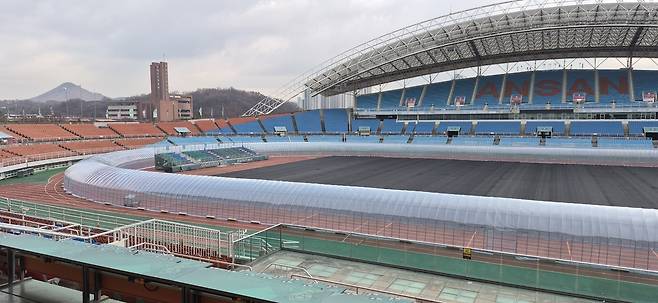
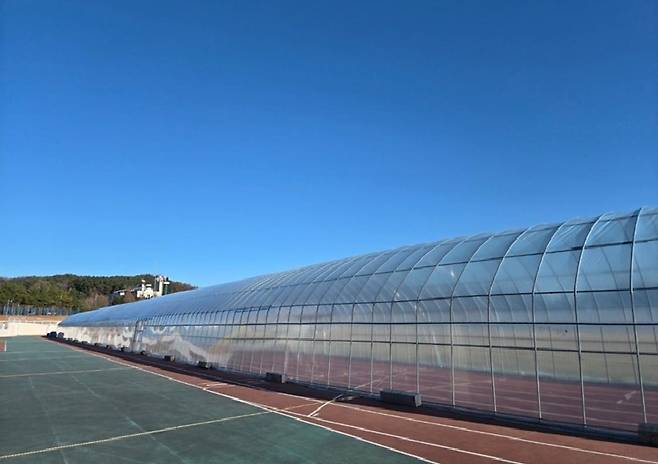
The greenhouse-covered tracks are especially popular with runners who favor outdoor routes over treadmills.
Kim Gi-hyeon, a 37-year-old avid runner from Goyang, Gyeonggi Province, who runs outdoors five to six times a week, visited the greenhouse-style track at Paju Stadium on a day when cold wave alerts were in effect across the province.
"I bundled up because I thought it would be cold, but it really wasn't. After a while, I got so warm that I took almost everything off except shorts and a long-sleeve shirt. It felt like late fall or early winter," he told The Korea Herald.
"Running on a treadmill feels like I'm being forced to work out. Running outdoors is just more fun. This kind of facility may not be necessary for everyone, but it's clearly helpful for some people like me. It feels good to see the city making healthy activities more accessible."
But there have been some concerns, with some saying the coverings are not built strongly enough to withstand Korea's strong winter winds or heavy snowfall. The makeshift tunnels are essentially plastic sheeting stretched over steel support frames anchored on existing tracks, designed to be removed when no longer needed.
Earlier this month, about 120 meters of the plastic covering over the athletic track at Ansan Wa Stadium recently tore and collapsed due to strong winds. Regular operations resumed Monday after 10 days of repairs.
"The elasticity of an athletic track is a critical factor that affects both athletes' performance and injury risk. Embedding any kind of structure into the track, even temporarily, undermines its safety function," a city official said.
"With demand for these tracks continuing to grow, we'll do our best to address safety concerns, including regular inspections and strengthening the support structures."
Copyright © 코리아헤럴드. 무단전재 및 재배포 금지.