Young Koreans’ employment, housing issues hinder economic growth: BOK
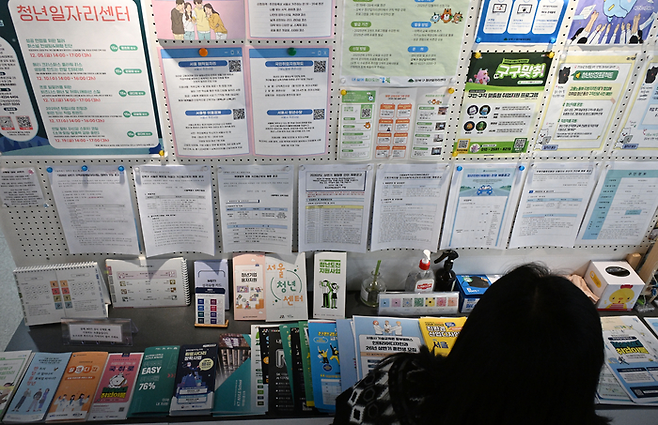
The analysis released Monday showed that young people aged 15 to 29 are struggling with rising housing costs and prolonged job searches.
The BOK noted that while headline indicators such as employment rates suggest youth job conditions have improved compared with earlier generations, the report said underlying pressures remain, particularly longer job search periods at the start of careers.
The BOK pointed to a weakened corporate growth ladder and a more rigid labor market that has deepened job dualism. As companies increasingly favor experienced hires and expand year-round recruitment, more young people are postponing job searches. An economic slowdown and a decline in high-quality jobs have further weighed on youth employment.
During extended job searches, young people are more likely to become locked in credential competition or take temporary and day labor jobs, raising the risk of long-term detachment from the workforce and slipping into economic inactivity, the report said.
The BOK warned that longer job searches early in a career limit opportunities to build skills and human capital. This weakens job stability and lowers lifetime income, producing a so-called “scarring effect.”
The analysis found that the likelihood of holding a regular job five years later was 66.1 percent for those who experienced one year of non-employment. That probability fell to 56.2 percent when non-employment lasted three years. Real wages were estimated to decline by 6.7 percent for each additional year of past non-employment.
The central bank said similar patterns were seen in Japan’s employment ice age or lost generation, which struggled to enter the labor market from the early 1990s through the 2000s.
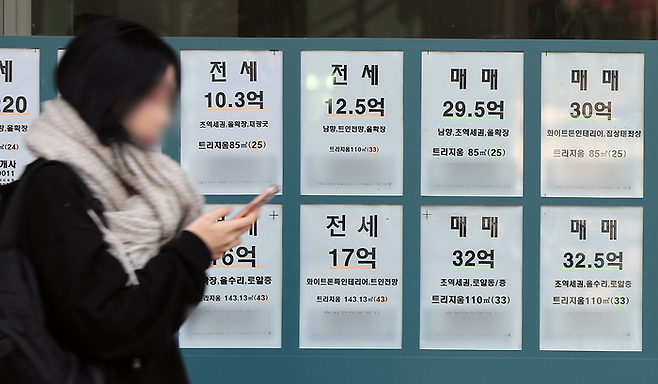
Housing quality has not kept pace with costs.
The share of young people living in vulnerable housing such as ultra-small single-room units with shared facilities rose to 11.5 percent in 2023 from 5.6 percent in 2010. The proportion living in homes below the minimum housing standard of 14 square meters increased to 8.2 percent in 2024 from 6.1 percent in 2023.
Excessive housing costs were also found to undermine asset building, human capital accumulation, and financial stability over a lifetime.
A 1 percent increase in youth housing costs reduces total assets by 0.04 percent, while a 1 percentage point rise in the share of housing expenses cuts the share of education spending by 0.18 percentage point. The BOK said these dynamics make youth employment and housing challenges a structural drag on Korea’s economic growth.
The BOK noted that a lasting solution requires easing labor market rigidities to reduce job polarization and expanding the supply of small housing units to correct supply-demand imbalances.
Copyright © 매일경제 & mk.co.kr. 무단 전재, 재배포 및 AI학습 이용 금지
- 파업으로 확보한 ‘정년 연장’...버스기사부터 경찰까지 청년 설자리 없다 - 매일경제
- “한국 사람들, 그 돈 주고 왜 포르쉐를?”...글로벌 시장선 갈수록 ‘외면’ - 매일경제
- [속보] 성장펀드 3년 이상 투자땐 최대 40% 소득공제…납입금 2억원 한도 - 매일경제
- “5km씩 30년 뛰었는데 허무하네요”...‘걷기족’ 보다 사망위험 높다는데 - 매일경제
- “할머니가 먹는 거 같다”…‘수척해진 얼굴’ 팬들 걱정에 안영미의 해명 - 매일경제
- “승진하고 연봉 5천이 깎였어요”...공공기관 직원들 ‘간부 포비아’ - 매일경제
- [단독] 조합-상가합의안 무효 판결에…개포주공 6·7단지 분양신청 일시중단 - 매일경제
- “매국베팅 욕해도 좋습니다”하더니…곱버스개미 올들어 26% 녹았다 - 매일경제
- 기억은 있는데 말이 안나오네… ‘깜빡깜빡’ 건망증 비밀 풀렸다 - 매일경제
- 162km 한국계 빅리거가 합류한다니…오브라이언, 류지현호 불펜 고민 덜게 하나 - MK스포츠