Banks emerge as test bed for Korea’s shorter workweek push
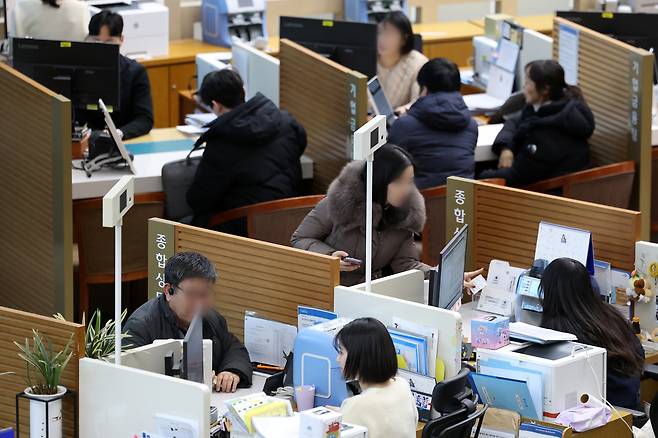
More Korean banks are moving to trim working hours this year as the country steps up efforts to introduce a four-and-a-half-day workweek to ease one of the world’s longest-working labor markets.
KB Kookmin Bank, one of Korea’s major commercial lenders, on Monday confirmed that the company reached a tentative wage agreement with its labor union on Sunday, which includes a plan to introduce a so-called 4.9-day workweek by moving Friday leaving times forward by one hour to 5 p.m.
While the deal still requires final approval, KB Kookmin’s move follows similar steps by peers that have already reached comparable agreements. NH NongHyup Bank is set to introduce the scheme in the first quarter, while Shinhan Bank and Hana Bank are also in talks over details, targeting implementation as early as this month.
Once implemented, office computers will automatically shut down at 5 p.m., one hour earlier than usual, while wages are not expected to be affected by the reduced hours, an official from one of the banks said.
The moves follow an October agreement between nationwide labor and management groups in the financial sector to cut Friday working hours and form a task force to introduce a four-and-a-half-day workweek.
Since last year, financial-sector unions have pushed for shorter working hours, including proposals to reduce the standard workweek from 40 hours to 36 hours through measures such as alternating four-day workweeks and weekly half-day shifts. They have also called for later branch opening times as part of efforts to promote a more family-friendly work culture and ramp up productivity amid Korea’s low birthrate and slowing growth.
The push gained momentum after President Lee Jae Myung pledged to introduce a 4.5-day workweek, aiming to cut the country’s average annual working hours to the OECD average of about 1,700 by 2030. Korea currently ranks among the most overworked economies, with 1,879 annual working hours — more than 100 hours above the OECD average.
Led by the Labor Ministry, the government is preparing measures to improve working conditions and reduce working hours, with a dedicated task force set to handle legislative and operational changes this year.
The banking sector’s early shift is expected to ripple into other industries, serving as a test case for expanding shorter workweeks across the broader economy.
“Banks have long been seen as among the easier sectors to introduce shorter workweeks because operating hours and workdays are largely fixed, unlike industries such as manufacturing, where late-night or weekend shifts are common,” an industry official said. Banks were also the earliest adopters when Korea moved to a five-day workweek in 2002.
Still, industry participants cautioned that cutting an hour on Fridays may not necessarily translate into a full half-day reduction, which would require more fundamental operational changes.
“While employees leaving an hour earlier on Fridays does not affect customers, a 4.5-day workweek is a different question and one that requires deeper policy discussions,” a banking official said.
Copyright © 코리아헤럴드. 무단전재 및 재배포 금지.