Private universities rush to hike tuition, drawing student backlash
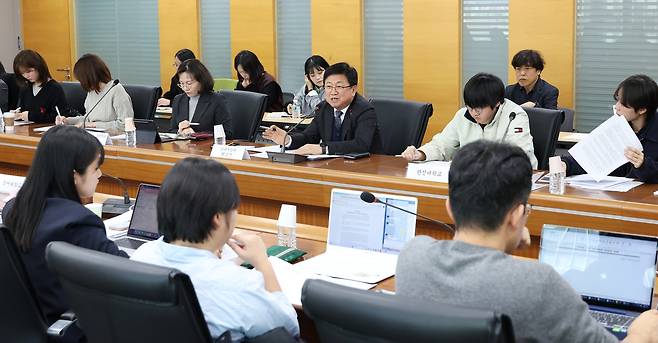
Tensions between private universities and student groups are escalating after several institutions announced tuition hikes last week, following the government’s December decision to relax tuition regulations.
Sogang University and Kookmin University said Saturday that they had decided to raise tuition by 2.5 percent and 2.8 percent, respectively, for the 2026 academic year.
“We proposed a 2.5 percent increase to students, who accepted it on the condition that the funds be used to improve educational and welfare environments,” said Sogang University.
Other major private universities quickly followed suit. Yonsei University, Korea University and the Hankuk University of Foreign Studies said Monday they are seeking tuition increases of 3.19 percent.
Sungkyunkwan University, Hanyang University, Chung-Ang University, Kyung Hee University and Ewha Womans University also said Monday that they had notified students of their intent to raise tuition.
Under current law, private universities are allowed to raise tuition by up to 1.2 times the average consumer price inflation rate over the past three years. This puts the maximum allowable increase at 3.19 percent this year, down from 5.49 percent in 2025.
Students, however, are protesting the hikes, arguing that they have yet to see tangible benefits from last year’s increase.
“The school increased tuition by 5 percent last year despite the opposition of all student council members,” the Hankuk University of Foreign Studies student council said in a statement issued Jan. 13. “It failed to follow through on its promise to use most of the additional funds for students.”
In a similar statement released Thursday, the Korea University student council said it did not feel tuition hikes had led to improvements in the curriculum. “Students are not the school’s ATM,” the statement read.
“The university should pursue self-help measures by securing more government funding and increasing the financial responsibility of its foundation,” the Ewha Womans University student council said during a press conference Friday.
Universities, meanwhile, argue that price increases are inevitable to sustain their financial stability.
“There is less government funding for private universities, yet they are expected to maintain low tuition,” said Hwang In-sung, secretary general of the Korean Association of Private University Presidents. “Private universities must compete with national universities, but the government effectively ties their hands (through tuition caps)."
Hwang added that the government’s push to expand funding for regional public universities undermines private institutions’ ability to develop their educational capacity.
KAPUP, which represents the heads of 154 private universities, said in December 2025 that it would file a constitutional complaint against the law capping private university tuition hikes.
The Education Ministry announced on Dec. 12, 2025, it would abolish the Type II National Scholarship program starting next year, a mechanism that had effectively pressured universities to freeze tuition.
Since 2012, universities have been required to freeze or lower tuition in order to qualify for Type II National Scholarship funding, effectively using financial incentives to discourage tuition increases.
Copyright © 코리아헤럴드. 무단전재 및 재배포 금지.