'Solana is autobahn for money,' says Swiss foundation’s Korea chief
전체 맥락을 이해하기 위해서는 본문 보기를 권장합니다.
"Solana can be compared to an autobahn where money moves at full speed," Lee said in a recent interview with Herald Business, a sister vernacular of The Korea Herald. "It is optimized for stablecoin transfers, payments, remittances and tokenization."
Acred, in particular, combines tokenized credit products with decentralized finance, or DeFi, protocols. "Acred secures about 4 to 5 percent returns from US Treasury yields and adds roughly another 4 percent through DeFi strategies," Lee said. "After fees, it offers returns in the 8 percent range, making it a new model that is gaining traction."
이 글자크기로 변경됩니다.
(예시) 가장 빠른 뉴스가 있고 다양한 정보, 쌍방향 소통이 숨쉬는 다음뉴스를 만나보세요. 다음뉴스는 국내외 주요이슈와 실시간 속보, 문화생활 및 다양한 분야의 뉴스를 입체적으로 전달하고 있습니다.
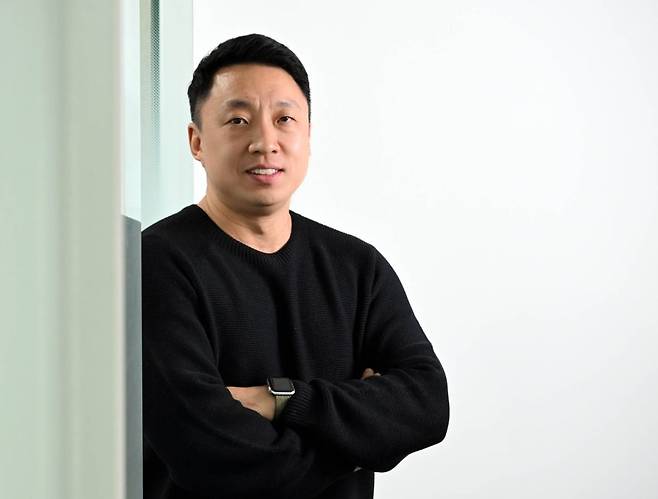
Solana is emerging as a preferred blockchain platform for stablecoin payments and tokenized financial assets, positioning itself as a high-speed, low-cost backbone for next-generation finance, according to Lee Sung-san, Korean chief of the Switzerland-based Solana Foundation.
"Solana can be compared to an autobahn where money moves at full speed," Lee said in a recent interview with Herald Business, a sister vernacular of The Korea Herald. "It is optimized for stablecoin transfers, payments, remittances and tokenization."
The Solana Foundation is a nonprofit responsible for supporting the development and global adoption of the Solana blockchain. While the Solana protocol itself is open source and maintained by a global developer community, the foundation plays a central role in ecosystem growth, developer support and institutional engagement across regions, including Asia.
Solana, a layer-1 blockchain platform, currently ranks among the world’s top five digital assets by market capitalization, excluding stablecoins, with a valuation of around $83 billion as of Jan. 15. As financial services increasingly migrate onto blockchain infrastructure, platforms like Solana are becoming the underlying rails for digital finance.
The network has strengthened its role as a financial platform by supporting a wide range of tokenized assets, including the US dollar-pegged USDC stablecoin and tokenized money market funds. Lee noted that at one point, nearly 60 percent of global USDC transactions were processed on Solana.
More recently, major financial institutions have begun testing real-world financial instruments on the network. "Last month, JPMorgan issued a US short-term commercial paper on Solana and completed settlement using a delivery-versus-payment structure," Lee said, describing it as a significant step toward institutional adoption.
Solana has also gained traction in stablecoin payments.
According to Lee, Solana accounts for the largest share of stablecoin payment volumes processed through Visa. In asset management, firms such as Franklin Templeton and Apollo have issued tokenized funds on the network, including Franklin Templeton’s tokenized money market fund Benji and Apollo’s Acred token.
Acred, in particular, combines tokenized credit products with decentralized finance, or DeFi, protocols. "Acred secures about 4 to 5 percent returns from US Treasury yields and adds roughly another 4 percent through DeFi strategies," Lee said. "After fees, it offers returns in the 8 percent range, making it a new model that is gaining traction."
Speed and cost efficiency are key reasons financial institutions are turning to Solana, Lee said. Transactions are included in blocks in an average of 0.4 second, while the network processes an average of 1,295 transactions per second. Fees also remain significantly lower than rival platforms.
As of Thursday, the average transaction fee on Solana stood at about $0.0013, compared to $0.24 on Ethereum. "Traditional financial institutions and large funds initially launched mostly on Ethereum, but due to cost issues, many are gradually moving toward Solana," Lee said.
As tokenization and on-chain finance expand, Solana aims to position itself not just as a crypto network, but as core infrastructure for institutional-grade digital finance.
Copyright © 코리아헤럴드. 무단전재 및 재배포 금지.