U.S. steps up tariff threats against foreign memory chipmakers
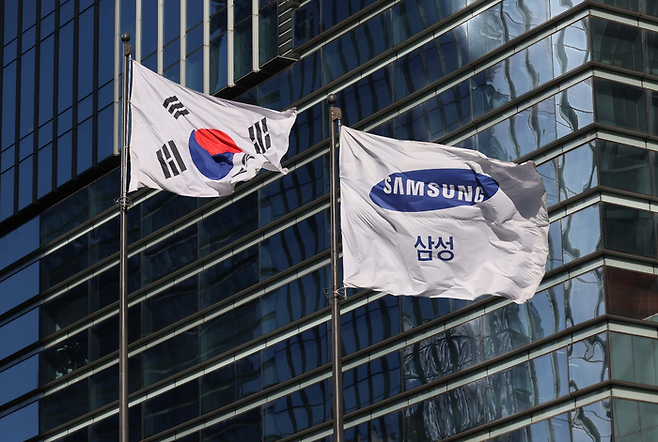
U.S. Commerce Secretary Howard Lutnick raised the prospect of steep tariffs on Saturday, local time, at a groundbreaking ceremony for Micron Technology Inc.’s new semiconductor plant near Syracuse, New York.
“Everyone who wants to build memory has two choice: They can pay a 100 percent tariff, or they can build in America,” he said.
Lutnick did not single out specific countries or companies but market attention has focused on Korean manufacturers.
According to Counterpoint Research, Samsung Electronics and SK hynix accounted for a combined 67 percent of the global memory market as of the third quarter of 2025, far ahead of U.S.-based Micron at 26 percent and Taiwan’s ChangXin Memory Technologies Inc. and Nanya Technology Corp. at a combined 7 percent.
“If memory chips produced in Korea were hit with a 100 percent tariff, Samsung Electronics and SK hynix would inevitably be at a competitive disadvantage against Micron products manufactured in the U.S.,” said an industry source.
While pressure from the Trump administration’s semiconductor policy has largely focused on foundries such as Taiwan Semiconductor Manufacturing Co., the tariff push is now expanding into the memory chip sector.
Korea’s presidential office said it would work to minimize the impact on domestic companies, citing an agreement that Korea would not be placed at a disadvantage compared with other major countries.
In a joint fact sheet released after the Korea-U.S. summit last November, the U.S. stated that if tariffs are imposed on semiconductors, including semiconductor manufacturing equipment, under Section 232 of the Trade Expansion Act, the U.S. “intends to provide terms for such Section 232 tariffs on Korea that are no less favorable than terms that may be offered in a future agreement covering a volume of semiconductor trade at least as large as Korea’s.”
Copyright © 매일경제 & mk.co.kr. 무단 전재, 재배포 및 AI학습 이용 금지
- “삼전이 계속 오를 순 없잖아요”...5천피 이후 국장 책임질 주도주는 - 매일경제
- 미국 경고에 놀란 K반도체…“용인 메모리 팹, 美로 옮겨야하나” - 매일경제
- 홍라희, 삼성전자 주식 2조 처분 - 매일경제
- “삼전 주식 2조 처분합니다”…상속세 납부·대출상환에 쓴다는 관장님 - 매일경제
- 중국 ‘예금액 1경원’ 빠져나간다…“돈이 복사되는데 왜 묶어놔?” - 매일경제
- “비행기 타려면 제발 살 좀 빼세요”...항공사들 연료비 8500억 굳었다는데 - 매일경제
- '똘똘한 한채' 장기보유공제 축소땐 … 양도세 최대 3배로 - 매일경제
- “살아생전 연명의료 받지 않겠다”…여성이 남성보다 2배 더 많아 - 매일경제
- 공매도 재개 후 첫 대규모 ‘철퇴’… 신한운용·파레토 등 6곳 과징금 40억 - 매일경제
- 충격, 김하성이 다쳤다! 오른손 가운데손가락 힘줄 파열로 수술...회복에 4~5개월 - MK스포츠