Council Chair Lee centers residents in plans for North Chungcheong Province
Located in the heart of the Korean Peninsula, North Chungcheong Province South Korea’s only landlocked province.
It sits between Seoul and the country’s southern industrial hubs, making it a strategic crossroads for logistics, industry and regional development.
In recent years, North Chungcheong Province, along with its capital city of Cheongju, has emerged as a key center for biotechnology, advanced manufacturing and inland transportation, while also grappling with challenges common to many nonmetropolitan regions, including demographic decline.
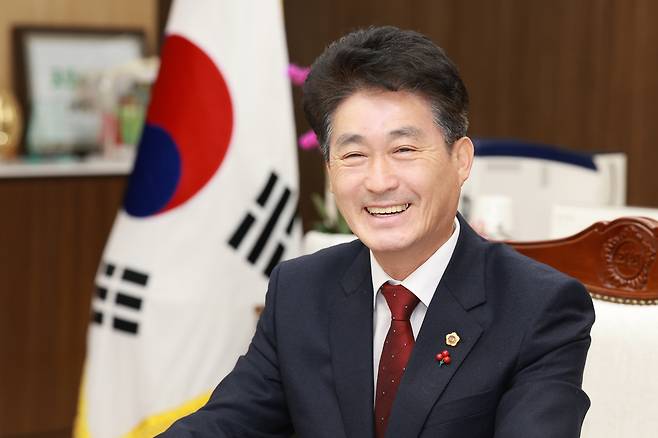
At the center of provincial policymaking is the North Chungcheong Provincial Council, the region’s legislative body. Its current chairperson, Lee Yang-seob, has led the council through a period marked by political upheaval in the country.
In an interview with The Korea Herald, Lee reflected on the council’s recent work, its priorities for 2026 and his own political philosophy.
Leading through uncertainty
Looking back on the past year and a half of the council’s second half of its 12th term, Lee described the period as one defined above all by responsibility.
Korea faced a convergence of challenges, including a presidential impeachment, a national election and a prolonged economic downturn driven by high inflation, high interest rates and a weak currency.
“Under those circumstances, restoring and stabilizing the livelihoods of residents had to come first,” he said.
The provincial council, he explained, focused its efforts on the real economy, visiting traditional markets, small businesses, farms and factories to hear directly from residents.
Concerns raised on the ground were then translated into legislative action, from the revision and enactment of ordinances to policy proposals.
Lee emphasized that the council sought not merely to point out problems, but to craft practical solutions.
While he acknowledged that the changes may have seemed modest, he believes they contributed meaningfully to stabilizing daily life and supporting economic recovery in the province.
In 2025, the council recorded what Lee called "meaningful achievements" on both institutional and operational fronts.
Legislatively, the council revised or consolidated nearly twice as many ordinances as the previous year, a move he said enhanced clarity, efficiency and relevance for residents.
It also developed a standardized model to evaluate the real-world impact of legislation, an initiative that earned recognition at a national competition for best practices among local councils.
Operationally, the council opened a new assembly building on a site of historical significance, where the province’s first assembly hall stood in the early years of Korean democracy in the 1950s. Lee said that the new venue not only offers an independent legislative space but also symbolizes a commitment to transparency and communication.
“These changes collectively helped the council take a step forward as a more resident-centered, open legislature,” Lee said.
Securing national support
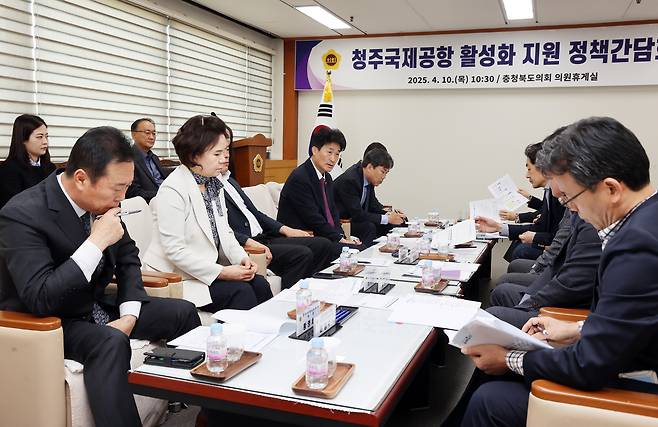
Among the council’s most significant accomplishments, Lee highlighted efforts to secure national policy and budget support with direct implications for the province’s future.
Funding was obtained for a preliminary feasibility study on a new civilian runway at Cheongju International Airport, a project seen as crucial to transforming the airport into a central hub for the inland region.
"The council also played a role in stabilizing the incomes of residents in rural areas by having Okcheon County newly selected as the rural basic income pilot program and the central government’s funding share increased," he noted.
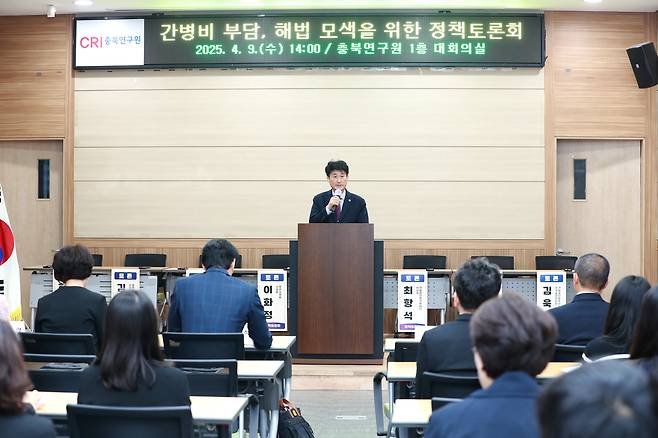
In the social welfare sector, sustained calls for greater national support contributed to a government decision to include caregiving costs at long-term care hospitals under national health insurance coverage.
“These outcomes reflect how quickly the voices of the people were connected to policy,” Lee said, adding that they were the result of persistent efforts to improve residents’ stability and promote regional development.
Not all decisions, however, were free of controversy, according to Lee.
He pointed to public criticism over the council's decision last year to cut the budget for a memorial sculpture honoring victims of the Osong disaster, in which 14 people lost their lives when a tunnel flooded in July 2023.
He stressed that the move was not intended to deny the significance of remembrance, but rather to ensure that commemoration proceeds with broader public consultation and consensus, including with bereaved families.
Priorities for 2026
Looking ahead, Lee described 2026 as a pivotal year for the province. With economic and demographic challenges intensifying, he said the council would concentrate its full capacity on sustainable development grounded in the principle that residents' happiness must come first.
All 35 council members, he said, are committed to completing their term with a renewed sense of purpose, focusing especially on policies that residents can feel in their everyday lives.
Key challenges remain, including infrastructure projects such as the Cheongju Airport runway, expanded regional transportation networks, the relocation of public institutions and amendments to special laws supporting inland development.
Yet Lee insisted that the recovery of the local economy lay at the core of all these issues.
“Small business owners and self-employed workers are still under severe pressure,” he said. The council, he noted, has enacted and revised ordinances to protect small merchants, support entrepreneurship and create jobs, and it will continue to prioritize tangible economic measures.
For Lee, trust is the most essential virtue in politics. Quoting Confucius, he said that without trust, neither individuals nor institutions can stand.
He stressed that aligning words with actions and maintaining politics at the eye level of residents were principles he strove to uphold.
As the council enters the final stretch of its term and prepares for local elections in June, Lee said he remained mindful of the sense of responsibility that comes with seeking voters’ judgment once again.
His goal, he said, was to repay residents’ trust with visible results and to help build a future in which North Chungcheong Province can thrive as a central pillar of Korea.
“We will continue to work for the well-being of our residents,” he said, expressing gratitude for their continued support and wishing them health and happiness in the year ahead.
Copyright © 코리아헤럴드. 무단전재 및 재배포 금지.