This is the film that dethroned 'Avatar' in Korea
When James Cameron's "Avatar: Fire and Ash" stormed Korean theaters in mid-December, the race for the box office crown looked all but settled.
The $400 million sci-fi threequel shattered milestone after milestone at record pace as global receipts sailed past the billion-dollar mark. Local films, meanwhile, largely stayed out of the way — the holiday slate offered little in the way of domestic competition.
Then along came "Once We Were Us."
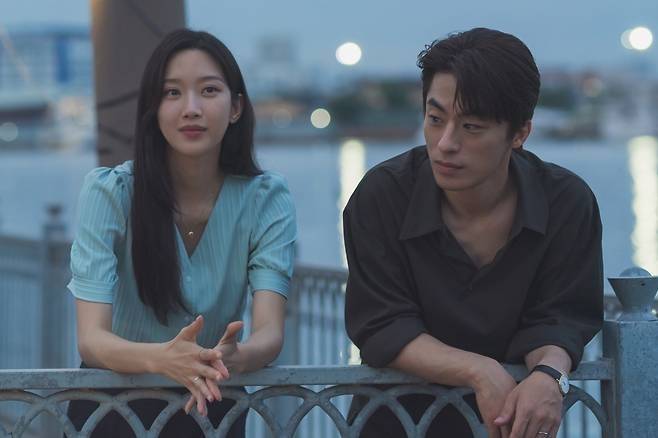
The romantic drama — a remake of Rene Liu's 2018 Chinese hit "Us and Them" — opened on New Year's Eve to modest expectations. The leads, Koo Kyo-hwan and Moon Ga-young, are hardly conventional picks: Koo skews more indie-film curiosity than leading-man heartthrob, and Moon, despite steady television work, isn't exactly a household name either.
Yet as of Friday, the film had drawn 1.26 million admissions according to the Korean Film Council's box office tracker, sitting atop the daily charts for five consecutive days. Cameron's juggernaut, at 6.2 million cumulative, has been slipping in daily ticket sales — a disappointing trajectory compared to its predecessors, both of which cleared 10 million admissions during their runs here.
That a mid-budget romantic flick could dethrone one of Hollywood's priciest productions says something about both timing and taste. Korean audiences haven't seen a proper romance pull these numbers in years — not since the genre's heyday in the 2000s and early 2010s, when heartstring-tugging fare featuring the biggest stars of the day packed the multiplexes.
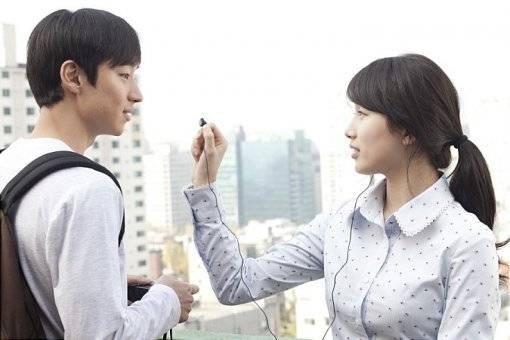
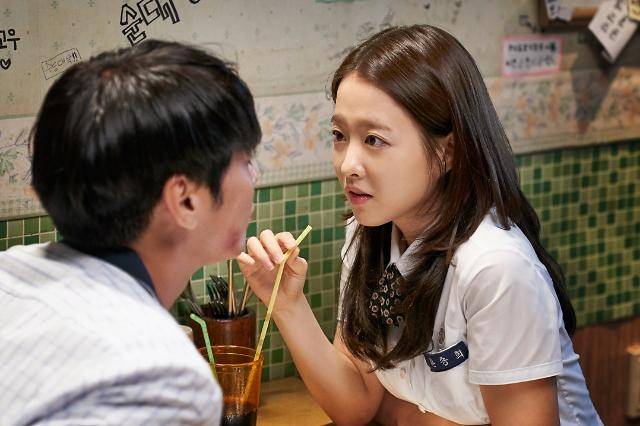
The year 2012 was the high-water mark for the genre. "Architecture 101" drew 4.1 million with Lee Je-hoon and a then-acting-newcomer Bae Suzy as the college flame you never quite shake. Later that year came "A Werewolf Boy," featuring Song Joong-ki as the feral teenager and Park Bo-young as the girl who tries to tame him. That film sold over 7 million tickets to become the top-grossing Korean romance ever made.
Then the formula fell out of favor. Audiences gravitated toward big-budget spectacles built for quick-hit thrills, and romances started to feel like something you could just as easily stream at home.
The closest thing to a romance hit in recent years was 2018's "On Your Wedding Day," a what-could-have-been tale starring Park Bo-young and Kim Young-kwang, which pulled in a respectable 2.8 million viewers. Park Chan-wook's critically acclaimed "Decision to Leave," a neo-noir thriller with romance at its bruised heart, barely cracked 1.9 million in 2022 following its Cannes premiere, an underwhelming haul for a filmmaker of his stature.
These days, when most Korean productions struggle to break even regardless of genre, "Once We Were Us" clearing its reported break-even point of 1.1 million ticket sales does count for something.
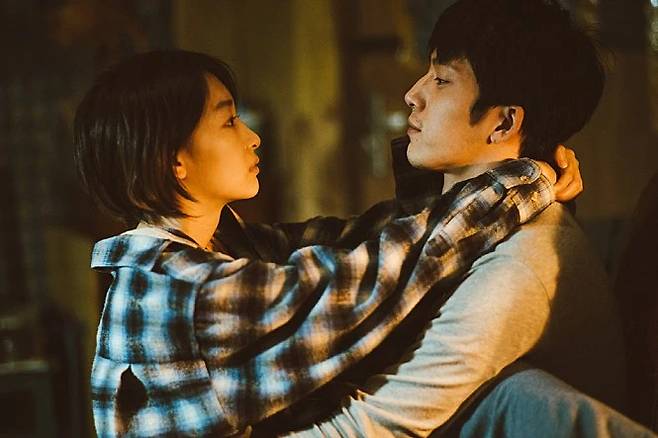
It adds to the intrigue that "Once We Were Us" plays it pretty straight as romances go: College sweethearts, idealistic, broke and hopelessly in love, drift apart as life intervenes, then cross paths a decade later to sift through what went wrong. A sizable dose of melodrama — the "too lates" and "what ifs" — does much of the heavy lifting here, keeping audiences hooked through the familiar beats.
Director Kim Do-young borrows some interesting stylistic choices from the Chinese original that give the film a semblance of artistry. The present rendered in black-and-white as opposed to the past in color parallels a video game the male lead creates as a kind of pixelated apology to his former lover. But the bottom line is that the film doesn't stray far from the standard playbook by any real measure.

What has resonated, judging by reviews, is the social realism threaded through the love story. Many viewers found the film's depiction of young people from rural provinces scraping by in Seoul particularly relatable, from the cramped studio flats to the minimum-wage part-time jobs, and the way money problems grind down dreams and relationships alike.
That social edge carries over from the Chinese original, which was widely praised for its clear-eyed take on urban poverty in Beijing and the indignities of chasing success in a city keen on crushing it. Fans of the original have pointed out that the Korean remake watered down those elements considerably, but still, enough texture remained to give the romance something to push against.
Timing likely helped as well. The year-end holiday stretch is prime territory for couples seeking a night out, and audiences fatigued by big-budget spectacle may simply have been ready to feel something.
Another romantic drama released around the same period, "Even If This Love Disappears from the World Tonight" — a high-school weepie starring Choo Young-woo and Shin Si-ah — also cleared its break-even threshold with over 800,000 admissions as of Friday.
"It's been a while since we've had a pure melodrama with this kind of emotional depth," said an official at Showbox, distributor for "Once We Were Us." "We're encouraged that audiences seem happy to have it back."
Copyright © 코리아헤럴드. 무단전재 및 재배포 금지.