S. Korea unveils W40tr plan to launch new megacities
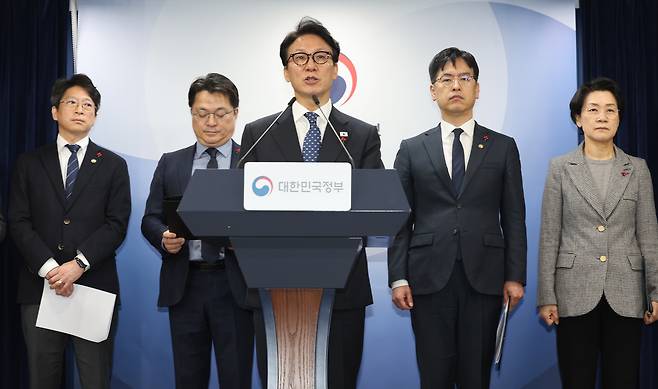
The South Korean government unveiled plans Friday to create two new megacities in the South Chungcheong and South Jeolla regions, with each anticipated to receive up to 20 trillion won ($13.6 billion) in state budget support over four years to accelerate the regional mergers.
It is the administration's latest response to population decline in the regions, amid criticisms that the liberal bloc is rushing to implement the plan for strategic purposes ahead of the June local election.
Prime Minister Kim Min-seok said in a briefing at the Government Complex Seoul that the budget support will grant each new megacity the capacity to autonomously plan and execute its own projects based on its needs.
Kim also said the announcement is meant to incentivize the regions' transition to megacities. "Merging local governments will be provided with clear incentives, autonomy and accountability," Kim said.
He added that the budget support will come with moves to grant these megacities the same administrative status as the capital city of Seoul, which is the only "special metropolitan city."
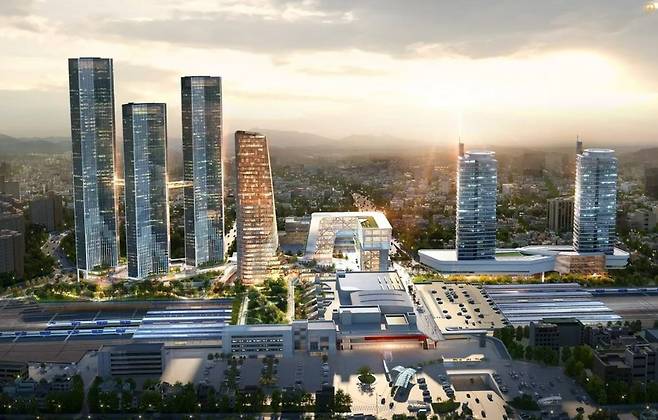
These new megacities will also be granted priority for state-run companies relocating out of Seoul through state-sponsored plans starting in 2027, and subsidies or tax benefits for businesses setting up shops in the newly merged regions, Kim said.
The announcement came amid political circles' proposals to integrate Daejeon and the surrounding South Chungcheong Province, and to merge Gwangju and the adjacent South Jeolla Province.
In December, President Lee Jae Myung floated the possibility of merging Daejeon and South Chungcheong Province in a meeting with the ruling party lawmakers representing constituencies in the region, adding that a new mayor should be elected in the June election.
A similar meeting between Lee and the ruling Democratic Party of Korea lawmakers representing the southwestern region was held on Jan. 9 to discuss the merger of Gwangju and South Jeolla Province as well as plans to elect its new leader in June.
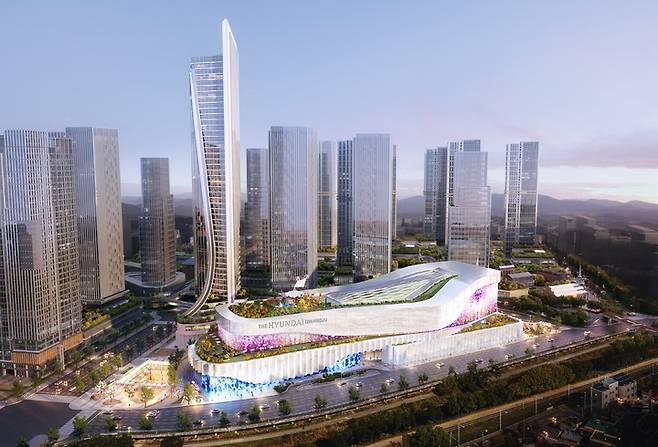
Both Daejeon and Gwangju are now considered metropolitan cities. Should the mergers take place, both regions would become megacities, or metropolises with populations exceeding 10 million.
The population in Daejeon and South Chungcheong Province combined amounts to over 35 million people, while Gwangju and South Jeolla Province have a combined population of some 32 million.
More legislative processes to accelerate such mergers are in place in these regions, in terms of the new megacities' naming and other concerns, Vice Minister of Interior and Safety Kim Min-jae, who accompanied the prime minister's briefing, told reporters.
On Monday, Democratic Party chair Rep. Jung Chung-rae said his party would work to pass the special bill to merge Daejeon and South Chungcheong before mid-February. The ruling party also drafted a law to integrate Gwangju and South Jeolla on Thursday with the aim of passing it before the end of February.
Copyright © 코리아헤럴드. 무단전재 및 재배포 금지.