KEPCO to pursue first dividend from UAE nuclear plant in H1
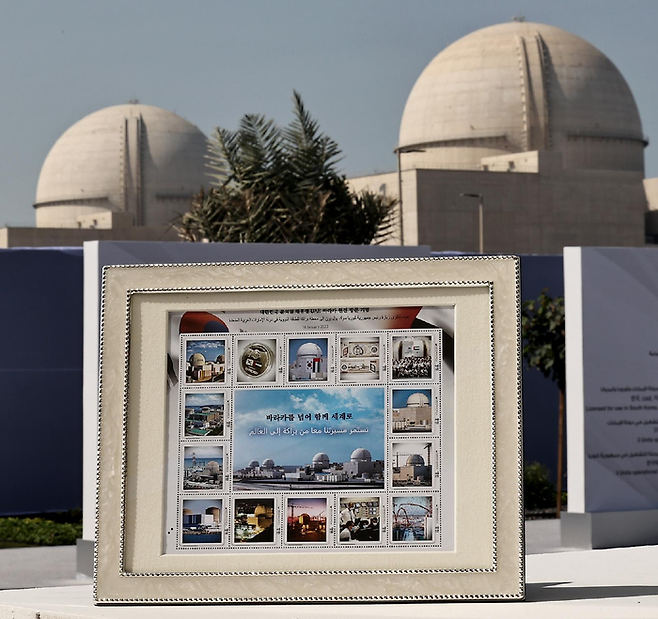
Industry officials say that if dividends from the Barakah project become regular, they could help improve KEPCO’s strained financial structure and expand room for shareholder returns, while also sending a positive signal for additional nuclear orders in the UAE and closer bilateral cooperation.
According to government and industry sources on Thursday, KEPCO disclosed the plan during a policy briefing to the Ministry of Trade, Industry and Resources, saying it would pursue its first shareholder dividend from the Barakah nuclear plant within the first half of the year. KEPCO decided to make an equity investment in the four-reactor project in October 2016, following its successful bid for the plant in 2009.
The dividend will be funded by operating profits generated from electricity sales at Barakah. KEPCO holds an 18 percent stake in Nawah Energy Company, the joint venture that operates Barakah Units 1 through 4 together with the Emirates Nuclear Energy Corporation (ENEC). The stake was valued at about 1.7 trillion won ($1.16 billion) at the time of investment.
The move became possible after Unit 4 entered commercial operation in September 2024, allowing all four reactors to operate simultaneously. This enabled the settlement of roughly one year’s worth of operating profits. “With the final unit beginning commercial operation in September 2024, we are now able to settle earnings through last year,” a KEPCO official said.
The size of the dividend has not yet been determined. When KEPCO made the investment in 2016, it projected cumulative revenue of $49.4 billion over 60 years from the Barakah project, equivalent to roughly 72 trillion won at current exchange rates. That estimate is now expected to be lower, as commercial operation was delayed by about three years from the original schedule and plans to secure bundled maintenance contracts were revised. ENEC, which is owned by the Abu Dhabi government, does not publicly disclose detailed power sales revenue.
Still, a sustained dividend stream could provide a meaningful boost to KEPCO’s finances. The utility’s accumulated losses totaled 23.1 trillion won from 2021 through the end of the third quarter of last year. Market watchers say dividend income from Barakah could eventually be used as a source of KEPCO’s own shareholder payouts, potentially starting as early as March next year, if the first distribution proceeds as planned.
Any decision on shareholder dividends would be finalized through KEPCO’s board and shareholders’ meeting after consultations led by the Ministry of Economy and Finance. “In line with the government’s value-up policy, KEPCO could use income from Barakah for shareholder returns,” an industry official said. “But given the scale of accumulated losses, the funds are more likely to be used to stabilize the company’s balance sheet.”
Barakah represents South Korea’s first successful overseas nuclear power export. Until now, most of KEPCO’s earnings from the project have come from engineering, procurement and construction work, as well as fuel supply, maintenance and operational support contracts. When the joint investment agreement was signed in 2016, KEPCO said the project elevated Korea–UAE ties from a buyer–supplier relationship to a strategic partnership aimed at ensuring stable long-term operation of the plant.
The dividend could also raise expectations for follow-on projects, including potential construction of Barakah Units 5 and 6, estimated to be worth at least 20 trillion won. While discussions are currently on hold, KEPCO, Korea Hydro & Nuclear Power (KHNP) and ENEC exchanged views on cooperation for the additional units in 2023. Investor optimism was further lifted after KEPCO signed a memorandum of understanding with ENEC during South Korean President Lee Jae-myung’s state visit to the UAE last November, aimed at jointly expanding into the global nuclear market.
Beyond dividends, KEPCO may secure additional income from Barakah through compensation related to construction delays. The company has said it plans to accelerate talks over delay-related claims involving KHNP, pledging to seek the maximum possible settlement from the project owner.
Copyright © 매일경제 & mk.co.kr. 무단 전재, 재배포 및 AI학습 이용 금지
- “주가 급등에 어닝쇼크 옵니다”…웃어야 할 기업들 등골 휘는 이유는? - 매일경제
- 호텔서 침구·전화 등 훔쳐간 절도범...잡고보니 미인대회 우승자였다 - 매일경제
- 10년 된 고장난 승마기가 30만원? 전현무, 기부 바자회 논란 - 매일경제
- “최태원 동거녀가 자녀 입사 방해” 유포한 70대 유튜버의 최후 - 매일경제
- 상가주인도 포기한 상가 …"재건축땐 입주권으로 달라" - 매일경제
- [속보] 역대최악 ‘경북산불’ 낸 50대 실화자, 징역형 집행유예 - 매일경제
- 불륜설 딛고 결혼한 여배우 “7개월째 신혼집 없이 텐트 생활중” - 매일경제
- “비트코인, 지금이 바닥인가...18만달러까지 간다” - 매일경제
- “1월 맞나” 한겨울에 20도 육박…남부지방 1월 최고기온 속출 - 매일경제
- WBSC, 프리미어12 출전팀 발표…‘4위’ 한국은 본선 직행 - MK스포츠