Korea’s Jan.-Nov. fiscal deficit widens to third-largest on record
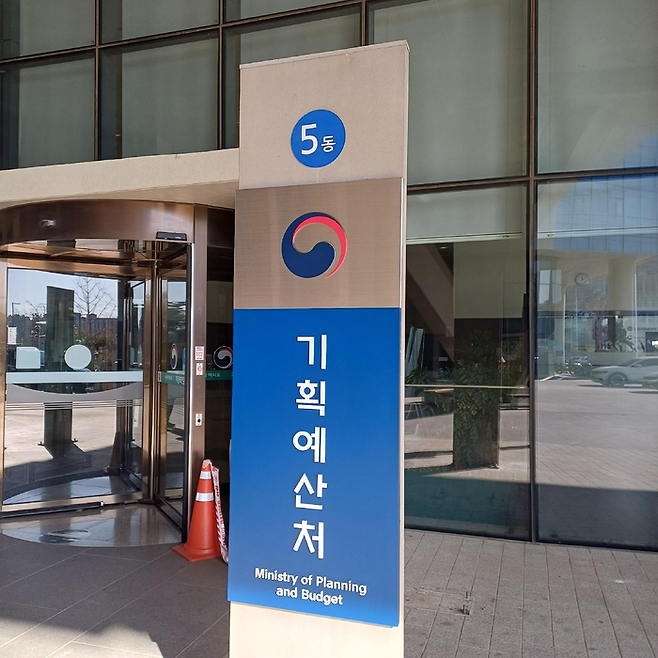
According to a report released by the Ministry of Planning and Budget on Thursday, total government revenue stood at 581.2 trillion won as of the end of November last year, up 39.2 trillion won from the same period a year earlier.
Of this amount, national tax revenue reached 353.6 trillion won, an increase of 37.9 trillion won.
By category, corporate tax revenue rose by 22.2 trillion won and income tax revenue increased by 12.3 trillion won.
Non-tax revenue increased by 2.3 trillion won, while fund revenue declined by 800 billion won.
Total expenditure, on the other hand, came to 624.4 trillion won over the same period, up 54.3 trillion won from a year earlier, the report showed.
As a result, the consolidated fiscal balance – total revenue minus total expenditure – posted a deficit of 43.3 trillion won.
The managed fiscal balance, which excludes the four major social security funds such as the National Pension Fund from the consolidated fiscal balance, recorded a deficit of 89.6 trillion won.
As of November, this is the third-largest deficit on record, following 2020 (98.3 trillion won) and 2022 (98 trillion won). Compared with the same period a year earlier, the deficit widened by 8.3 trillion won.
Central government debt stood at 1,289.4 trillion won at the end of November, up 14.1 trillion won in a single month and approaching the 1,300 trillion won mark.
Meanwhile, the issuance of treasury bonds in December totaled 5.4 trillion won.
Short-term treasury bond yields declined amid expectations of a U.S. policy rate cut and rising long-term bond yields in Japan, while long-term yields showed an upward trend.
The cumulative treasury bond issuance from January through December last year reached 226.2 trillion won, filling 97.9 percent of the annual issuance ceiling, the report showed.
Copyright © 매일경제 & mk.co.kr. 무단 전재, 재배포 및 AI학습 이용 금지
- “주가 급등에 어닝쇼크 옵니다”…웃어야 할 기업들 등골 휘는 이유는? - 매일경제
- 호텔서 침구·전화 등 훔쳐간 절도범...잡고보니 미인대회 우승자였다 - 매일경제
- 10년 된 고장난 승마기가 30만원? 전현무, 기부 바자회 논란 - 매일경제
- “최태원 동거녀가 자녀 입사 방해” 유포한 70대 유튜버의 최후 - 매일경제
- 상가주인도 포기한 상가 …"재건축땐 입주권으로 달라" - 매일경제
- [속보] 역대최악 ‘경북산불’ 낸 50대 실화자, 징역형 집행유예 - 매일경제
- 불륜설 딛고 결혼한 여배우 “7개월째 신혼집 없이 텐트 생활중” - 매일경제
- “비트코인, 지금이 바닥인가...18만달러까지 간다” - 매일경제
- “1월 맞나” 한겨울에 20도 육박…남부지방 1월 최고기온 속출 - 매일경제
- WBSC, 프리미어12 출전팀 발표…‘4위’ 한국은 본선 직행 - MK스포츠